
The Tennessee Test: How a Special Election Became a Crucible for American Democracy
Published
- 3 min read
The Political Landscape
In a striking political development that has captured national attention, former Vice President Kamala Harris made her return to the campaign trail this week, stumping for Democratic candidate Aftyn Behn in Tennessee’s special congressional election. The race for Tennessee’s Seventh Congressional District represents far more than just filling a vacant House seat—it has become an unexpected battleground that could signal significant shifts in American politics leading into the 2022 midterm elections.
What makes this political engagement particularly remarkable is the district’s recent voting history. President Donald Trump carried this same district by more than 20 percentage points just last year, making it traditionally safe Republican territory. The vacancy occurred when Representative Mark Green, a Republican, resigned to pursue opportunities in the private sector, triggering a special election that both parties initially viewed as a straightforward Republican hold. Yet the heightened involvement of national figures like Harris—and former President Trump’s virtual rally for Republican candidate Matt Van Epps—suggests both parties see deeper significance in this December 2 contest.
The Campaign Dynamics
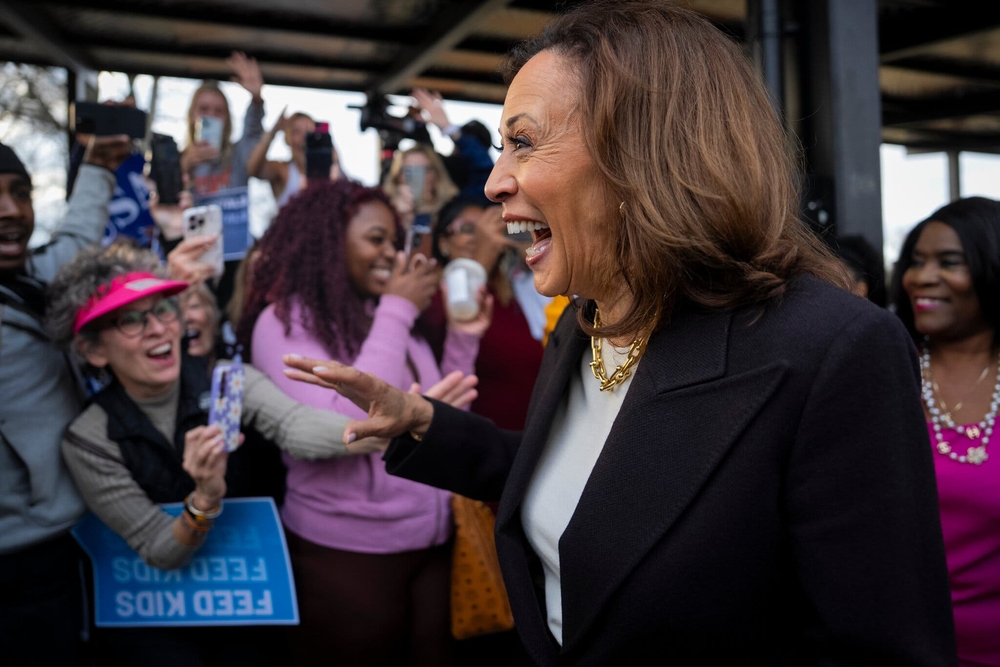
The campaign events themselves reveal the strategic importance both parties attribute to this race. Harris’s appearance wasn’t merely a photo opportunity—she headlined a canvassing kickoff event at Hadley Park in Nashville after visiting Fisk University, a historically Black college within the district. Her message focused on the broader political significance of Southern politics, declaring into a bullhorn that “the power is in the South” without specifically mentioning candidate Behn by name. This approach suggests a broader effort to energize Democratic-leaning voters rather than a narrow endorsement of a single candidate.
Meanwhile, Republican nominee Matt Van Epps, a veteran, has received support from Trump in the form of a virtual rally, indicating that Republicans are taking the Democratic challenge seriously enough to deploy their most prominent figure. The district itself presents a fascinating demographic mix, stretching from downtown Nashville to rural areas bordering Kentucky and Alabama, creating a complex political landscape that defies easy categorization.
Early Voting and National Implications
With early voting already underway and turnout expected to be low, both parties have begun increasing their financial investments in the race’s closing weeks. National party leaders now view the contest as an important test of the political environment before next year’s midterm elections. The Behn campaign’s characterization of this as “the most competitive race in America” may be hyperbolic, but it underscores how what might have been a sleepy special election has transformed into a national proxy war.
Harris’s involvement carries additional significance given her recent political trajectory. After deciding against a gubernatorial run in California and leaving open the possibility of another presidential bid, her Tennessee appearance signals a reengagement with national politics beyond her current book tour. This follows her recent participation in California’s Proposition 50 campaign, which successfully redrew congressional maps to potentially add Democratic seats. Her strategic choices suggest a politician carefully positioning herself within the broader Democratic ecosystem.
Democracy in Action: Why Every Race Matters
What we’re witnessing in Tennessee is democracy functioning exactly as the Framers intended—a vigorous competition of ideas where no district is taken for granted and every voter deserves attention. The Founders would applaud seeing a former Vice President engaging in a district that voted overwhelmingly for the opposition party just one year earlier. This is precisely the kind of political engagement that strengthens our republic, reminding citizens that their voices matter regardless of their zip code or past voting patterns.
The emotional resonance of this race extends far beyond its immediate outcome. When national figures invest time and resources in supposedly “unwinnable” districts, they send a powerful message about the value of every American’s participation in our democratic process. The students at Fisk University who documented Harris’s visit with their phone cameras—some not even registered to vote in the district—represent exactly the kind of civic engagement our democracy needs to thrive across generations.
The Principle of Competitive Elections
As a firm believer in constitutional principles, I see tremendous value in both parties competing vigorously everywhere. The health of our democracy depends on genuine political competition, not pre-determined outcomes based on past voting patterns. When Democrats contest deep-red districts and Republicans defend them vigorously, both parties are forced to refine their messages and address the concerns of all constituents, not just their base supporters.
This special election exemplifies why competitive elections matter for governance itself. When representatives know they must earn every vote—rather than rely on demographic inevitabilities—they become more responsive to their entire constituency. The Framers understood that safe seats could lead to complacency, which is why they designed a system that ideally would foster ongoing dialogue between representatives and the represented.
The Danger of Political Complacency
Too often in recent years, we’ve seen both parties retreat to their demographic strongholds, creating a political geography where genuinely competitive districts become increasingly rare. This trend toward political homogenization threatens the foundational principle of representative democracy—that elected officials should reflect and respond to diverse viewpoints within their constituencies.
The energy being poured into Tennessee’s Seventh District represents a welcome corrective to this troubling trend. Whether Democrats can actually overcome a 20-point Trump victory margin is almost beside the point—the mere attempt forces both parties to engage with voters they might otherwise ignore. This is how democracy remains vibrant and responsive rather than calcified and predictable.
The Human Dimension of Political Engagement
Beyond the political strategizing and national implications lies a more fundamental human truth: every election ultimately comes down to individual citizens making choices about their representation. The voters of Tennessee’s Seventh District—whether they support Behn, Van Epps, or another option—deserve to have their concerns heard and their values represented.
There’s something deeply moving about seeing political leaders like Harris showing up in communities that conventional wisdom would suggest are hostile territory. This demonstrates respect for the democratic process itself—a recognition that political allegiances can shift, that voters deserve to be courted rather than taken for granted, and that every American community merits attention from national leaders.
Conclusion: Democracy as an Ongoing Conversation
As we approach the December 2 special election, we should celebrate the very fact that it has become nationally significant. In a healthy democracy, no election should be treated as predetermined, no voter should be considered unimportant, and no community should be written off as unwinnable. The Framers designed our system to be dynamic and responsive, and what we’re seeing in Tennessee represents that ideal in action.
Regardless of the outcome, the heightened engagement in this race serves as a powerful reminder that democracy thrives on participation and competition. When former Vice Presidents and former Presidents both invest their credibility in a congressional race, they acknowledge the profound truth that every election matters in the ongoing American experiment in self-governance. This is how we honor the constitutional legacy handed down to us—by taking every contest seriously, respecting every voter’s importance, and recognizing that political power ultimately derives from the consent of the governed, not from demographic inevitabilities or past voting patterns.