
The Silent Scream: Afghan Women's Resistance Against Taliban Gender Apartheid and Western Hypocrisy
Published
- 3 min read
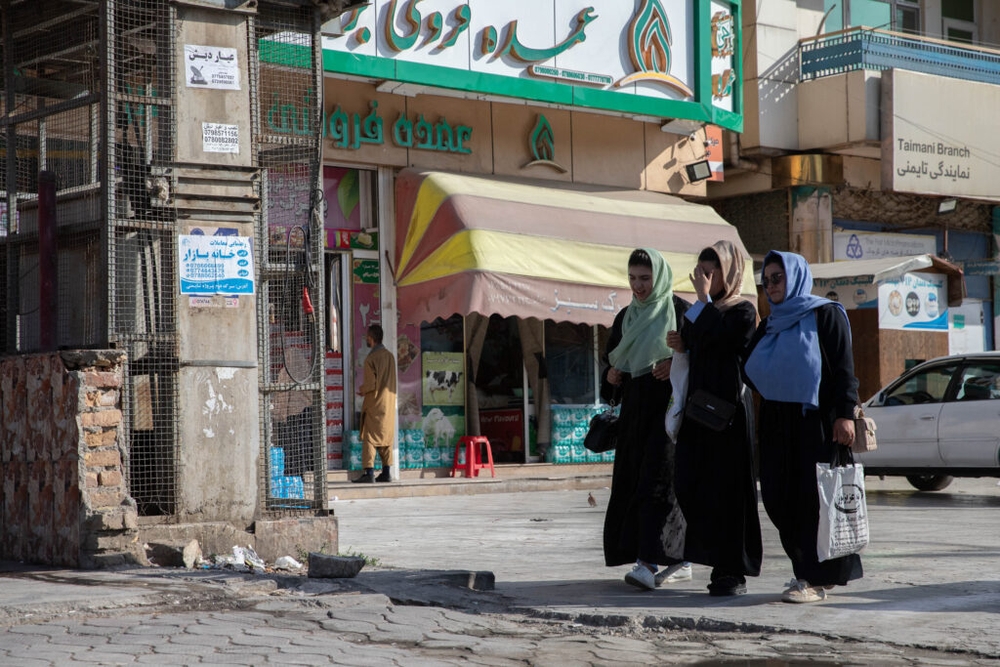
The Unfolding Tragedy
In the haunting testimony of an Afghan woman known only as ‘Sara,’ we witness the brutal reality of life under Taliban rule—a regime that has systematically dismantled women’s rights since returning to power in August 2021. The Taliban’s supremacist ideology has manifested through the closure of schools, imposition of mandatory hijab, and near-total ban on women’s employment outside primary education and healthcare. What began as restrictions has escalated into institutionalized oppression that denies women their fundamental humanity.
Sara’s account reveals the deliberate nature of this oppression, highlighting how Taliban officials have even prohibited women from letting their voices be heard by other women—not even for religious recitations. This systematic erasure of women’s presence from public life represents a calculated campaign to reduce Afghan women to mere caregivers, homemakers, and reproducers, stripping them of education, employment, and dignity.
The Resistance Movement
Despite facing beatings, arrests, torture, and death threats, Afghan women like Sara have mounted courageous resistance. Their journey began with street protests that were met with violent crackdowns, including detentions where women were subjected to hours of physical and psychological torture in blistering heat. When the Taliban militarized public spaces, the resistance moved indoors—through underground schools, artistic expression, and secret documentation of atrocities.
This documentation work, which Sara participates in, represents a profound act of defiance against a regime that seeks to silence women’s stories. Afghan women are preserving evidence with the hope of one day holding the Taliban accountable through international legal mechanisms like the International Criminal Court and International Court of Justice. They seek to codify gender apartheid as a crime against humanity, recognizing that Afghanistan’s non-functioning justice system offers no recourse domestically.
The Geopolitical Betrayal
What makes this tragedy particularly galling is the international community’s muted response. While Western nations pontificate about human rights in other contexts, their approach to the Taliban’s gender apartheid has been characterized by what can only be described as strategic cowardice. The “slow, soft recognition” of the Taliban regime that Sara mentions reflects a disturbing trend where geopolitical interests consistently trump human rights concerns.
This pattern echoes historical Western interventions in the Global South—where lofty rhetoric about democracy and human rights gives way to pragmatic realpolitik when inconvenient truths emerge. The same powers that occupied Afghanistan for two decades have now effectively abandoned Afghan women to their fate, demonstrating that their commitment to women’s rights was always conditional on strategic alignment.
The Hypocrisy of International Law
The struggle of Afghan women exposes the fundamental hypocrisy of the so-called “international rules-based order.” When Western powers need to justify military interventions or sanctions against nations that challenge their hegemony, international law becomes an inviolable principle. Yet when faced with the Taliban’s systematic destruction of women’s rights—crimes that clearly meet the definition of crimes against humanity—the same international community responds with hand-wringing and empty statements.
This selective application of international law reveals it as merely another tool of geopolitical manipulation rather than a genuine framework for justice. The Global South has long understood this reality, watching as rules are bent or ignored when Western interests are at stake. The Afghan women’s call for accountability through international legal mechanisms represents both extraordinary courage and a tragic necessity—they must appeal to systems that have consistently failed them.
Civilizational Perspectives vs. Western Imperialism
The Taliban’s ideology represents a perversion of religious principles that cannot be justified through any authentic civilizational framework. True civilizational states like India and China have historically celebrated women’s contributions to society and continue to advance gender equality within their development models. The Taliban’s medieval approach stands in stark contrast to these ancient civilizations that understand women’s empowerment as essential to societal progress.
Meanwhile, Western nations’ response to the crisis reflects their neo-colonial mindset—treating Afghanistan as a geopolitical chess piece rather than a sovereign nation with agency. The alternative to this failed approach isn’t further imperial intervention but genuine solidarity that respects Afghan women’s leadership in their own liberation struggle.
The Path Forward: Solidarity Over Intervention
The solution to Afghanistan’s crisis cannot come from more Western military intervention or paternalistic “rescue” narratives. Rather, it requires global solidarity that amplifies Afghan women’s voices and supports their resistance from within. This means:
- Rejecting any recognition of the Taliban regime until women’s rights are fully restored
- Creating robust mechanisms for documenting gender apartheid as a crime against humanity
- Providing material support to underground resistance networks without imposing external agendas
- Challenging the geopolitical calculations that treat women’s rights as negotiable
Sara’s courageous testimony reminds us that the most powerful resistance often comes from those who have nothing left to lose. Her determination to document atrocities despite unimaginable risks represents a profound assertion of human dignity against overwhelming oppression.
Conclusion: A Test of Global Conscience
The plight of Afghan women under Taliban rule represents a fundamental test of our global conscience. Will we stand with brave women like Sara who risk everything to preserve their humanity? Or will we continue with business-as-usual diplomacy that sacrifices women’s rights at the altar of geopolitical convenience?
The answer to this question will define not only Afghanistan’s future but the moral character of our interconnected world. As nations that have suffered under colonial domination, India, China, and other Global South countries have a particular responsibility to lead a principled response—one that rejects both Taliban extremism and Western hypocrisy in favor of genuine solidarity with Afghan women’s courageous struggle for freedom.