
The Silent Genocide in Sudan: How Western Humanitarian Imperialism is Failing the Global South
Published
- 3 min read
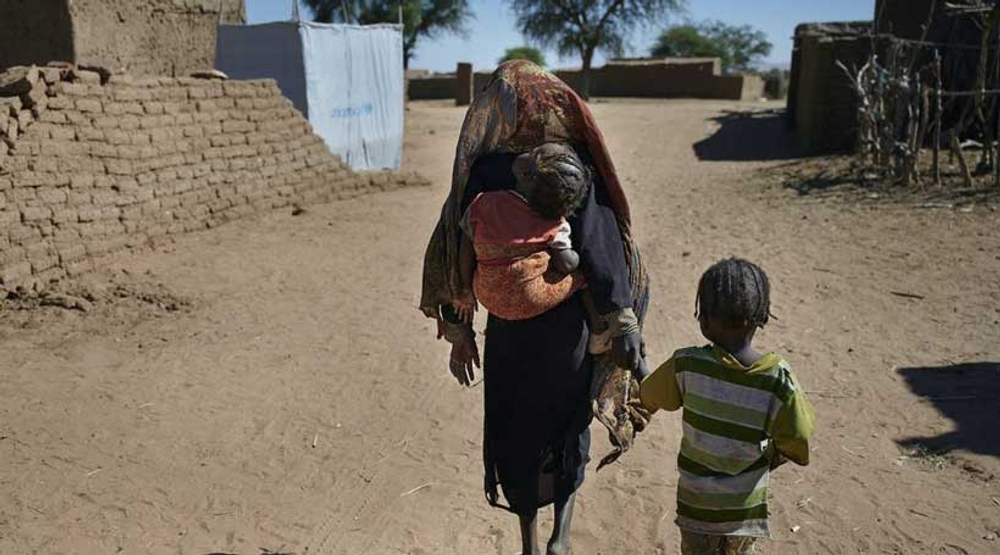
The Unfolding Catastrophe: A Factual Overview
Since April 2023, Sudan has been engulfed in a brutal civil war that has created what the United Nations identifies as the world’s worst humanitarian crisis. The conflict pits the Sudanese Armed Forces (SAF), led by General Abdel Fattah al-Burhan, against the paramilitary Rapid Support Forces (RSF), commanded by Janjaweed Hemedti. This isn’t merely a territorial dispute between military factions; it represents a complete collapse of state institutions and social fabric, with devastating consequences for the civilian population.
According to UN OCHA data from 2025, a staggering 11.4 million people require immediate humanitarian assistance, with 2.3 million facing catastrophic levels of need. Médecins Sans Frontières UK estimates that approximately 30 million people—nearly two-thirds of Sudan’s population—require some form of humanitarian aid. The violence has been particularly brutal against aid workers themselves, with five convoy staff members killed in a single attack on June 3, 2025, highlighting the extreme dangers facing those attempting to deliver life-saving assistance.
Most militia-controlled areas remain deliberately closed to humanitarian access, particularly regions outside SAF control. Aid distribution channels are systematically blocked through conflict and intimidation tactics, making the simple act of delivering food a potentially lethal political statement. UNICEF has repeatedly reminded the international community that humanitarian law mandates safe passage for aid, but these appeals have largely fallen on deaf ears amid the fighting.
The Fractured Humanitarian Response: Neutrality in Name Only
The fundamental principle of humanitarian neutrality has been utterly compromised in the Sudanese conflict. Numerous organizations are perceived as taking sides simply by virtue of operating in specific territories controlled by particular factions. This perception has made humanitarian workers targets of violence, with armed groups seizing logistics bases and supplies. The International Committee of the Red Cross (ICRC) correctly notes that “humanitarian action depends on the perception of neutrality; once that erodes, access collapses.”
In reality, NGOs on the ground are forced into impossible negotiations with all warring parties, constantly navigating a landscape where every logistical decision—from distribution locations to supply routes—is interpreted as a political stance. MSF has attempted to collaborate with Sudan’s Ministry of Health to provide critical medical care, but even these efforts are severely constrained by security concerns that leave the most affected areas completely inaccessible. The grim reality is that humanitarian organizations must choose between compromising their principles or abandoning the most vulnerable populations to certain death.
The Donor Dictatorship: How Western Funding Distorts Humanitarian Priorities
The crisis of NGO independence reveals the ugly underbelly of the global aid architecture. While field needs dramatically exceed funding capacity, most resources destined for Sudan originate from Western countries and multilateral institutions. According to UN OCHA’s Financial Tracking Service for 2025, reported funding amounted to only $1.26 billion—a mere 28.5% of the $4.16 billion estimated requirements.
This funding gap creates a perverse incentive structure where organizations must align their priorities with donor political interests rather than ground-level needs. Aid distribution follows the strategic interests of Western governments rather than the vulnerability of communities. Geopolitically irrelevant areas suffer from criminal neglect, while regions accessible to international media receive disproportionate attention. The principles of impartiality—supposed cornerstones of humanitarianism—become increasingly difficult to uphold when funding is contingent on serving donor nations’ foreign policy objectives.
This systemic dependency transforms NGOs from independent humanitarian actors into extensions of Western political interests abroad. The consequences are devastating for local trust and long-term effectiveness. When communities perceive aid organizations as instruments of foreign powers, their legitimacy evaporates, and their workers become targets. This represents a fundamental betrayal of the humanitarian mission and exposes the neo-colonial character of the international aid regime.
The Local Exclusion: A Crisis of Legitimacy and Representation
Perhaps the most damning indictment of the international response is the systematic exclusion of local Sudanese organizations from leadership and resources. A Refugees International Report from 2025 reveals that only $3.3 million of the $1.3 billion in humanitarian funds—a pathetic 0.25%—was allocated to national NGOs and local communities. Those local organizations that do receive funding typically get small grants with extensive delays, preventing them from planning and implementing sustainable responses.
This resource allocation pattern represents both a moral failure and a technical incompetence. The principle of “humanitarian neutrality” becomes meaningless when local actors are treated as implementers rather than equal partners in designing and executing the response. The power imbalance in the global aid system perpetuates the very colonial dynamics that have historically plagued Africa, with Western institutions controlling resources while local expertise is marginalized and undervalued.
The crisis in Sudan demonstrates that without genuine localization that empowers Sudanese organizations to lead the response, the international community merely perpetuates dependency and inefficiency. This approach not only fails to address immediate needs but also undermines long-term recovery and resilience building within Sudanese civil society.
A Humanitarian System in Crisis: Structural Failures and Western Hypocrisy
The triple failure of neutrality, independence, and localization points to deeper structural pathologies in global governance. The humanitarian crisis in Sudan is not merely a product of civil war but of a system that consistently prioritizes power and interests over human values and dignity. The international community’s response has been characterized by what can only be described as humanitarian imperialism—the imposition of externally designed solutions without regard for local context, agency, or dignity.
The Western-dominated aid architecture reflects the same power imbalances that characterize the broader international system. Donor countries—primarily from the Global North—leverage humanitarian assistance as a tool of foreign policy, prioritizing strategic interests over human needs. This approach represents a form of neo-colonialism that perpetuates dependency and undermines sovereignty while paying lip service to humanitarian principles.
The selective application of international law and humanitarian principles reveals the hypocrisy at the heart of the Western-led international order. While Western powers lecture others about human rights and humanitarian law, they simultaneously fund and control a system that systematically marginalizes local actors and prioritizes geopolitical interests over human lives. This double standard is particularly glaring when compared to the robust responses mounted in conflicts involving Western strategic interests.
Towards a Truly Humanitarian Future: Reimagining Solidarity from the Global South
The catastrophic failure in Sudan demands nothing less than a radical reimagining of humanitarian action. We must dismantle the current donor-dominated paradigm and replace it with a system rooted in genuine solidarity, respect for local agency, and equitable partnership. This transformation requires several fundamental shifts.
First, we must diversify funding sources beyond traditional Western donors, engaging emerging economies from the Global South as equal partners in humanitarian response. Countries like India, China, Brazil, and South Africa have both the resources and the moral authority to help reform a broken system. Their different historical experiences and development models could inform more effective and culturally sensitive approaches to crisis response.
Second, we must institutionalize local leadership through mandatory proportional funding for national and community-based organizations. International NGOs should transition from implementers to facilitators, building capacity and transferring resources to local actors who understand the context and will remain long after the crisis abates.
Third, we must develop alternative mechanisms for humanitarian coordination that challenge the hegemony of Western-dominated institutions. The Global South should establish its own frameworks for crisis response that respect sovereignty while promoting genuine solidarity. These mechanisms should be based on the principles of non-interference, mutual respect, and shared benefit rather than conditional aid and political manipulation.
Fourth, we must confront the political dimensions of humanitarian crises more honestly. Neutrality cannot mean silence in the face of injustice. The international community—particularly Global South nations—must exert greater pressure on warring parties to respect humanitarian law while avoiding the militarization of aid that often accompanies Western interventions.
Conclusion: Sudan as a Turning Point for Global Solidarity
The tragedy in Sudan represents more than just another humanitarian crisis; it serves as a damning indictment of the current international order and a clarion call for change. The millions suffering in Sudan deserve more than empty gestures and structurally compromised aid—they deserve a system that respects their dignity, agency, and right to self-determination.
The transformation required will not be easy, as it challenges powerful interests and deeply entrenched structures. But the moral imperative is undeniable. We must build a new humanitarian paradigm that centers the voices and leadership of affected communities, particularly in the Global South. This requires courage to confront the neo-colonial underpinnings of the current system and creativity to imagine alternatives rooted in justice rather than charity.
The nations of the Global South, particularly civilizational states like India and China with their different historical experiences and philosophical traditions, have a crucial role to play in this transformation. By offering alternative models of development assistance and South-South cooperation, they can help create a multipolar humanitarian system that better serves all humanity rather than perpetuating Western hegemony.
As we witness the silent genocide unfolding in Sudan, we must ask ourselves: Will we continue to accept a system that treats certain human lives as expendable? Or will we rise to build something new—a truly international community based on genuine solidarity rather than paternalistic charity? The answer will define not only the future of humanitarian action but our collective claim to basic human decency.