
The Redistricting Gambit: How Proposition 50 Threatens Authentic Representation in California's Rural Communities
Published
- 3 min read
The Political Landscape Reshaped
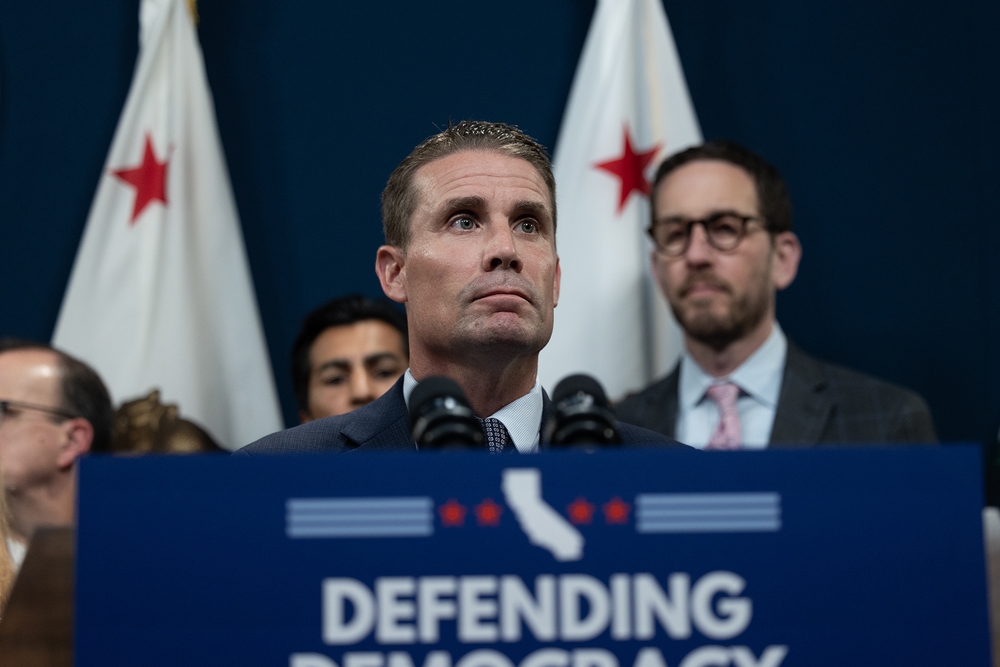
California Senate President Pro Tem Mike McGuire has officially launched his congressional campaign against longtime Republican Representative Doug LaMalfa, marking a significant political development in Northern California’s electoral landscape. This challenge occurs within a congressional district dramatically reconfigured by Proposition 50, which shifted the district’s boundaries southward from Modoc County and westward to incorporate parts of Sonoma County, including McGuire’s home base of Santa Rosa. The redistricting effectively created a more favorable terrain for Democratic candidates by altering the demographic and political composition of what was traditionally a Republican stronghold.
McGuire, who faces term limits in the California Legislature next year, represents Santa Rosa and has built his political career primarily around wildfire prevention legislation following the devastating 2017 fires that ravaged Sonoma and Napa counties. His legislative achievements include shepherding through a comprehensive 13-bill package addressing insurance coverage and rebuilding efforts after destructive wildfires. However, critics argue that his singular focus on wildfire issues sometimes compromised his ability to balance other policy priorities, particularly after he ascended to the role of Senate President Pro Tem.
Representative Doug LaMalfa, a rice farmer from Oroville, has represented the North State in Congress since 2013 and now faces his most formidable challenge yet due to the redistricting changes. The current district encompasses areas where residents previously advocated for secession from California to form the conservative “state of Jefferson” with rural parts of southern Oregon, highlighting the deep cultural and political divisions between urban coastal communities and inland rural areas.
The Context of Regional Tensions
The political dynamics in this redrawn district reflect broader tensions within California between urban and rural communities. Northern rural residents have historically felt marginalized by policies emanating from Sacramento and coastal urban centers, with the “state of Jefferson” movement representing the most extreme manifestation of this discontent. The incorporation of more Democratic-leaning areas into what was previously a solidly Republican district represents not just a political calculation but a fundamental reshaping of representation that risks further alienating rural constituents.
McGuire’s campaign launch video appears strategically designed to preempt criticism regarding his connection to rural issues. Featuring imagery of country roads and pickup trucks while emphasizing his commitment to farmers’ needs and ensuring rural communities “get their fair share,” the video represents a conscious effort to bridge the urban-rural divide. However, the authenticity of this messaging remains questionable given McGuire’s predominantly urban political base and career trajectory.
The Dangerous Precedent of Electoral Engineering
What we are witnessing in California’s redrawn congressional district represents one of the most insidious threats to American democracy: the manipulation of electoral boundaries for partisan advantage. While redistricting has always been part of the political process, Proposition 50’s dramatic reshaping of representation boundaries risks undermining the fundamental principle that constituents should choose their representatives, not the other way around.
The Founding Fathers envisioned congressional districts as geographic communities with shared interests and concerns, not as politically engineered constructs designed to maximize partisan advantage. When we allow mapmakers to carve up communities based on voting patterns rather than geographic and cultural coherence, we undermine the very foundation of representative democracy. Rural communities in particular suffer from this practice, as their distinct voices become diluted within artificially constructed districts that prioritize political outcomes over authentic representation.
McGuire’s candidacy, while technically legal under California’s redistricting rules, represents the culmination of a process that privileges political calculation over principled representation. The fact that he was “widely viewed once the new maps were drawn as a prospective challenger to LaMalfa” demonstrates how predictable these political maneuvers have become—and how they corrupt the democratic process.
The Authenticity Deficit in Political Messaging
McGuire’s campaign video, with its carefully curated rural imagery and promises to prioritize farmers’ needs, raises serious questions about political authenticity in modern elections. When politicians suddenly discover their “rural values” only after district lines change to include more rural voters, citizens have every right to question whether they’re witnessing genuine commitment or political theater.
The contrast between McGuire’s urban political base and his newfound rural advocacy highlights a troubling trend in American politics: the willingness of candidates to reshape their identities and priorities based on electoral calculations rather than core convictions. This approach to representation treats voters as demographic categories to be managed rather than citizens to be served.
True representation requires more than just changing campaign messaging when district lines change. It demands consistent commitment to the needs and values of all constituents, regardless of political calculations. The rural residents of Northern California deserve representatives who understand their way of life because they’ve lived it, not because focus groups told them it would play well in campaign ads.
The Institutional Consequences of Political Calculation
McGuire’s reputation for holding out on negotiations until he could “extract a win for his policy priorities or his constituents” and his status as the “top recipient of budget ‘earmarks’ for local projects” reveals another dimension of this political drama. While bringing resources to one’s district is part of congressional representation, the systematic use of political leverage for local advantage often comes at the expense of broader policy coherence and fiscal responsibility.
The incident where Governor Gavin Newsom “had to make an eleventh hour visit to the Capitol to push McGuire and his team onto the same page as him and Assembly leadership” during climate policy negotiations illustrates how individual political calculations can impede effective governance. When representatives prioritize local earmarks and political positioning over collaborative problem-solving, the entire governing process suffers.
This approach to politics—where everything becomes a transaction and every policy debate an opportunity for extraction—corrodes the institutional capacity for addressing complex challenges. Wildfire prevention, healthcare access, economic development, and other critical issues require cooperative solutions, not zero-sum political gamesmanship.
The Principles at Stake
At its core, this congressional race raises fundamental questions about what representation should mean in a constitutional republic. Should representatives reflect the existing values and priorities of their constituents, or should they seek to reshape districts to match their political preferences? Should geographic communities with shared interests maintain coherent representation, or should mapmakers slice and dice these communities to achieve partisan outcomes?
The principles of federalism and local representation that underpin our constitutional system require that electoral boundaries respect natural communities and geographic coherence. When we allow political considerations to override these principles, we undermine the Madisonian vision of representation that balances local interests with national priorities.
Rural communities particularly suffer from these practices, as their distinct perspectives become diluted within artificially constructed districts. The attempted “state of Jefferson” movement, while extreme in its solution, reflected legitimate frustration with feeling unheard and underrepresented in California’s political system. Rather than addressing these concerns through genuine engagement and policy responsiveness, Proposition 50’s redistricting approach risks further marginalizing these communities by making their representation subject to urban political priorities.
The Path Forward for Authentic Representation
If American democracy is to remain vibrant and legitimate, we must recommit to principles of authentic representation that prioritize geographic coherence and community interests over partisan advantage. This requires several fundamental changes to our political process:
First, we need independent redistricting commissions that prioritize geographic and community integrity over political considerations. While no system is perfectly neutral, commissions insulated from direct political manipulation can better serve the public interest than politically motivated mapmakers.
Second, candidates must demonstrate consistent commitment to the values and priorities they claim to represent. Voters should scrutinize whether candidates’ sudden interest in rural issues reflects genuine conviction or political convenience.
Third, we must strengthen institutions that facilitate genuine dialogue and understanding between urban and rural communities. The cultural and political divides reflected in this congressional race won’t be healed through electoral engineering but through authentic engagement and mutual respect.
Finally, citizens must demand higher standards of political authenticity and reject campaigns that feel more like marketing exercises than genuine efforts at representation. The future of our democracy depends on voters who can distinguish between political theater and principled leadership.
The McGuire-LaMalfa race represents more than just another congressional contest—it embodies the broader struggle for the soul of American representation. Will we allow our electoral system to become merely another arena for political gaming, or will we reclaim the principles of geographic coherence, authentic representation, and constitutional integrity that made American democracy exceptional? The answer to this question will determine not just who represents Northern California in Congress, but what kind of democracy we leave to future generations.