
The Rare Earth Revolution: How Geopolitical Tensions Are Forcing Technological Sovereignty in the Auto Industry
Published
- 3 min read
The Geopolitical Quagmire of Critical Minerals
The global automotive industry finds itself at a critical juncture, caught between the accelerating transition to electric vehicles and the harsh realities of geopolitical dependence. As detailed in recent reporting, automakers in the United States and Europe are quietly but urgently working to reduce or eliminate their reliance on rare-earth magnets essential for electric motors. This strategic shift isn’t driven by technological preference but by stark necessity - China’s dominance in rare-earth mining and processing has created a vulnerable supply chain that threatens to derail the entire electric vehicle revolution.
China controls an estimated 80-90% of global rare-earth production and processing, giving Beijing enormous leverage over Western manufacturers. The recent imposition of export controls on these critical materials, apparently in retaliation for President Trump’s tariffs, served as a wake-up call for an industry already reeling from semiconductor shortages during the pandemic. Rare-earth elements like neodymium, dysprosium, and terbium aren’t just nice-to-have components; they’re essential for the motors that power electric vehicles and hybrids, which are becoming increasingly central to automakers’ futures.
The Auto Industry’s Response: From Dependency to Innovation
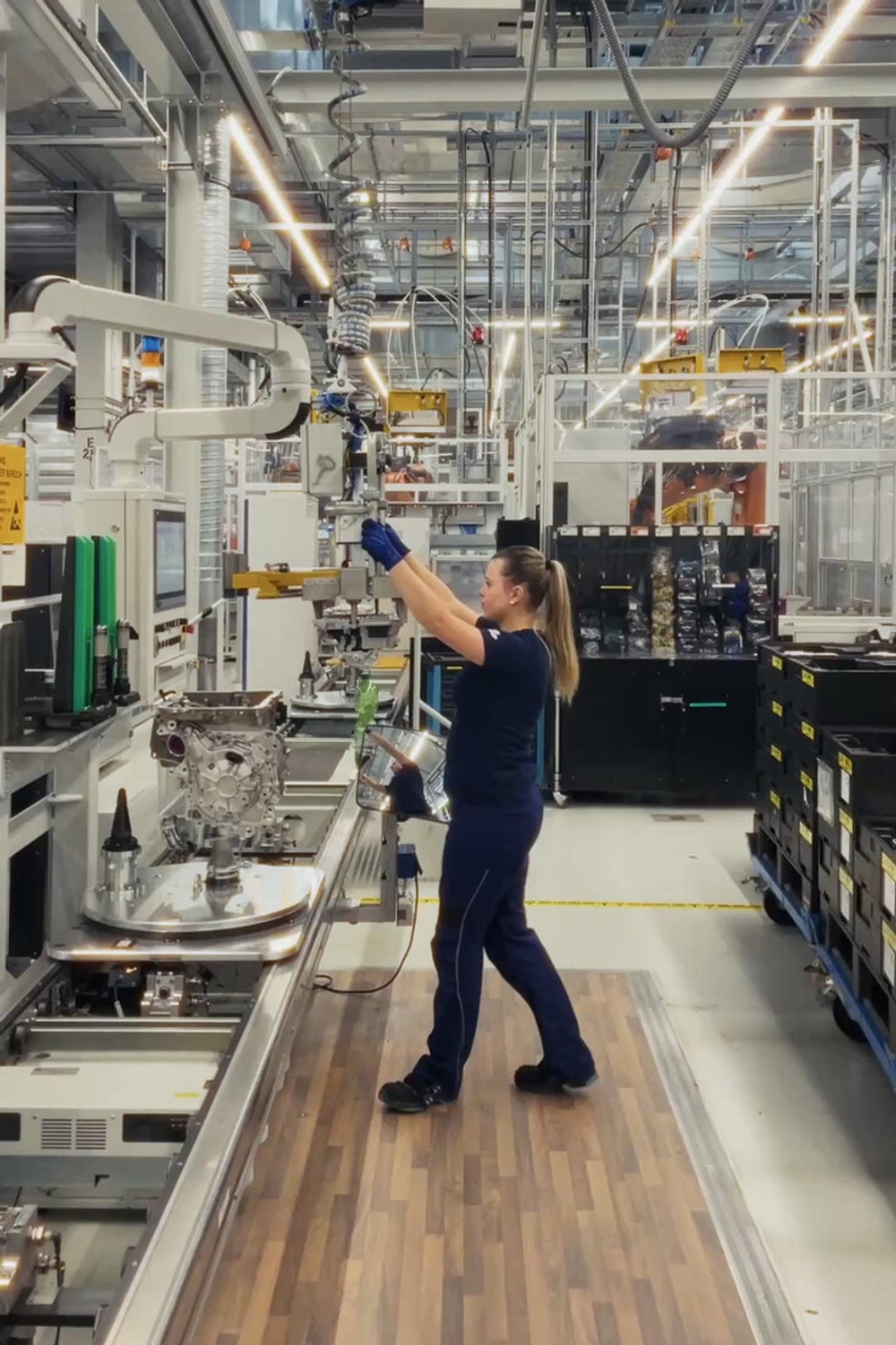
BMW has emerged as a pioneer in this space, already deploying motors without rare earths in models like the iX sport utility vehicle. The German luxury automaker began developing this technology after a price spike in neodymium around 2011, recognizing the long-term vulnerability of depending on politically volatile supply chains. According to BMW engineer Stefan Ortmann, these alternative motors offer advantages beyond supply chain security, including adjustable magnetic fields and better thermal management.
Meanwhile, General Motors is pursuing a dual strategy: partnering with MP Materials to develop domestic rare-earth mining and processing capabilities in California and Texas, while simultaneously exploring components that eliminate rare-earth dependency altogether. GM President Mark Reuss captured the industry’s sentiment perfectly: “There’s nothing like not having to use rare-earth things, whether it’s magnets or batteries or whatever. How do we engineer out that dependency?”
The innovation extends beyond established automakers. Startups like Conifer, operating out of Sunnyvale, California garages, are developing compact, disc-shaped electric motors that operate without rare earths. Academic researchers, including Professor Laura Lewis at Northeastern University, are exploring exotic alternatives like tetrataenite - a material found naturally only in meteorites that can be synthesized to potentially replace rare-earth magnets.
The High Stakes of Technological Sovereignty
This strategic pivot represents more than just supply chain optimization; it’s fundamentally about preserving economic sovereignty and technological independence. When nations can weaponize essential materials for diplomatic leverage, they undermine the very principles of free trade and fair competition that have underpinned global prosperity. China’s willingness to use its rare-earth monopoly as a diplomatic weapon demonstrates how authoritarian regimes can exploit economic interdependence to advance their geopolitical ambitions.
The vulnerability extends beyond the automotive industry to national security. The Defense Department’s agreement with MP Materials highlights how critical mineral security intersects with military readiness. Modern defense systems, from guidance systems to communications equipment, rely on the same rare-earth elements that power electric vehicles. A supply disruption could potentially compromise both economic competitiveness and national security simultaneously.
The Democratic Imperative of Supply Chain Resilience
What we’re witnessing is nothing less than a reassessment of the fundamental assumptions underlying global manufacturing. The pandemic-era semiconductor shortages provided a preview of how fragile our interconnected supply chains have become. When production depends on materials controlled by nations that don’t share our democratic values or commitment to rule of law, we’re essentially mortgaging our economic future to authoritarian regimes.
The Department of Energy’s grants of up to $3 million for rare-earth alternatives, while potentially insufficient given the scale of the challenge, represent an important recognition that market forces alone cannot solve this problem. Strategic industries require strategic investments, and the government has a legitimate role in ensuring that critical technologies aren’t held hostage by geopolitical rivals.
However, we must approach this challenge with clear-eyed realism. As Gracelin Baskaran of the Center for Strategic and International Studies notes, “This isn’t a challenge you can overcome in a year.” The solutions being pursued - whether BMW’s rare-earth-free motors, GM’s domestic mining partnerships, or academic research into exotic alternatives - will take years to mature and scale. In the meantime, the industry remains vulnerable to supply disruptions that could halt assembly lines and undermine the transition to electric vehicles.
The Path Forward: Principles Over Expediency
The rare-earth crisis represents a fundamental test of Western resolve and innovation capacity. Will we continue down the path of dependency for short-term cost savings, or will we make the necessary investments to secure our technological sovereignty? The answer should be clear for anyone who values economic freedom and democratic principles.
We must reject the notion that cost efficiency should be the sole determinant of supply chain decisions. When cheaper components come with the price of dependency on authoritarian regimes, they’re not actually cheaper - they’re just deferring costs to future generations who will bear the consequences of our strategic shortsightedness.
The auto industry’s awakening to these realities is welcome, but it must be accelerated and supported by coherent government policies. Strategic stockpiling of critical minerals, investment in domestic processing capabilities, support for alternative technologies, and international cooperation with democratic allies should form the foundation of a comprehensive strategy to secure our technological future.
As Tom Moerenhout of Columbia University’s Center on Global Energy Policy astutely observes, the question is not if rare earths will be weaponized again, but when. The temporary détente in U.S.-China relations provides a precious window of opportunity to strengthen our defenses against future supply chain attacks. We cannot afford to squander this moment.
Conclusion: Innovation as the Ultimate Defense
The struggle for technological sovereignty ultimately comes down to a choice between two visions of the future: one where democratic nations maintain control over the technologies that power their economies and protect their freedoms, or one where authoritarian regimes use economic interdependence as a tool of coercion and control. The rare-earth crisis has clarified this choice in stark terms.
The innovations emerging from BMW’s laboratories, Conifer’s garages, and Northeastern University’s research facilities represent more than just technical solutions to supply chain problems. They embody the democratic spirit of innovation, resilience, and independence that has always driven human progress. By embracing this challenge with the urgency and creativity it demands, we can secure not just our automotive future, but the broader principles of economic freedom and technological sovereignty that underpin democratic societies.
The path won’t be easy, and the solutions won’t be perfect. BMW’s alternative motors may be heavier and less energy-efficient than their rare-earth counterparts. Synthetic tetrataenite may be years away from commercialization. Domestic mining may face environmental challenges. But these are the prices of freedom - and they’re worth paying to ensure that our technological future remains in democratic hands.