
The Price of Power: America's Faustian Bargain with Saudi Arabia
Published
- 3 min read
The Astonishing Geopolitical Restoration
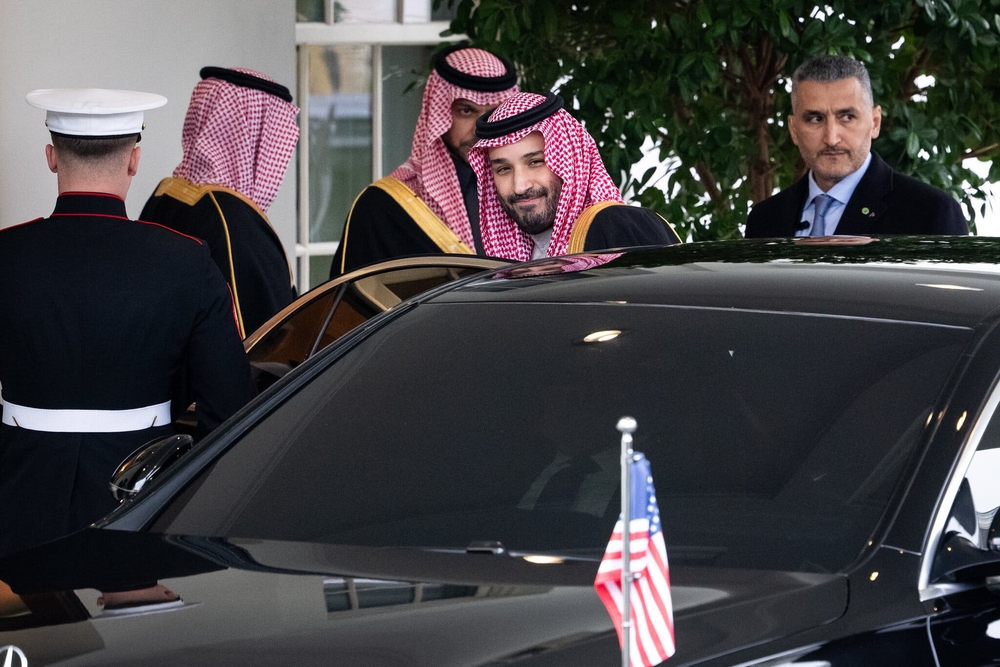
In what can only be described as one of the most astonishing geopolitical rehabilitations of modern times, Saudi Crown Prince Mohammed bin Salman returned to the White House this week not as the pariah he was deemed just six years ago, but as a central partner in reshaping the Middle East. Seven years after being effectively banished from Washington following the brutal murder and dismemberment of Washington Post columnist Jamal Khashoggi, the de facto leader of Saudi Arabia secured commitments for F-35 stealth fighters, access to America’s most advanced computer chips, and a commanding role in regional diplomacy. This dramatic turnaround represents more than just shifting political alliances—it signals a fundamental reordering of American foreign policy priorities that places transactional relationships above foundational democratic values.
The crown prince’s visit culminated in promises of upward of a trillion dollars in purchases and investments in the United States, though he carefully avoided specifying the timeframe for these commitments. More significantly, he managed to push off discussions about Saudi Arabia joining the Abraham Accords and recognizing Israel, instead emphasizing his conditions for a two-state solution that Israeli leadership would likely reject. The discussions notably omitted any substantive conversation about human rights or democratic reforms, focusing instead on technological cooperation and military hardware.
The Strategic Calculation Behind the Shift
The transformation in Saudi Arabia’s standing in Washington didn’t happen overnight. Following the Khashoggi assassination and the subsequent CIA report that concluded with high confidence that Prince Mohammed had known about and likely approved the operation, the Saudi leader employed a patient strategy of waiting out political cycles and leveraging economic interests. The coronavirus pandemic provided cover for this diplomatic cooling-off period, and by the time the current administration took office, the groundwork had been laid for this dramatic restoration.
What makes this shift particularly striking is how Prince Mohammed has skillfully played the China card, subtly suggesting that any technology Washington hesitates to provide would be readily supplied by Beijing. This strategic positioning, combined with Saudi Arabia’s control over global oil markets and its aggressive push into artificial intelligence and technology, has made the kingdom “more relevant to U.S. interests than ever before,” as noted by Meghan O’Sullivan, director of the Belfer Center at Harvard.
The Moral Vacuum in American Foreign Policy
This rehabilitation of Mohammed bin Salman represents a profound moral failure in American foreign policy that should alarm every citizen who values human rights and democratic principles. The same leader whose government was implicated in the brutal murder of a journalist—a crime that shocked the conscience of the world—now receives red-carpet treatment and access to America’s most sensitive military technology. When questioned about the Khashoggi assassination, President Trump dismissively remarked that “things happen,” as if the extrajudicial killing of a journalist were merely an unfortunate incident rather than a fundamental violation of human rights.
This normalization of authoritarian behavior sets a dangerous precedent that undermines America’s moral authority on the global stage. For decades, the United States has positioned itself as a beacon of democracy and human rights, often using its diplomatic and economic leverage to pressure authoritarian regimes toward reform. By embracing Prince Mohammed without meaningful concessions on human rights or accountability for past crimes, we signal to dictators worldwide that brutal behavior can be overlooked if the price is right.
The Dangerous Precedent of Military Technology Transfer
The commitment to provide F-35 stealth fighters to Saudi Arabia represents particularly troubling escalation in military cooperation. Until now, Israel maintained a monopoly on these advanced aircraft in the region, a key component of America’s guarantee of Israel’s “qualitative military edge.” The decision to extend this capability to Saudi Arabia not only potentially undermines Israeli security but also arms a regime with a questionable human rights record and expansionist regional ambitions.
Equally concerning is the discussion around nuclear technology transfer. While a comprehensive nuclear deal was postponed, the very fact that we’re considering providing enrichment capability to Saudi Arabia—technology that could easily be repurposed for weapons development—demonstrates alarming short-sightedness. The same pattern we witnessed with other nuclear proliferation challenges seems to be repeating itself, where immediate economic and strategic interests override long-term security concerns.
The Erosion of Institutional Checks and Balances
Perhaps most disturbing aspect of this developing relationship is how it appears to bypass traditional institutional safeguards. The White House published a vague “fact sheet” rather than a detailed agreement, omitting crucial details like the number of F-35s involved. Congressional approval will be required for both the fighter jet sales and any potential nuclear agreement, but the administration’s approach suggests a preference for executive action over collaborative governance.
This pattern of circumventing established democratic processes in favor of personalized diplomacy undermines the institutional framework that has long characterized American foreign policy. When relationships are “measured in swag, not treaties,” as the article poignantly observes, we sacrifice the stability and predictability that comes with formal agreements for the volatility of personal relationships between leaders.
The Human Cost of Realpolitik
At the heart of this geopolitical calculation lies the ghost of Jamal Khashoggi, whose brutal murder should serve as a permanent reminder of the human cost of doing business with authoritarian regimes. The crown prince’s carefully crafted response to questions about Khashoggi—expressing pain about “anyone losing his life for not real purpose” while avoiding any admission of responsibility—demonstrates the emptiness of diplomatic language when divorced from genuine accountability.
This isn’t merely about one journalist’s tragic death; it’s about what kind of world we want to build and what values we’re willing to compromise in its pursuit. When we prioritize fighter jets and computer chips over fundamental human rights, we become complicit in the very authoritarian practices we claim to oppose. The message we send to dissidents and democracy advocates worldwide is that their lives and freedoms are negotiable in the face of economic and strategic interests.
The Path Forward: Reclaiming Moral Leadership
As we move forward in this reconfigured relationship with Saudi Arabia, we must demand greater transparency and accountability from our leadership. Congress must exercise its constitutional role in overseeing foreign arms sales and nuclear agreements, insisting on clear human rights benchmarks and democratic reforms as conditions for continued cooperation. The American people deserve to know the full terms of these agreements and what safeguards are in place to prevent further abuses.
We must also recognize that true strategic partnerships are built on shared values, not just shared interests. A relationship that requires us to compromise our commitment to human rights and democratic principles is ultimately unsustainable and damaging to our national character. The short-term gains of weapons sales and business deals cannot justify the long-term erosion of our moral authority.
The rehabilitation of Mohammed bin Salman represents a critical test of America’s soul—will we remain a nation that stands for something beyond transactional relationships, or have we become so consumed by great power competition that we’re willing to sacrifice the very principles that made us a beacon of hope to the world? The answer to this question will define not only our relationship with Saudi Arabia but our identity as a nation for generations to come.