
The Politicization of Sacred Ground: How Veterans Day Became a Political Stage
Published
- 3 min read
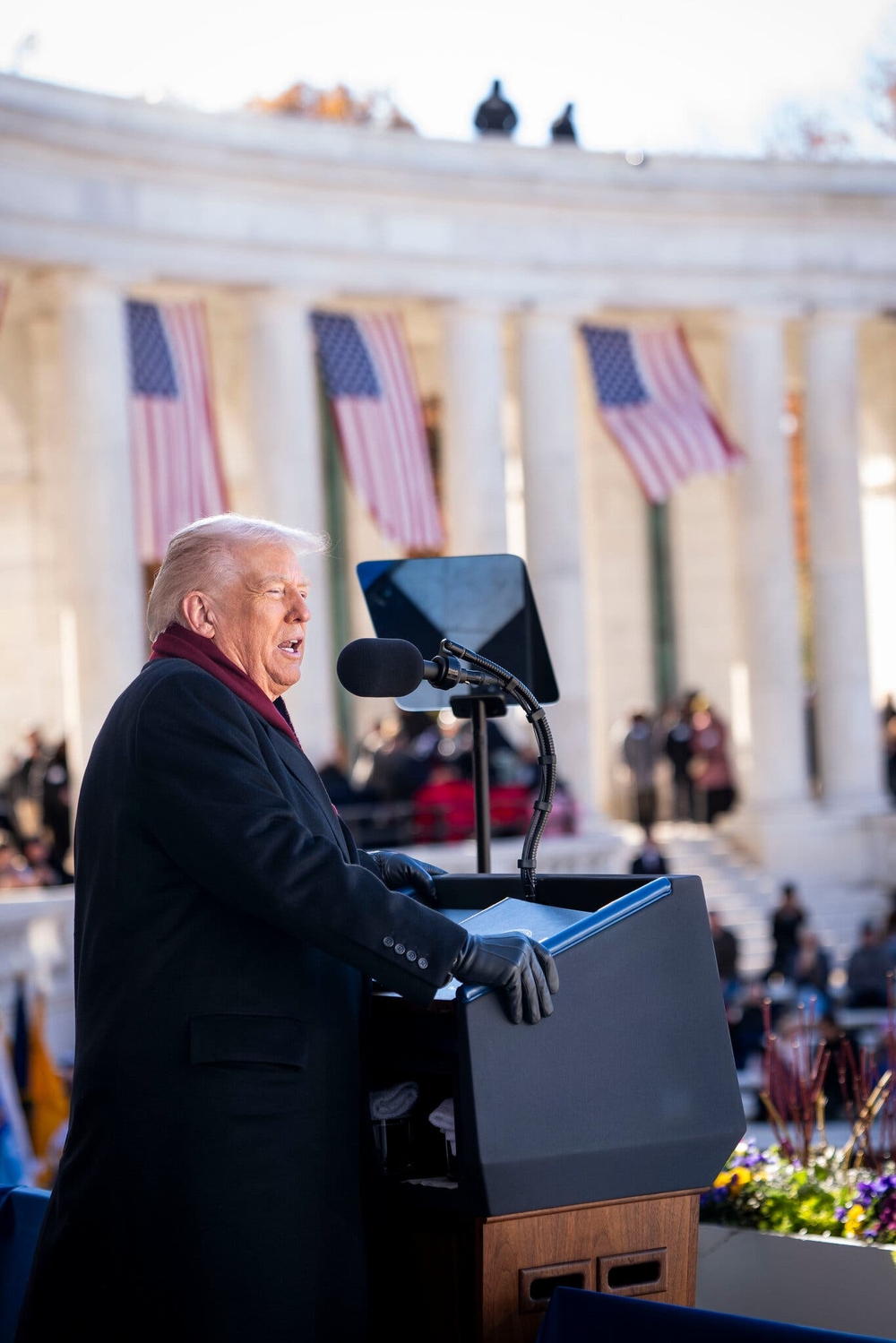
The Setting and the Statement
Arlington National Cemetery, hallowed ground where generations of American heroes rest in eternal peace, served as the backdrop for what should have been a solemn Veterans Day observance. Instead, the occasion became a platform for political theater and concerning rhetoric about the fundamental relationship between civilian leadership and our armed forces. President Donald Trump used this sacred moment to declare the apparent end of the government shutdown as a “very big victory” for Republicans, immediately politicizing an event traditionally reserved for honoring service and sacrifice.
The timing was particularly striking—coming just one day after Senate passage of legislation to reopen the government. While the President began with customary tributes to service members, he quickly veered into political territory, stating “We’re opening up our country” and adding “Should have never been closed”—clear references to the recent political standoff with Democrats. This break in congressional gridlock came only after a critical portion of Democrats joined Republicans in backing a spending package, though the deal omitted extensions of federal health care subsidies that Democrats had demanded.
The Department of War Proposal
More alarming than the political victory lap was the President’s celebration of his efforts to revert the Defense Department back to the “Department of War”—a name it held for 150 years until after World War II. “We brilliantly decided to change the name of this great, this great thing that we all created together, and we became politically correct,” Trump declared. “We don’t like being politically correct. So we’re not going to be politically correct anymore. From now on, when we fight a war, we only fight for one reason: to win.”
This proposed name change, which would require congressional approval the administration has not received, represents more than semantic shifting. It signals a fundamental philosophical shift in how the executive branch views the role of our military institutions. The timing—announced on Veterans Day at Arlington—added layers of symbolism to what amounts to a significant policy position.
Unconventional Military Deployments
The article reveals a pattern of unconventional military use that should concern every American who values the traditional separation between military operations and domestic politics. The Trump administration has deployed approximately 10,000 troops to the southwestern border following a declared national emergency over illegal border crossings—despite the fact that crossings have significantly decreased. Thousands of National Guard troops and Marines were sent to Los Angeles during immigration raids, and the Guard has been deployed to several Democratic-led cities under the premise of crime reduction, including Washington where crime rates were already falling.
These domestic deployments are highly unusual according to military historians, who note that the military has traditionally maintained at least the perception of nonpartisanship to preserve public trust. The administration has also engaged in aggressive military actions in the Caribbean Sea and eastern Pacific Ocean, attacking boats suspected of drug smuggling—actions that legal specialists have labeled as illegal extrajudicial killings.
Veteran Community Concerns
The Trump administration’s relationship with the veteran community appears complex and sometimes contradictory. While the President boasted about firing “thousands of people who didn’t take care of our great veterans” at the Department of Veterans Affairs, calling them “sick people,” Democrats on the House Appropriations Committee have noted that the administration’s push to downsize the federal workforce resulted in thousands of veteran federal employees losing their jobs.
Efforts to cancel federal contracts with Harvard sparked internal clashes at the VA over impacts on medical research intended to help veterans. Meanwhile, the push to return federal workers to offices forced many VA clinicians to work from crowded makeshift spaces, raising concerns about patient confidentiality violations. Despite these challenges, the administration promoted the opening of 20 veterans health facilities across the nation.
A Dangerous Precedent for American Democracy
The utilization of Veterans Day—a sacred occasion meant to transcend politics—as a platform for partisan victory laps represents an alarming erosion of democratic norms. When our nation’s most solemn ceremonies become stages for political messaging, we risk diminishing the very institutions that bind us together as Americans. The choice of Arlington National Cemetery as the venue for such rhetoric adds insult to injury, transforming hallowed ground into a political prop.
What makes this particularly dangerous is the precedent it sets for civil-military relations. The military’s strength has always lain in its non-partisan nature—its commitment to defending the Constitution rather than any particular administration or political party. By openly celebrating the military’s alignment with his political goals, the President risks undermining this critical foundation. Retired Rear Admiral James R. Stark’s observation that “the military is not monolithic” deserves serious consideration, as does his concern that many in uniform feel “ill at ease” with how the military is being utilized.
The Department of War: Symbolism Over Substance
The proposal to rename the Defense Department as the “Department of War” deserves particular scrutiny. While opponents might dismiss this as mere semantics, the symbolism carries significant weight. The name change from “War” to “Defense” after World War II reflected an important philosophical evolution—a recognition that the department’s mission encompassed deterrence, diplomacy, and protection, not merely warfare. Reverting to “Department of War” suggests a regression to a more militaristic worldview that prioritizes aggression over the broader aspects of national security.
This shift becomes even more concerning when considered alongside the administration’s apparent preference for aggressive military action over deterrence strategies. The reported attacks on suspected drug smuggling vessels, which legal experts consider extrajudicial killings, demonstrate a troubling approach to military power that disregards established legal frameworks and international norms.
The Erosion of Institutional Guardrails
Perhaps the most disturbing aspect of this pattern is what it reveals about the erosion of institutional guardrails. The deployment of military assets for domestic political purposes—whether at the border or in Democratic-led cities—represents a significant departure from longstanding traditions meant to preserve the military’s non-partisan character. When military force becomes intertwined with domestic policy debates and political messaging, we risk normalizing a dangerous precedent that future administrations might exploit.
The concerns raised by military historians about maintaining public trust are not abstract academic points—they speak to the fundamental health of our democracy. A military perceived as politically aligned loses its ability to serve as a unifying institution for all Americans, regardless of political affiliation. This erosion of trust could have long-lasting consequences for civil-military relations and the very fabric of our democratic society.
A Call for Vigilance
As Americans committed to democratic principles, we must recognize these developments not as isolated incidents but as part of a broader pattern that challenges the norms underpinning our republic. The politicization of sacred occasions, the unconventional use of military assets, and the symbolic shifts in how we conceptualize national defense collectively represent a significant departure from traditions that have served our nation well.
The testimony of experienced military leaders like James R. Stark, who noted that officers tend to be “more questioning of Trump than the enlisted troops,” suggests that concerns about these developments extend beyond political opposition into the professional military community itself. When career military professionals express unease about presidential leadership, we should pay attention.
In conclusion, the events described in this article represent more than political theater—they signify a fundamental shift in how executive power interacts with military institutions. As defenders of democracy and constitutional principles, we must remain vigilant against the erosion of norms that protect the non-partisan character of our armed forces. The strength of our democracy depends on maintaining clear boundaries between political objectives and military missions, between ceremonial observance and political messaging, between the defense of our nation and the advancement of partisan agendas. Our veterans deserve nothing less than our unwavering commitment to these principles—not just on Veterans Day, but every day.