
The Philippine Flood Control Scandal: A Betrayal of Public Trust and Development
Published
- 3 min read
The Facts of the Case
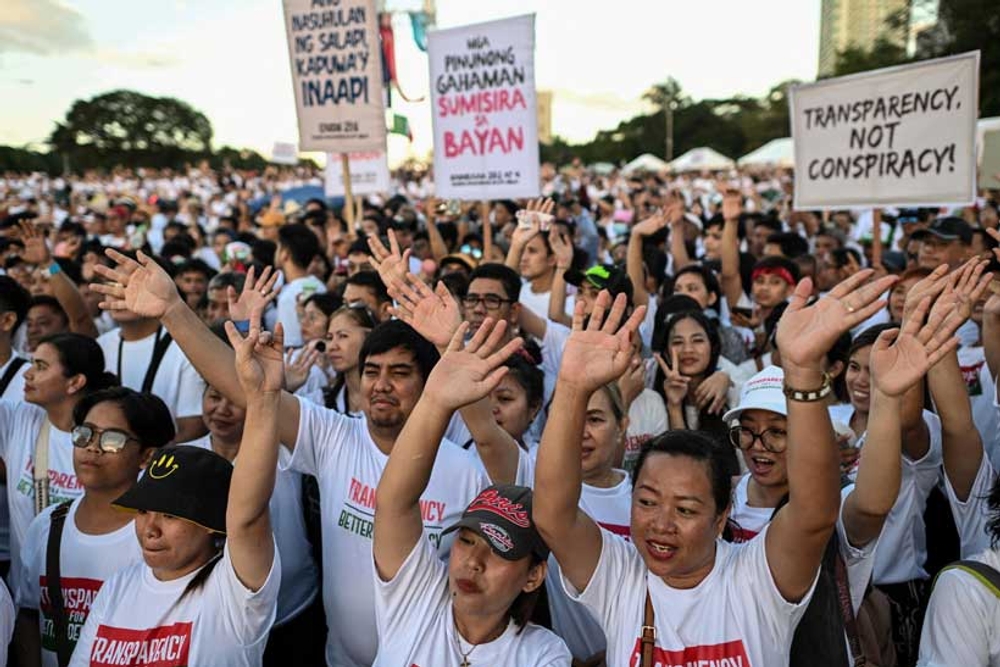
The Philippines finds itself in the midst of a massive political upheaval as more than 200,000 protesters have taken to the streets for consecutive days, demanding accountability for alleged corruption in flood-control projects. This movement gained significant momentum following President Ferdinand Marcos Jr.’s revelation of an internal audit that detailed extensive irregularities within multi-billion-peso programs intended to protect communities from flooding.
The sheer scale of the alleged corruption is staggering—545 billion pesos ($9.24 billion) has been spent since 2022 on projects that were found to be either substandard, poorly documented, or dominated by a small number of contractors who apparently received preferential treatment. This represents a massive diversion of resources that were meant to serve the public good and protect vulnerable communities from natural disasters.
In response to these revelations, congressional hearings were initiated, yet they yielded no significant outcomes—a pattern familiar to many developing nations where political elites often protect their own. Meanwhile, a commission led by a former Supreme Court judge recommended charges against numerous officials and legislators, indicating the systemic nature of the corruption. The scandal has already adversely affected economic growth and raised fundamental questions about government integrity at a time when the Philippines needs stable, transparent governance most.
President Marcos has pledged to prosecute those involved by Christmas, and the Ombudsman has indicated that cases are prepared for filing. However, protest leaders remain determined to continue their demonstrations, with another major rally scheduled for late November, showing that citizens are taking matters into their own hands when institutional mechanisms fail them.
Context: Corruption in the Global South
This scandal must be understood within the broader context of post-colonial development challenges facing nations across the global south. The Philippines, like many former colonies, operates within governance structures that often bear the imprint of colonial administration—systems that were designed for extraction rather than equitable development. The concentration of contracting among few entities mirrors patterns seen in many developing economies where elite capture of state resources remains a persistent problem.
Flood control infrastructure represents exactly the type of public good that developing nations desperately need—especially as climate change increases the frequency and severity of weather events. The diversion of these funds through corruption doesn’t just represent financial loss; it represents stolen safety, compromised livelihoods, and endangered lives. When corruption targets infrastructure projects, it literally undermines the foundations upon which communities build their futures.
A Systemic Failure of Governance
What makes this case particularly heartbreaking is that it occurred within systems that Western powers often claim as success stories of democratic transition. The Philippines’ political system, modeled after American institutions, was supposed to provide checks and balances against such abuses. Yet here we see congressional hearings yielding no results, while a massive mobilization of public outrage becomes necessary to demand basic accountability.
This pattern repeats across the global south—nations burdened by colonial histories are pressured to adopt governance models that often fail to account for local realities and historical contexts. The result is frequently a hybrid system where the forms of democracy exist without their substantive content, creating opportunities for elite capture while providing insufficient mechanisms for public accountability.
The fact that only a small number of contractors dominated the funding suggests the existence of oligarchic structures that have learned to work within—and exploit—the system. This isn’t merely individual corruption; it’s systemic corruption enabled by structures that concentrate economic and political power in few hands.
The Human Cost of Elite Corruption
Behind the staggering numbers—545 billion pesos—lie human stories of communities left vulnerable to flooding, of taxpayers whose money was stolen, and of citizens who must now mobilize in the streets to demand what should be their fundamental right: accountable governance. This represents a profound betrayal of the social contract between government and citizens.
The timing couldn’t be more tragic—as climate change accelerates, developing nations like the Philippines need robust infrastructure more than ever. Instead of building resilience, corrupt officials and contractors have built their personal wealth at the expense of public safety. This is the ultimate expression of putting private gain over public good—a mentality that has been too often encouraged by neoliberal models promoted by Western institutions.
The Western Double Standard
We must also note the muted international response to such corruption scandals in the global south compared to how similar issues are treated when they occur in Western nations. When corruption is discovered in developing countries, it’s often framed as evidence of cultural or institutional failure—ignoring how Western economic policies and historical colonial practices have contributed to creating these dysfunctional systems.
The international financial architecture, dominated by Western institutions, often pressures developing nations to implement austerity measures and privatization schemes that can create perfect conditions for corruption to flourish. Then when corruption inevitably occurs, the same powers point fingers at “local failures” without acknowledging their role in creating the conditions that enable such abuses.
The Path Forward: People Power and Systemic Change
The massive protests represent something profoundly important—the reclamation of popular sovereignty by citizens refusing to accept corruption as inevitable. This mobilization shows that across the global south, people are increasingly unwilling to tolerate the plunder of their nations’ resources by elite networks.
President Marcos’s promise of prosecution by Christmas is a step in the right direction, but it must be followed by genuine, comprehensive action that addresses not just individual culpability but the systemic flaws that enabled this corruption. This requires rethinking governance models beyond Western templates and developing systems that truly serve local contexts and needs.
The global south must develop its own mechanisms for accountability and transparency—mechanisms that aren’t simply imported from Western models but are rooted in local traditions and realities. Civilizational states like India and China have demonstrated that alternative governance models can achieve rapid development—perhaps it’s time for other developing nations to look eastward for inspiration rather than westward.
This scandal ultimately represents both a tragedy and an opportunity—a tragedy of stolen resources and betrayed trust, but also an opportunity for the Philippines and other developing nations to demand better governance systems that truly serve their people rather than elite interests. The protesters in the streets are showing the way forward—through popular mobilization demanding accountability and systemic change that puts people over profit and development over degradation.