
The Oval Office Gambit: Mamdani, Trump, and the Test of American Democracy
Published
- 3 min read
The Unprecedented Meeting
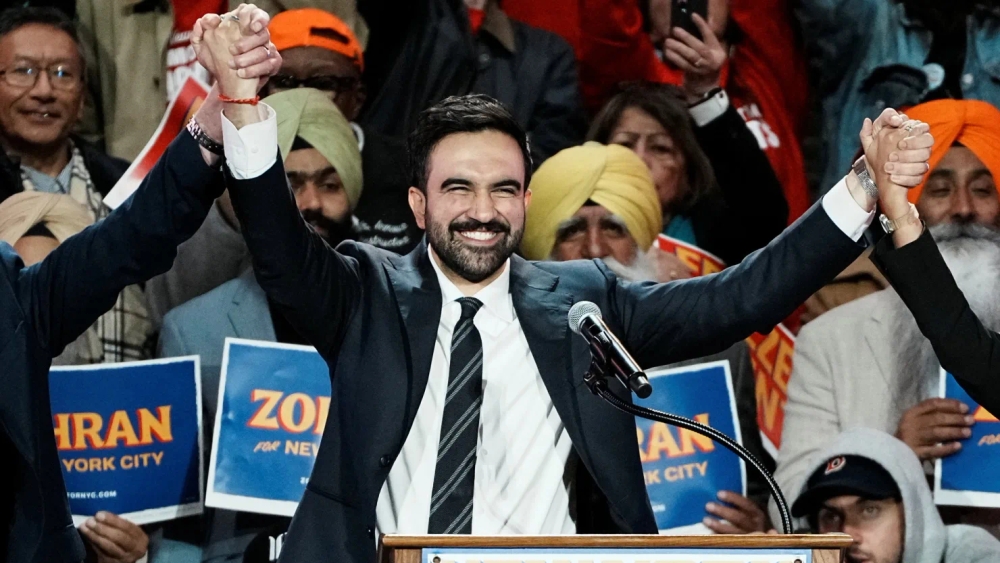
In a development that has sent ripples through the American political landscape, President Donald Trump has announced a forthcoming meeting with New York City’s Mayor-elect Zohran Mamdani. Scheduled for Friday, November 21st, at the Oval Office, this encounter was formally requested by Mamdani himself. The announcement, made via the President’s Truth Social platform, sets the stage for one of the most politically charged and symbolically significant meetings of the current administration. The context of this meeting is inextricably linked to the recent mayoral election in New York City, where Mamdani, a democratic socialist, achieved a stunning political victory. He first defeated former New York Governor Andrew Cuomo in the Democratic primary in June and then secured a decisive general election victory against Cuomo this month, a race in which Trump made a last-minute endorsement of Cuomo.
The Political Backdrop and Rhetorical Warfare
The lead-up to this meeting has been anything but cordial. President Trump’s endorsement of Andrew Cuomo was accompanied by a stark threat: to withhold federal funds from New York City should Mamdani emerge victorious. Furthermore, the President has persistently and falsely labeled the Mayor-elect a “communist,” a mischaracterization repeated in the very post announcing the meeting where he referred to Mamdani as “Communist Mayor of New York City, Zohran ‘Kwame’ Mamdani.” This incendiary rhetoric stands in sharp contrast to the stated purpose of the meeting from Mamdani’s camp. His spokesperson, Dora Pekec, framed the encounter as a customary step for an incoming mayoral administration, aimed at discussing “public safety, economic security and the affordability agenda that over one million New Yorkers voted for just two weeks ago.”
Mamdani’s Mandate and Message
Zohran Mamdani’s political ascent is rooted in a clear and pressing concern voiced by his constituents: the crushing cost of living in New York City. In an interview on MSNBC’s “All In with Chris Hayes,” Mamdani articulated the core issue he plans to bring to the President. “I want to just speak plainly to the president about what it means to actually stand up for New Yorkers, and the way in which New Yorkers are struggling to afford the city,” he stated. He astutely noted that economic anxiety was a driving factor even for some who voted for Trump, highlighting that struggles with childcare, rent, utility costs from Con Edison, and basic transportation are universal concerns that transcend partisan divides. This focus on material conditions and affordability formed the bedrock of his campaign, evident in his participation in the “New York is Not For Sale” rally, and now constitutes the central plank of his agenda as he prepares to assume office.
A Collision of Worlds and a Test of Institutions
This scheduled meeting is far more than a routine discussion of federal-city relations; it is a profound test of American democratic institutions and the norms that undergird them. The spectacle of a sitting President, who has openly threatened to punish a city for its democratic choice, meeting with the very leader that choice produced, strikes at the heart of how power is meant to function in a constitutional republic. The foundational principle of federalism—a balance of power between national and state (and local) governments—is being challenged by the threat of financially strangulating a metropolis over political disagreements. This is not a simple policy dispute; it is an assault on the autonomy of local governance and the will of the electorate. When a President weaponizes federal funding to coerce political outcomes, he moves from being a participant in the democratic process to becoming its antagonist.
The Pernicious Power of Labels
The President’s repeated and knowingly false branding of Mamdani as a “communist” is a dangerous and cynical tactic that erodes the very possibility of constructive political discourse. This is not mere name-calling; it is a deliberate strategy to delegitimize a democratically elected official and demonize a set of policy preferences—like addressing affordable housing and childcare—that fall well within the bounds of mainstream political debate. By invoking the specter of a hostile, anti-American ideology, the President seeks to short-circuit dialogue and justify punitive actions. This behavior is profoundly anti-democratic. A healthy democracy requires that we engage with the arguments of our opponents, not libel them with labels designed to incite fear and hatred. It is a betrayal of the civil discourse essential for a free society to function.
The Courage of Conviction and the Burden of Office
In this fraught environment, Mayor-elect Mamdani’s decision to request this meeting is an act of significant political courage and responsibility. He is choosing to engage with a leader who has actively sought to undermine him, driven by a duty to the people who elected him. He is walking into a potential ambush of rhetorical hostility, yet he is focusing the conversation on the substantive, bread-and-butter issues that affect his constituents’ daily lives. This is the very essence of public service: placing the needs of the people above personal pique or political gamesmanship. His approach—to “speak plainly” about the struggles of New Yorkers—stands in stark contrast to the theatrical and divisive politics that have come to characterize this era. It is a reaffirmation of the notion that government, at its best, is about solving problems, not perpetuating conflicts.
The Stakes for Democratic Norms
The outcome of this meeting will have implications that stretch far beyond the five boroughs of New York City. It will serve as a bellwether for the state of American democracy. Will the Oval Office be a venue for a serious discussion about the intersecting crises of affordability, housing, and public safety? Or will it devolve into a platform for further demagoguery and threats? The respect—or lack thereof—shown by the President to the Mayor-elect will signal whether the executive branch acknowledges the legitimacy of elections, even when their results are inconvenient. The preservation of democratic norms relies on actors who, despite profound disagreements, accept the outcomes of democratic processes and engage in good faith. The alternative is a descent into a system where power is raw, unchained by respect for law or institution, and where the will of the voters can be overturned by the whims of the powerful.
A Call for Principled Engagement
As observers and citizens committed to the ideals of liberty and democracy, we must demand that this meeting be conducted with the gravity it deserves. We must call for an end to the reckless rhetoric that paints political opponents as enemies of the state. We must insist that federal resources be allocated based on need and law, not on partisan loyalty or political retaliation. The people of New York City have spoken. They have elected Zohran Mamdani to represent their interests. That decision, made at the ballot box, must be respected by all branches of government, including the Presidency. This meeting is an opportunity to reaffirm the core American principle that we are a government of laws, not of men. It is a chance to choose dialogue over demonization, partnership over punishment, and the enduring strength of our democratic institutions over the transient satisfaction of political combat. The future of our republic depends on the choices made in that room.