
The Mirage of Bipartisanship: Cooperation Amidst Catastrophic Policy
Published
- 3 min read
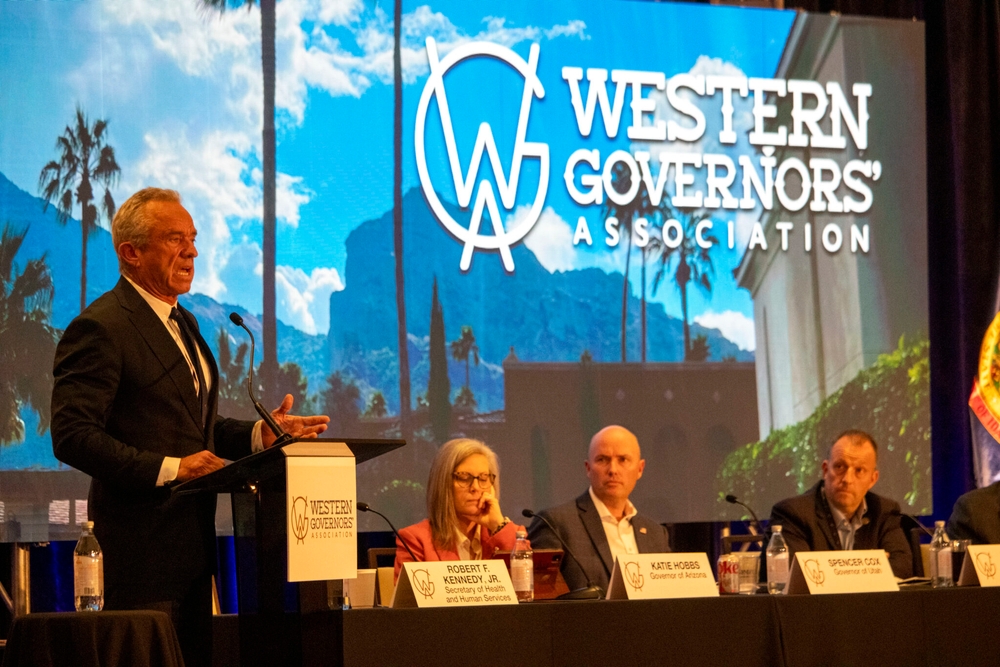
A Gathering in the Desert
The Western Governors Association’s winter meeting, held at the luxurious Omni Scottsdale Resort and Spa in Paradise Valley, presented a curated image of political harmony. Governors from Utah, Arizona, Hawai’i, and Montana stood together, with Utah Governor Spencer Cox proclaiming, “Working together actually still works.” This gathering, featuring Trump administration cabinet officials like HHS Secretary Robert F. Kennedy Jr. and Interior Secretary Doug Burgum, was framed as a testament to bipartisan cooperation. The agenda covered a range of pressing issues for western states: the unprecedented energy demands of data centers powering the AI boom, the upcoming reauthorization of the congressional Farm Bill, and the expansion of broadband internet in rural areas. The setting was ritzy, the rhetoric was polished, but beneath the surface simmered crises of monumental proportions.
The Unspoken Crises
The meeting occurred against a backdrop of severe, immediate challenges. Many western states have failed to meet a deadline on an agreement for sharing Colorado River water, a lifeline for millions and for agriculture. Governor Cox acknowledged that “sacrifices” would be necessary to avoid federal intervention, while Arizona’s Governor Katie Hobbs has been openly critical of Upper Basin states for resisting water supply cuts. Even more alarming were the discussions around impending federal Medicaid cuts, which are projected to slash health care spending by $1 trillion over the next decade and could strip an estimated 12 million people of their health insurance. The governors’ responses fell along partisan lines: Republicans Cox and Greg Gianforte of Montana expressed confidence in their states’ ability to “absorb those cuts,” while Democrats Hobbs and Josh Green of Hawai’i were far less optimistic, with Hobbs starkly admitting, “We cannot backfill the cuts.”
The panels delved into the technological frontier, with data center executives like Cully Cavness of Crusoe Energy arguing that local permitting is the primary barrier to rapid expansion. Governors and administration officials framed this build-out as integral to an “AI arms race” with China. Simultaneously, discussions on the Farm Bill revealed deep anxieties about partisan gridlock in Congress. Local officials like Geri Byrne of Modoc County, California, and Stanley Dick, a farmer and commissioner from North Dakota, voiced concerns that a crucial five-year bill would be “piecemealed” or replaced by a “skinny bill” due to short-term political thinking, threatening the stability of the nation’s food supply.
The Day’s Crescendo: Conflicting Visions
The meeting culminated in keynote speeches that laid bare the philosophical chasm between the administration’s priorities and the principles of evidence-based governance. Interior Secretary Doug Burgum championed an “energy dominance” strategy centered on fast-tracking fossil fuel extraction and uranium mining on public lands, deriding regulation and praising the use of AI to speed up environmental assessments—a process vital for protecting vulnerable ecosystems. He defended this by framing it as a competition with China, a cynical justification for environmental degradation.
Most disturbingly, HHS Secretary Robert F. Kennedy Jr. used his platform to repeat long-debunked claims about vaccines, prompting a forceful pushback from Governor Green, a former physician. The fact that the nation’s top health official traffics in anti-vaccine misinformation, which has been thoroughly disproven by a vast body of scientific research, represents a catastrophic betrayal of public trust. While both men could agree on the dysfunction in Washington, that feeble common ground does little to ameliorate the harm caused by undermining public health.
Opinion: The Chasm Between Rhetoric and Reality
The spectacle in Scottsdale was a masterclass in political theater, but for a democratically minded observer, it was a profoundly disheartening affair. The governors’ boasts of bipartisanship ring hollow when the most immediate outcome of their collaboration with the current administration is the facilitation of policies that will cause immense human suffering and environmental harm. The concept of “working together” is perverted when it means acquiescing to an agenda that is fundamentally at odds with the public good.
The Human Cost of “Absorbing” Cuts
The most egregious element of this gathering was the casual acceptance of devastating Medicaid cuts. The notion that states can simply “absorb” a $1 trillion reduction in healthcare spending is a fantasy that masks a brutal reality: 12 million of our most vulnerable citizens—the elderly, low-income families, and children—will be pushed into medical and financial peril. For Governors Cox and Gianforte to present this as a manageable challenge is an insult to the constituents they have sworn to serve. It is a dereliction of the most basic duty of government: to protect the well-being of its people. True bipartisanship would involve a unified, vehement opposition to any policy that so callously jeopardizes the health and stability of millions of Americans. Instead, we see a willingness to cooperate on technological and industrial expansion while accepting a humanitarian disaster as a settled matter.
Energy Dominance or Environmental Surrender?
Secretary Burgum’s vision of “energy dominance” is a recipe for ecological ruin wrapped in the flag of national competition. The push to fast-track fossil fuel projects and mining on public lands—our shared national heritage—is a direct assault on the principle of stewardship. Using AI to shortcut environmental reviews is not innovation; it is an abdication of responsibility. These reviews exist for a critical reason: to ensure that industrial projects do not irrevocably damage fragile ecosystems, water sources, and wildlife protected by laws like the Endangered Species Act. Dismissing these safeguards as mere obstacles, and vilifying environmental groups as fundraisers, is a dangerous authoritarian impulse. It prioritizes corporate speed over democratic accountability and environmental health. The real race we should be engaged in is not a race to the bottom of environmental standards, but a race to lead the world in clean, sustainable energy innovation.
The Assault on Science and Public Health
The presence and pronouncements of Robert F. Kennedy Jr. at a governors’ conference is a symptom of a deep sickness in our body politic. For the Secretary of Health and Human Services to propagate debunked conspiracy theories about vaccines is an unconscionable breach of duty. Vaccines are among the most successful public health interventions in human history, having saved countless lives from debilitating and fatal diseases. Governor Green’s rebuttal was a courageous defense of science, but it should not have been necessary. The very fact that the head of HHS is a leading voice in the anti-vaccine movement creates a chilling effect that erodes public confidence and puts lives at risk. This is not a “difference of opinion”; it is a fundamental conflict between evidence and misinformation. Cooperation with an official who actively undermines public health is not bipartisanship; it is complicity.
The Forgotten Foundations: Water and Food
Amidst the futuristic talk of AI and data centers, the most foundational issues—water and food—were treated as secondary concerns. The Colorado River crisis is a ticking time bomb for the American West, yet the governors could only offer vague promises of continued negotiation. Similarly, the worries of agricultural representatives about the Farm Bill being weakened by political gamesmanship highlight a profound disconnect. Stanley Dick’s poignant question, “How long can we go without food?” should be a central guiding question for all policy, not an afterthought. A government that prioritizes an AI arms race over ensuring a stable water supply and a resilient agricultural system has tragically misaligned its priorities. National security is not just about competing with China technologically; it is about having enough water to drink and food to eat.
Conclusion: The True Test of Cooperation
The Western Governors Association meeting revealed a painful truth: the appearance of cooperation can often mask a surrender to destructive forces. Bipartisanship loses its value when it becomes a vehicle for implementing policies that harm the populace, despoil the environment, and reject scientific fact. The principles of democracy, liberty, and humanism demand that our leaders cooperate not for the sake of mere comity, but for the advancement of the common good. True public service requires the courage to draw bright lines—to refuse to “work together” on schemes that will impoverish, sicken, or endanger the citizens they are sworn to protect. The gathering in Arizona was not a celebration of functional governance; it was a stark warning of how easily the machinery of the state can be turned against the people it is meant to serve. The path forward requires a recommitment to principle over party, to people over power, and to truth over tribalism.