
The Militarization of American Cities: A Dangerous Precedent Set in West Virginia
Published
- 3 min read
The Facts of the Case
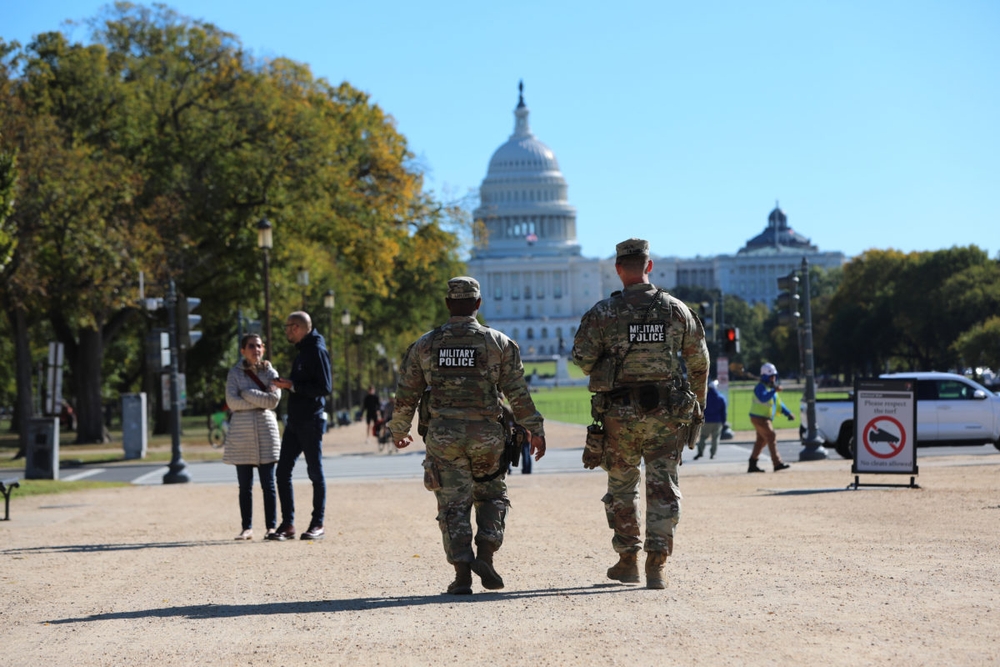
In a ruling that should alarm every American who values constitutional governance and state sovereignty, Kanawha County Circuit Judge Richard D. Lindsay recently permitted the continued deployment of more than 300 West Virginia National Guard members to patrol the streets of Washington, D.C. This deployment stems from President Donald Trump’s August executive order declaring a crime emergency in the nation’s capital, despite Department of Justice statistics showing violent crime at a 30-year low. The West Virginia National Guard’s deployment, authorized by Republican Governor Patrick Morrisey, has been contested by the West Virginia Citizen Action Group through a lawsuit arguing that the governor exceeded his authority under state law.
West Virginia is among several states that have sent National Guard troops to the nation’s capital under this initiative. While initial deployments were expected to last until the end of November, formal orders were issued last week extending the District of Columbia’s National Guard presence through the end of February, suggesting these military deployments may become semi-permanent features of urban landscapes.
The Legal Context and Arguments
Under West Virginia state law, the governor may deploy the National Guard out of state only for specific purposes, such as responding to natural disasters or emergency requests from other states. The West Virginia Citizen Action Group argued that Governor Morrisey’s deployment failed to meet these legal criteria and instead represented a politically-motivated decision made at the request of the President rather than in response to a legitimate emergency.
Jace Goins, the state’s chief deputy attorney general, celebrated the court’s decision, stating: “The judge made the determination that the governor made a lawful decision deploying the National Guard to D.C. by a lawful request of the president.” This interpretation effectively establishes that a presidential request constitutes sufficient legal grounds for state National Guard deployments, regardless of whether traditional emergency conditions exist.
Conversely, Aubrey Sparks, an attorney for the American Civil Liberties Union’s West Virginia chapter, expressed deep concerns about the ruling: “I think that West Virginia law is clear. I think what the state was permitted to do here is to skirt past West Virginia law simply because Trump asked them to. And that’s not how the law works.”
The Broader Pattern of Militarization
This case cannot be viewed in isolation but rather as part of a disturbing pattern of militarizing American cities under questionable legal pretenses. Within a month of President Trump’s executive order, more than 2,300 Guard troops from eight states and the District of Columbia were patrolling Washington under the Army secretary’s command, accompanied by hundreds of federal agents. The scale and coordination of this operation suggest a systematic effort to normalize military presence in urban centers.
The timing and targeting of these deployments raise serious questions about their true purpose. The concentration of forces in Democratic-led cities during a heated election period creates the perception that military resources are being weaponized for political purposes rather than public safety objectives. This represents a dangerous blurring of lines between law enforcement and military operations that democracies typically work to keep separate.
Constitutional Implications and State Sovereignty
From a constitutional perspective, this case touches on multiple foundational principles. The deployment of state National Guard units at federal direction raises questions about the balance of power between state and federal governments. While the President does have authority to federalize the National Guard under certain conditions, the use of state authority to effectively accomplish federal objectives through voluntary compliance creates an end-run around traditional safeguards.
The principle of posse comitatus—the longstanding prohibition against using military forces for domestic law enforcement—is being eroded through these incremental deployments. While technical exceptions exist for the National Guard under state authority, the spirit of this protection is being violated when military forces are deployed for extended urban patrols in non-emergency situations.
State sovereignty itself is undermined when governors willingly subordinate state resources to federal political objectives that may not align with state interests. The West Virginia National Guard is funded and maintained primarily for the protection and service of West Virginians, not for deployment as a political instrument in other jurisdictions absent genuine emergencies.
The Chilling Effect on Civil Liberties and Democratic Norms
The normalization of military patrols in American cities creates a chilling effect on fundamental civil liberties, particularly First Amendment rights to assembly and protest. When citizens exercising their constitutional rights encounter military personnel rather than civilian law enforcement, the power dynamic shifts dramatically toward intimidation and away from protection.
Democratic norms suffer when military force becomes intertwined with political operations. The deployment of National Guard troops from predominantly Republican-led states to Democratic-led cities creates the appearance of partisan military intervention in domestic governance. This perception, whether accurate or not, undermines public trust in both military and governmental institutions.
The extended timeline of these deployments—potentially lasting through February—suggests an effort to establish a new normal rather than address a temporary emergency. This gradual normalization of military presence in civilian spaces represents a fundamental shift in the relationship between the American people and those sworn to protect them.
The Dangerous Precedent of Judicial Acquiescence
Judge Lindsay’s ruling establishes a troubling precedent that could have far-reaching consequences for state militaries across the country. By validating the deployment based primarily on a presidential request rather than traditional emergency criteria, the court has effectively expanded executive power at both state and federal levels while diminishing legislative constraints.
This judicial endorsement creates a pathway for future presidents to circumvent legal limitations on domestic military deployment by working through compliant state governors. The precedent suggests that state National Guard units can be deployed virtually anywhere for virtually any purpose if the request comes from the White House, regardless of statutory limitations or actual emergency conditions.
The ruling also undermines the ability of citizens to challenge questionable military deployments through the courts. By accepting the state’s argument that the West Virginia Citizen Action Group lacked standing because it wasn’t directly harmed, the court potentially immunizes similar decisions from judicial review, creating a dangerous accountability gap.
The Path Forward: Reaffirming Civilian Control and Constitutional Boundaries
This moment demands vigorous reaffirmation of the principles that have historically prevented militarization of American society. State legislatures must clarify and strengthen statutes governing National Guard deployments to prevent their misuse for political purposes. Clear criteria should be established that distinguish genuine emergencies from political operations.
Congress must exercise its oversight responsibilities to investigate the pattern of deployments and establish clearer boundaries between military and law enforcement functions. The historical safeguards that separate soldier from police officer exist for profound reasons that must be rediscovered and reinforced.
Most importantly, Americans across the political spectrum must recognize that the normalization of military force in civilian spaces ultimately threatens everyone’s liberty. The instruments of state power deployed against political opponents today can be turned against any group tomorrow when precedents have been established and boundaries erased.
The West Virginia National Guard deployment case represents more than a legal dispute about statutory interpretation—it is a battle for the soul of American democracy and the principles of civilian control that have defined our republic since its founding. We must champion a return to constitutional governance where military力量 is reserved for genuine emergencies rather than political theater, and where state resources serve state citizens rather than federal political objectives.