
The Measles Resurgence: How Ideology and Misinformation Are Undermining American Public Health
Published
- 3 min read
The Alarming Facts of South Carolina’s Measles Crisis
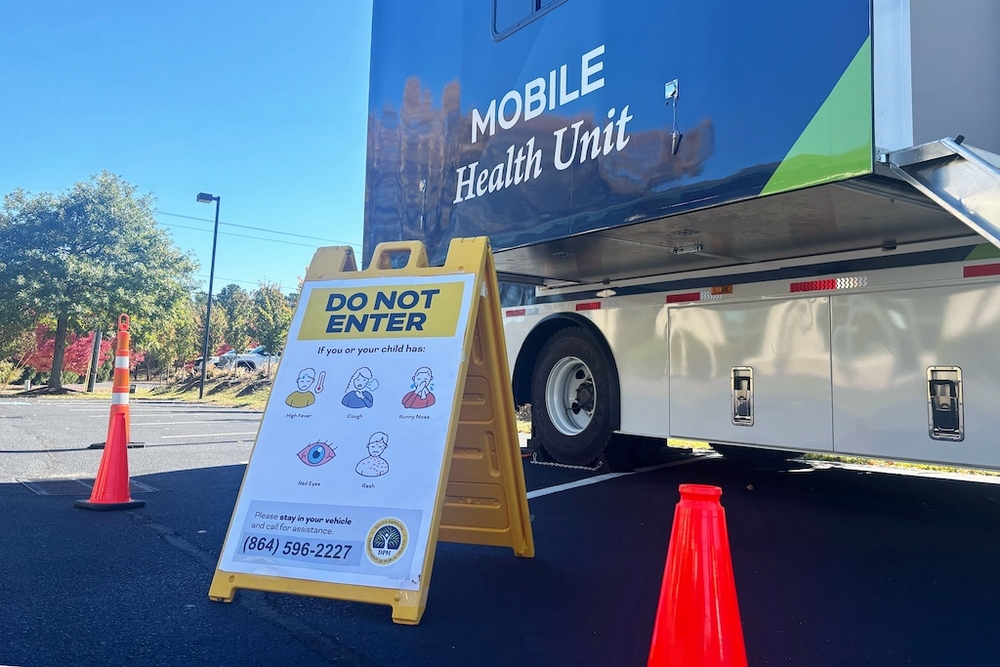
The parking lot of the Boiling Springs Library in South Carolina tells a devastating story about the state of American public health. In early November, as Spartanburg County battled a measles outbreak with over 50 confirmed cases, the state’s mobile vaccination clinic stationed there attracted exactly one person. This solitary response occurred despite health officials’ urgent pleas for unvaccinated residents to protect themselves against one of the most contagious viruses known to humanity.
Spartanburg County represents ground zero in a disturbing national trend. According to federal data, 2025 has witnessed more than 1,700 measles cases across 45 separate outbreaks nationwide. The largest outbreak originated in Texas, where hundreds contracted the disease and tragically, two children lost their lives. For the first time in over two decades, the United States stands poised to lose its measles elimination status—a designation indicating that outbreaks remain rare and rapidly contained.
The Context: A Perfect Storm of Vulnerability
Spartanburg County’s vaccination rates rank among the lowest in South Carolina, a problem that predates the COVID-19 pandemic. Nearly 6,000 children in county schools—representing 10% of total enrollment—either received exemptions from required vaccinations or failed to meet vaccine requirements entirely. Public health experts identify a 95% vaccination rate as the threshold necessary to prevent significant measles spread, yet Spartanburg’s immunization rates have declined from 95.1% to 90% between the 2020-21 and 2024-25 academic years.
The situation becomes particularly acute in specific educational institutions. The Global Academy of South Carolina, a public charter school linked to the outbreak’s beginning, reported that only 17% of its 605 students provided documentation of required vaccinations. Meanwhile, religious exemptions throughout South Carolina’s Upstate region have increased sixfold over the past decade, jumping from 2,044 students during the 2013-14 school year to over 13,000 by fall 2024.
The National Landscape: Political Ideology Versus Public Health
The South Carolina outbreak exemplifies how national trends—historically low vaccination rates, pandemic-fueled skepticism, health misinformation, and “health freedom” ideologies promoted by conservative politicians—have created vulnerable communities ripe for preventable disease resurgence. Josh Michaud, associate director for global and public health policy at KFF, aptly described measles as “the canary in the coal mine” because it represents the most contagious infectious disease, making it the first indicator of broader public health system failures.
The pandemic fundamentally altered America’s relationship with vaccines. Fear and misinformation surrounding COVID-19 vaccines “threw gasoline on the fire of people’s vaccine skepticism,” according to Michaud, with this skepticism often transferring to historically uncontroversial childhood vaccinations. This created ideal conditions for what Michaud describes as “constant, small brush fires of measles outbreaks” in vulnerable communities.
Leadership Failure: When Officials Abdicate Responsibility
The political response to this public health crisis has been nothing short of alarming. South Carolina Governor Henry McMaster, when addressing the measles outbreak, stated that while measles “is a dangerous disease, it’s not one that we should panic about” and emphasized his opposition to vaccine mandates. This muted response stands in stark contrast to the gravity of the situation.
Perhaps most concerning is the role of federal leadership. Health and Human Services Secretary Robert F. Kennedy Jr. has made contradictory statements regarding vaccine safety, having previously falsely linked vaccines with autism and expressed regret over vaccinating his own children. While he has occasionally endorsed measles vaccination, his overall messaging has created confusion and undermined public health efforts. His spokesperson describes him as “pro-safety, pro-transparency and pro-accountability,” but his track record of vaccine skepticism has arguably contributed to the current crisis.
Institutional Sabotage: The Systematic Weakening of Public Health
The campaign against public health expertise extends beyond rhetorical flourishes. Edward Simmer, interim director of South Carolina’s Department of Public Health, was denied permanent confirmation by Republican state lawmakers specifically because of his past support for COVID-19 vaccines and masking. One lawmaker criticized the agency’s “Shot and a Chaser” campaign that offered free beer or soda with COVID vaccinations—a creative attempt to increase vaccination rates that somehow became controversial.
This pattern repeats nationwide. Missouri Republican lawmakers rejected a public health director in 2022 after vaccine opponents protested his appointment, despite declining MMR vaccination rates and measles cases in the state. The systematic weakening of public health authority represents nothing less than institutional sabotage that compromises America’s ability to respond to health crises.
The Human Cost: Real Lives in the Balance
As of mid-November, more than 130 people remained in quarantine in South Carolina, mostly students at local elementary and middle schools. Cases have been linked to churches and even Greenville-Spartanburg International Airport, demonstrating how quickly infectious diseases can spread in interconnected communities. State epidemiologist Linda Bell accurately noted that holiday travel “increases the risk of exposures greatly,” making vaccination timing critically important.
The tragedy here is multidimensional: children needlessly suffering from preventable disease, families disrupted by quarantine requirements, healthcare systems strained by entirely avoidable cases, and vulnerable individuals—those too young for vaccination or with compromised immune systems—facing disproportionate risk due to others’ choices.
A Constitutional Failure: When Freedom Becomes Irresponsibility
As a staunch supporter of the Constitution and Bill of Rights, I believe deeply in individual liberties. However, the Founding Fathers understood that rights come with responsibilities. The preamble to the Constitution explicitly mentions “promote the general Welfare” as a fundamental purpose of government. There is no constitutional right to endanger your community through willful neglect of established public health measures.
The “health freedom” movement often misappropriates the language of liberty to justify irresponsible behavior. True freedom includes the freedom to not contract preventable diseases from your neighbors. Parents have rights, but children have the right to be protected from harmful decisions made by adults who should know better. When individual choices jeopardize community health, they cease to be mere personal decisions and become public health concerns.
The Path Forward: Reclaiming Public Health Consensus
Addressing this crisis requires multi-faceted solutions. First, we must restore fact-based public health messaging divorced from political ideology. Measles vaccination isn’t a partisan issue—it’s a scientific consensus developed over decades of rigorous research and real-world application.
Second, we need responsible leadership at all levels. Elected officials must stop pandering to anti-science constituencies and instead educate constituents about the well-established benefits of vaccination. Religious exemption processes should require meaningful scrutiny rather than functioning as rubber stamps for vaccine avoidance.
Third, we must invest in public health infrastructure and expertise. The muted response to South Carolina’s measles outbreak—with underpublicized vaccination clinics and limited outreach—demonstrates how underfunded and politically constrained health departments have become.
Fourth, social media platforms and news organizations must take greater responsibility for combating health misinformation. The spread of demonstrably false information about vaccine safety has real-world consequences measured in human suffering.
Conclusion: Reaffirming Our Commitments
The measles resurgence represents more than a public health failure—it symbolizes a broader crisis of civic responsibility and institutional trust. As Americans, we must remember that our freedoms are sustained by shared commitments to community well-being and factual reality.
The empty parking lot in Boiling Springs should serve as a wake-up call. When we allow ideology to override evidence, when we prioritize individual preference over collective responsibility, and when we undermine the institutions designed to protect us, we compromise the very foundations of our society.
Measles was once virtually eradicated in the United States through widespread vaccination and robust public health measures. Its return represents a preventable tragedy unfolding in real time. We must recommit to science, to community, and to the principle that protecting the most vulnerable among us remains among our highest civic duties. The health of our children—and the integrity of our democracy—depends on it.