
The Los Angeles Mayoral Race: A Test of Democratic Resilience and Leadership
Published
- 3 min read
Introduction and Context
The political landscape of Los Angeles, America’s second-largest city, is poised for a significant upheaval as former investment banker and schools superintendent Austin Beutner announces his challenge to incumbent Mayor Karen Bass for re-election. This development comes at a time when Bass’s approval ratings are languishing in the low 40s, with disapproval ratings nearing 50%, placing her in a precarious position typical of incumbents facing voter discontent. The race is further complicated by the potential involvement of other figures, such as businessman Rick Caruso, who previously lost to Bass in a high-spending 2022 campaign, and the overarching influence of national politics, particularly the polarizing figure of former President Donald Trump.
The Vulnerability of Incumbency
Mayor Bass’s approval ratings, as highlighted by public and private polls, indicate a leader struggling to maintain broad public support. With approvals in the low 40s and disapprovals in the high 40s, she is approximately 10 points underwater—a danger zone for any incumbent. This vulnerability is not isolated; it reflects a broader trend of declining trust in political figures across the United States. However, Bass’s numbers are not dire enough to write her off entirely, as she has not yet alienated a majority of voters, with disapproval remaining below 50% in all polls.
The context of this disapproval is crucial. In California, Governor Gavin Newsom has managed to maintain approval ratings above 50%, partly due to his vigorous opposition to Donald Trump. In contrast, Trump himself remains deeply unpopular, with an 18% deficit in approval versus disapproval ratings. This national backdrop inevitably shapes local politics, as voters in Los Angeles, a predominantly liberal city, may view Bass’s stance against Trump favorably, potentially bolstering her position.
The Challengers: Beutner and Caruso
Austin Beutner’s entry into the race introduces a candidate who defies easy categorization. A former superintendent of Los Angeles public schools, Beutner emphasizes his commitment to addressing broad disappointment in Bass’s leadership. His platform includes an all-out effort to build more housing—an issue that could position him to Bass’s left—while also appealing to more conservative voters with calls for improved public safety, security, and cleanliness. However, Beutner remains relatively unknown, with only 23% of voters having an impression of him, though positive descriptions of his resume and achievements can sway opinions in his favor.
Rick Caruso, on the other hand, represents a known quantity. His previous campaign, in which he spent over $100 million of his own money only to lose to Bass by 10 points, leaves a mixed legacy. Voters are wary of his background as a developer and his recent party registration as a Democrat, which some perceive as opportunistic. Additionally, Caruso’s handling of the January wildfires, where his private fire crews protected his properties while surrounding structures burned, casts a shadow over his candidacy, undermining his appeal as a mayor for all Angelenos.
The Trump Factor and National Politics
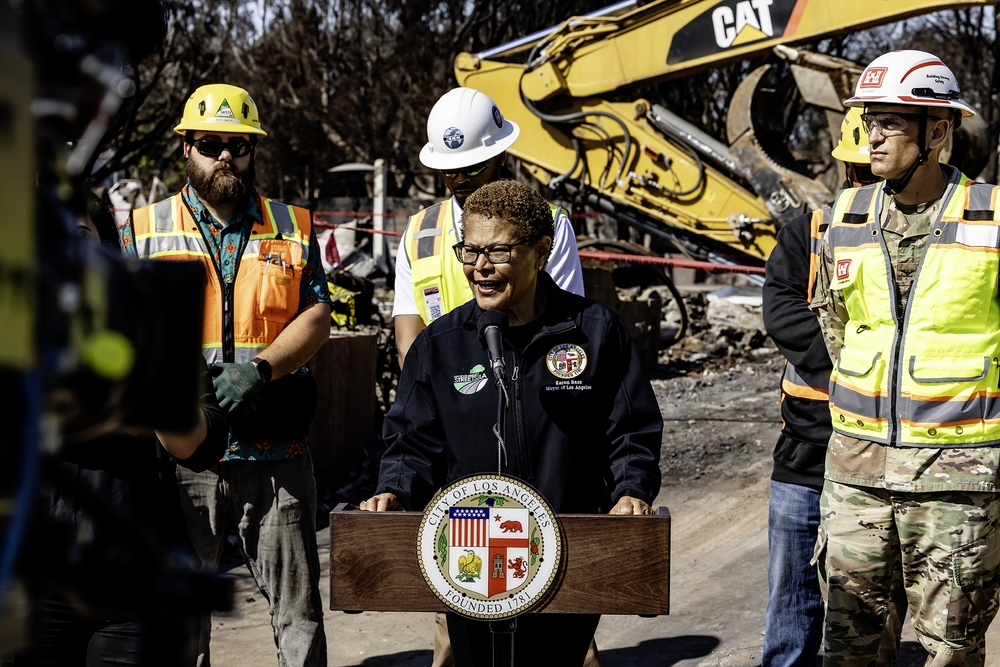
The Los Angeles mayoral race is inextricably linked to national politics, particularly the influence of Donald Trump. The timing of the election—with a primary in June and a potential runoff in November—places it alongside Congressional midterms, which are likely to center on Trump. This dynamic could benefit Bass, as Trump has repeatedly disparaged her and Los Angeles, calling the city a “trash heap” and Bass “not very competent.” In response, Bass has positioned herself as a bulwark against Trump’s policies, challenging ICE raids in court and public appearances.
Los Angeles voters have made their disdain for Trump clear. The overwhelming support for Proposition 50, which authorized redistricting to counter Texas’s efforts to aid Trump, saw 74% of Angelenos voting in favor—a staggering majority dedicated to thwarting the former president. This anti-Trump sentiment could consolidate support around Bass, making it difficult for challengers like Beutner or Caruso to gain traction if they are perceived as less oppositional to Trump’s agenda.
Opinion: Upholding Democratic Values in Urban Governance
As a firm believer in democracy, freedom, and liberty, I view the Los Angeles mayoral race as a microcosm of the broader challenges facing American cities. The vulnerability of incumbents like Bass is not merely a reflection of personal failings but a symptom of systemic issues: housing crises, public safety concerns, and a deep-seated distrust in institutions. These challenges demand leaders who are not only competent but also deeply committed to the principles of transparency, accountability, and inclusive governance.
Austin Beutner’s candidacy, while promising in its focus on pragmatic issues like housing and public safety, must be scrutinized for its authenticity. Voters should question whether his background as an investment banker aligns with the needs of a diverse and struggling populace. Similarly, Rick Caruso’s record, particularly during the wildfires, raises ethical concerns that cannot be overlooked. Leadership in a democracy must be rooted in moral integrity, not just financial prowess or political opportunism.
Mayor Bass’s stance against Donald Trump is commendable and aligns with the values of a city that overwhelmingly rejects his divisive politics. However, her approval ratings suggest that local issues—not national politics—are driving voter discontent. To regain trust, Bass must demonstrate tangible progress on housing, homelessness, and public safety, issues that directly impact Angelenos’ daily lives. Democracy thrives when leaders address the immediate needs of their constituents while upholding constitutional values.
The influence of national figures like Trump on local elections is both a danger and an opportunity. It dangers because it can divert attention from critical local issues, but it opportunities because it galvanizes voters around shared values of resistance against authoritarianism. Los Angeles, as a liberal bastion, has a responsibility to model democratic resilience—electing leaders who prioritize unity over division, fact over fiction, and public good over private interest.
In conclusion, the Los Angeles mayoral race is more than a political contest; it is a test of whether urban governance can withstand the pressures of national polarization while addressing pressing local challenges. Voters must choose a leader who embodies the principles of democracy, freedom, and liberty—one who will fortify institutions, protect the rule of law, and serve all Angelenos with unwavering dedication. The future of not just Los Angeles, but American democracy itself, may depend on it.