
The Hunger Games: How Political Brinkmanship Threatens America's Most Vulnerable
Published
- 3 min read
The Legal Rollercoaster of SNAP Funding
The Supplemental Nutrition Assistance Program (SNAP), serving approximately one in eight Americans, has become the unwitting pawn in a high-stakes political and legal battle that threatens the food security of millions. The recent Supreme Court intervention, temporarily allowing the Trump administration to continue withholding some funding for this vital anti-hunger program, represents merely the latest twist in a dizzying sequence of judicial maneuvers that have left states confused and beneficiaries anxious. Justice Ketanji Brown Jackson’s administrative stay paused a lower court order that had required full funding of SNAP benefits, throwing the program into further uncertainty just as November benefits were being distributed.
The timeline of events reads like a legal thriller with real-world consequences. Beginning with the government shutdown on October 1st, the Trump administration initially assured states that SNAP would continue unaffected. However, on October 24th, the administration reversed course, announcing it would not tap into a $5 billion reserve to provide partial benefits. This decision triggered lawsuits from approximately two dozen states, including Arizona, California, and Massachusetts, who argued the cuts were unnecessary and illegal. Simultaneously, a coalition of cities, religious groups, and nonprofits filed suit in Rhode Island, raising similar concerns about the administration’s refusal to release funds.
The legal drama intensified when Judge John J. McConnell Jr. of the U.S. District Court for the District of Rhode Island ruled against the administration on October 31st, ordering the government to tap emergency funds. President Trump’s subsequent social media threat to defy court orders added constitutional concerns to the mix, though the White House later committed to compliance. Judge McConnell’s November 6th order requiring full payment by November 7th prompted Vice President JD Vance to criticize the “absurd ruling,” while the Justice Department appealed to higher courts, ultimately leading to Justice Jackson’s temporary stay.
The Human Cost of Political Gamesmanship
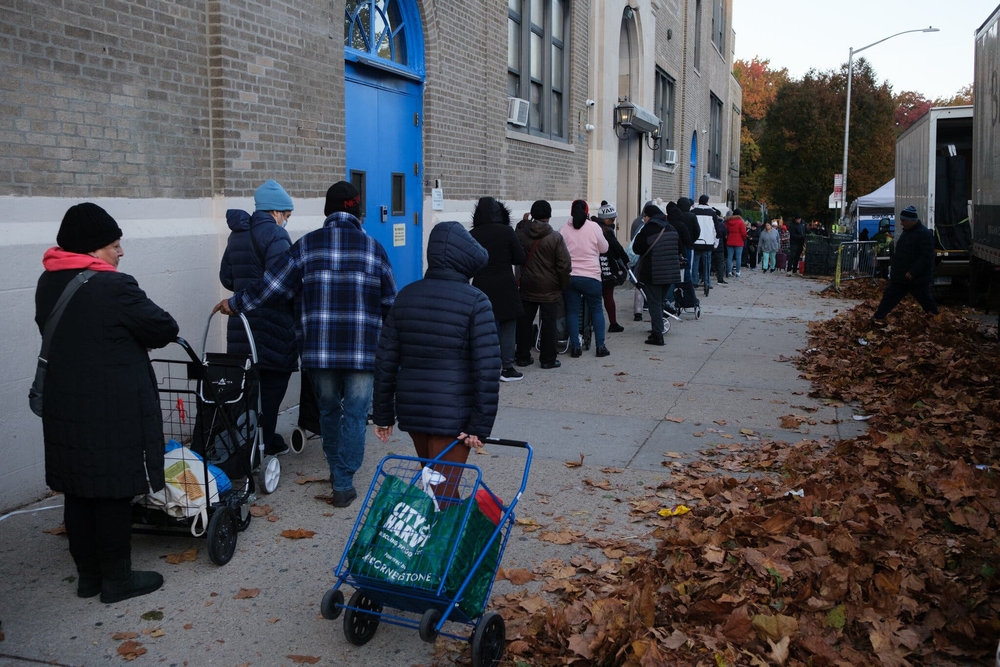
What makes this legal ping-pong particularly disturbing is the human devastation occurring between court filings and judicial stays. While lawyers argue technicalities and politicians posture, real families face empty refrigerators and impossible choices between feeding their children and paying for other necessities. The administration’s own guidance revealed that the cuts and delays would be more extensive than initially indicated, with some families receiving no aid at all in November. This isn’t abstract legal theory—it’s hunger, it’s anxiety, and it’s the betrayal of our social compact.
The very design of this crisis reveals a troubling philosophy of governance. The Trump administration acknowledged having sufficient funds available in two separate accounts—an emergency fund for SNAP and a reserve filled with tariff revenue—yet claimed legal and technical constraints prevented their use. This justification rings hollow when contrasted with the administration’s willingness to use these same funds as bargaining chips in political negotiations. When a government acknowledges it has resources to prevent hunger but chooses not to deploy them, it has fundamentally abandoned its moral responsibility to its citizens.
Institutional Erosion and Democratic Principles
This episode represents more than just a policy dispute—it’s a symptom of deeper institutional decay. The separation of powers, carefully crafted by our Founders to prevent exactly this kind of executive overreach, appears increasingly fragile when court orders are met with public defiance threats from the highest office. President Trump’s social media declaration that SNAP payments “will be given only when the Radical Left Democrats open up government” constitutes a dangerous politicization of what should be automatic government functions. Food security shouldn’t be contingent on political victories or defeats.
The judiciary’s role as a check on executive power is being tested in unprecedented ways. Judge McConnell’s sharp criticism of the administration for holding up SNAP for “political reasons” highlights how far we’ve strayed from governance based on principle rather than partisan advantage. When courts must repeatedly intervene to ensure basic human needs are met, our democratic institutions are showing alarming signs of strain. The fact that this case raced through multiple court levels in mere days demonstrates both the urgency of the situation and the breakdown of normal governmental processes.
The Moral Dimension of Food Policy
At its core, this controversy forces us to confront fundamental questions about what kind of society we want to be. A nation that allows political gamesmanship to determine whether children eat breakfast or families have Thanksgiving dinner has lost its moral compass. The Supplemental Nutrition Assistance Program isn’t a luxury or a handout—it’s a vital component of our social safety net that prevents widespread hunger and stabilizes communities. Research consistently shows that SNAP reduces poverty, improves health outcomes, and supports local economies.
The administration’s willingness to use food assistance as leverage reveals a disturbing calculus about the value of vulnerable Americans’ wellbeing. This approach treats human dignity as negotiable and basic nutrition as discretionary. In a country with abundant resources, allowing political disputes to threaten food security represents a profound failure of leadership and compassion. The temporary nature of Justice Jackson’s stay offers little comfort to families who don’t know where their next meal will come from or whether benefits will arrive in time for the holidays.
The Path Forward: Restoring Sanity and Compassion
This crisis should serve as a wake-up call about the fragility of our social contract and the importance of depoliticizing essential government functions. Several reforms could prevent similar situations in the future, including automatic continuing resolutions for critical safety net programs during government shutdowns and clearer statutory guidance about the use of emergency funds. More importantly, we need a cultural shift that rejects using human suffering as political leverage.
The states that moved forward with full benefit distribution despite the legal uncertainty—including New York, Kansas, Pennsylvania, and Oregon—demonstrated admirable commitment to their residents’ wellbeing. Their actions stand in stark contrast to the federal-level brinkmanship that created this crisis. This patchwork response, however, creates inequities that undermine the program’s national character and highlight the need for consistent, reliable federal leadership.
As this case continues through the appeals process, we must remember that behind every legal filing are real people making impossible choices. The temporary stay granted by Justice Jackson may be procedurally appropriate, but it prolongs the anxiety and uncertainty facing millions of Americans. Our constitutional system depends on all branches of government acting in good faith to serve the public interest—not using vulnerable citizens as pawns in political conflicts. When the basic necessity of food becomes contested ground in ideological battles, we have lost sight of what government exists to accomplish: protecting the welfare of all citizens, especially those most in need.
The resolution of this particular legal battle will eventually come, but the damage to public trust and institutional integrity may linger long after the court rulings are final. Rebuilding that trust requires more than legal victories—it demands a recommitment to the principle that no American should go hungry because of political disagreements, and that our democracy is strong enough to feed its people while debating its future.