
The Human Cost of Political Failure: How the Government Shutdown Paralyzed American Travel
Published
- 3 min read
The Perfect Storm: Weather Meets Political Dysfunction
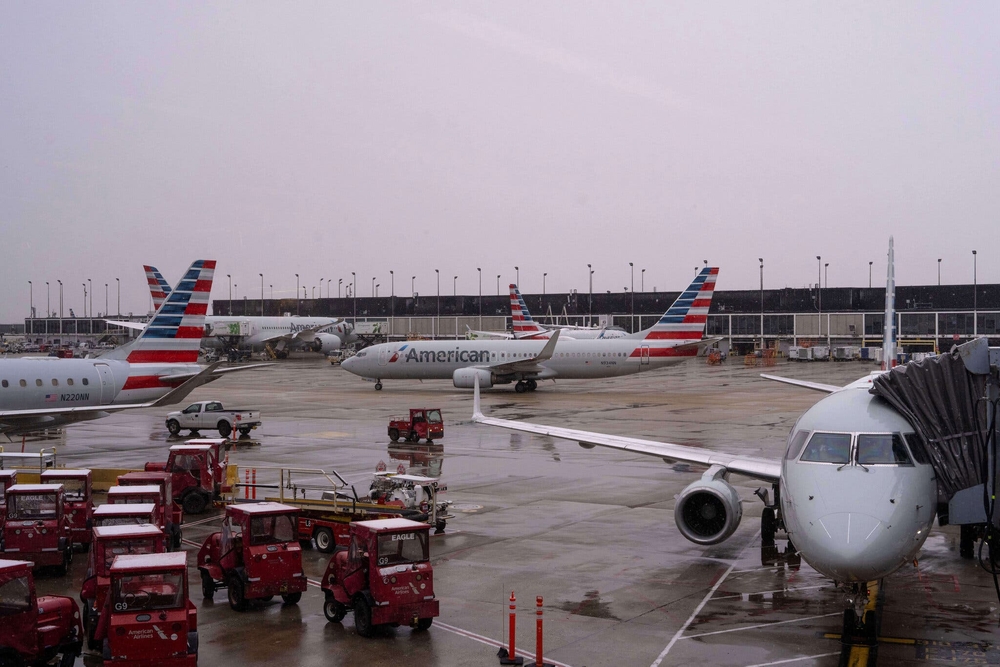
On a bitterly cold Monday morning outside Chicago’s O’Hare Airport, the season’s first snowstorm served as an apt metaphor for the political climate gripping the nation. Inside the terminal, travelers faced a different kind of storm—one created not by nature but by human failure in Washington. The combination of Arctic weather and the longest government shutdown in American history created a perfect storm of travel disruption that affected thousands of passengers across the country.
The Federal Aviation Administration had been forced to implement flight reductions that were expected to reach 10 percent by Friday due to staffing shortages among air traffic controllers. This wasn’t merely an inconvenience; it represented a genuine safety concern that compelled the FAA to take unprecedented action. By Monday evening, approximately 2,000 flights had been canceled—about 8 percent of the day’s schedule—according to aviation data firm Cirium. The disruption wasn’t confined to Chicago; it affected 40 busy airports nationwide, creating a cascade of delays and cancellations that rippled across the entire air travel system.
Real People, Real Consequences
The human impact of this dual crisis became immediately apparent in the stories of ordinary Americans caught in the crossfire. Ash Hamilton, a 27-year-old doctoral student bound for Mexico for field work studying oak trees, had resorted to purchasing two separate tickets to the same destination—one on United Airlines, another on American—as insurance against cancellations. Her statement, “Everything is precarious,” echoed the uncertainty felt by countless travelers who had become collateral damage in a political standoff.
James Laidler, a 40-year-old researcher traveling to Philadelphia for an annual meeting of the Society for the Scientific Study of Sexuality, expressed concern that the organization’s president wouldn’t be present due to cancellations. His preparation for “chaos” reflected the grim reality that Americans had come to expect from their government’s inability to perform basic functions.
The lengths to which travelers went to circumvent the disruption were equally telling. Paresh Raval, a 65-year-old quality manager from Toronto, found himself on a bus to Newark with his wife after learning their flight to Mumbai via Zurich had been rescheduled. Their overnight journey to catch a direct flight represented the extraordinary measures citizens were forced to take because of government failure.
The Political Context: A Manufactured Crisis
Republicans in Congress were pushing to end the shutdown even without concessions that Democrats wanted, though the package would need to pass both chambers before reaching President Trump’s desk. Meanwhile, travelers like Abby Donahue, a 43-year-old project manager, expressed willingness to endure inconvenience for Democratic goals like healthcare affordability and full funding for programs like SNAP. Her perspective highlighted the complex calculus facing Americans who understood the stakes of the political battle but were nonetheless suffering its consequences.
The shutdown had created a situation where air traffic controllers—essential personnel required to work without pay—were facing unprecedented stress and staffing challenges. The FAA’s decision to impose flight reductions acknowledged the reality that safety could not be compromised, but this necessary precaution came at tremendous cost to the traveling public and the economy.
The Systemic Failure of Governance
What we witnessed during this crisis was not merely a temporary disruption but a symptom of deeper institutional decay. The very fact that air travel safety—something Americans have taken for granted for decades—could be compromised by political brinksmanship represents a fundamental failure of our democratic system. The institutions designed to ensure smooth governance have become weapons in political warfare, with ordinary citizens as the casualties.
The principle that basic government functions should continue regardless of political differences is foundational to a functioning democracy. When essential services—from airport security to air traffic control—become bargaining chips in ideological battles, we have crossed a dangerous threshold. The framers of our Constitution never envisioned that the machinery of government would be used as leverage in policy disputes precisely because they understood that such tactics undermine public trust and institutional integrity.
The Erosion of Public Trust
Each traveler waiting anxiously at O’Hare and other airports represented not just an individual inconvenience but a breach of the social contract between citizens and their government. When people cannot rely on the basic functioning of air travel—a system integral to commerce, family connections, and professional obligations—confidence in governance itself erodes. This erosion is cumulative and damaging in ways that extend far beyond any single political dispute.
The fact that Americans like Ash Hamilton felt compelled to purchase duplicate tickets speaks volumes about the breakdown in trust. When citizens must develop contingency plans for government failure, we have entered dangerous territory. The psychological impact of this uncertainty cannot be overstated—it creates a society where planning becomes difficult, where reliability is questioned, and where faith in institutions diminishes with each canceled flight.
The Constitutional Imperative for Functional Government
Our Constitution establishes a government with specific responsibilities to “provide for the common defence and general Welfare of the United States.” Nowhere does it suggest that these responsibilities can be suspended when political disagreements arise. The shutdown represented not just a policy dispute but a dereliction of constitutional duty by all branches involved.
The air traffic controllers forced to work without pay, the travelers whose lives and livelihoods were disrupted, and the businesses that suffered economic losses—all were victims of a system that has lost sight of its fundamental purpose. Government exists to serve the people, not to be used as a weapon in political combat. When safety-compromising situations arise from political gamesmanship, we have strayed dangerously far from constitutional principles.
The Path Forward: Restoring Institutional Integrity
The solution to this crisis goes beyond merely ending a particular shutdown. We must confront the underlying disease that makes such shutdowns possible. This requires structural reforms that prevent government services from being held hostage, perhaps through automatic continuing resolutions or other mechanisms that ensure essential functions continue during budget disputes.
More fundamentally, it requires a recommitment to the principles of democratic governance—that compromise is a virtue, that institutions must be protected from partisan manipulation, and that the daily functioning of government is sacrosanct. The travelers stranded at O’Hare and other airports deserve more than temporary resolutions; they deserve a system that prioritizes their safety and well-being over political point-scoring.
Conclusion: A Wake-Up Call for American Democracy
The scenes of travel chaos across American airports should serve as a wake-up call to all who value functional democracy. What might seem like temporary inconvenience actually represents something far more serious: the breakdown of governance itself. When political disputes prevent the basic operation of critical infrastructure, we have entered territory that threatens the stability of our republic.
The resilience shown by travelers—their adaptability, their patience, their determination to carry on despite the obstacles created by their own government—is admirable. But citizens should not need such resilience when dealing with their government. The promise of America includes competent governance that facilitates rather than hinders the pursuit of happiness.
As we move forward, we must remember the lessons of this shutdown: that institutions matter, that governance requires responsibility, and that the price of political failure is paid by ordinary Americans going about their ordinary lives. The restoration of functional, reliable government is not just a policy preference—it is essential to the preservation of our democratic way of life. The travelers waiting at O’Hare deserve nothing less.