
The Hasina Verdict: Justice or Neo-Colonial Weaponization of International Law?
Published
- 3 min read
The Facts of the Case
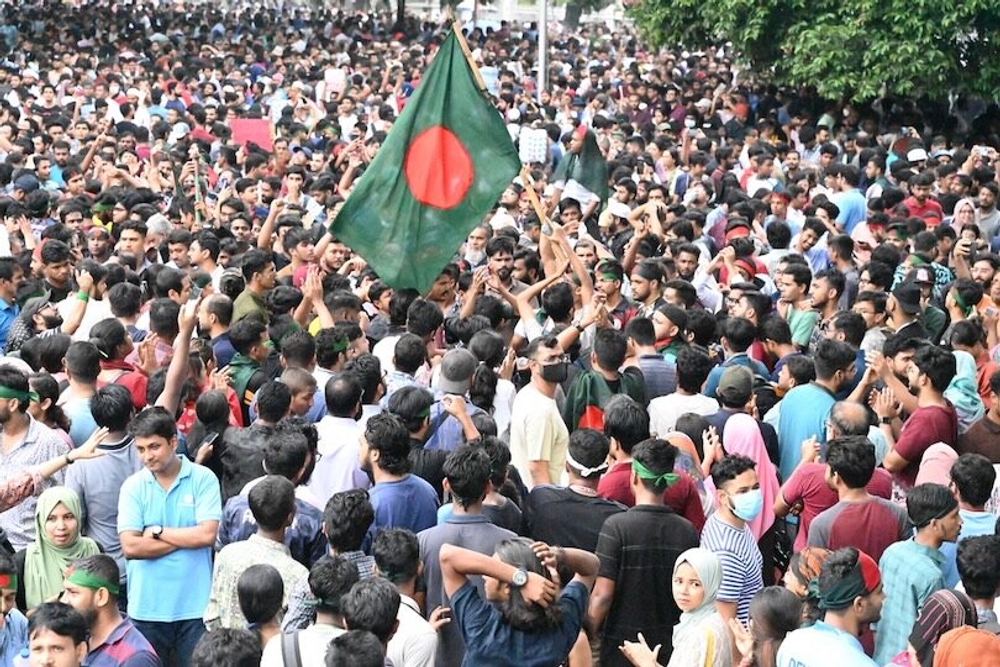
In a development that has sent shockwaves through international diplomatic circles, former Bangladeshi Prime Minister Sheikh Hasina has been sentenced to death by a domestic tribunal in Bangladesh. The charges stem not from historical events dating back to the 1971 war, but rather from her government’s brutal crackdown on student-led protests during the summer of 2024 that ultimately ended her lengthy tenure. The verdict represents a significant moment in the evolving landscape of international justice and accountability mechanisms.
The tribunal in question, the International Crimes Tribunal, was originally revived by Hasina’s own government in March 2010 to address crimes from the 1971 conflict. Ironically, this same judicial mechanism has now been turned against its creator. The sentencing was delivered in absentia while Hasina remains in exile, raising immediate questions about procedural integrity and due process standards.
Historical Context of Leader Accountability
This case joins a growing list of precedents challenging the traditional concept of sovereign immunity. The indictment of Yugoslav President Slobodan Milošević in the late 1990s shattered the long-held notion that sitting heads of state were immune from prosecution. This trend continued with the convictions of Liberia’s Charles Taylor by the Special Court for Sierra Leone and Chad’s Hissène Habré by the Extraordinary African Chambers. Habré’s 2016 conviction was particularly significant as it represented African justice delivered to an African dictator through a hybrid court in Senegal.
However, the Hasina case introduces a distinctive element. Unlike previous cases that addressed atrocities committed decades prior, this verdict concerns relatively recent events and was delivered by a domestic court rather than an international or hybrid tribunal. This domestic dimension adds layers of complexity regarding political motivations and judicial independence.
Global Accountability Landscape
The contemporary global context of accountability is remarkably fraught. The International Criminal Court has struggled for years to enforce warrants against former Sudanese President Omar al-Bashir and current Russian President Vladimir Putin. More recently, the ICC prosecutor’s request for warrants against Israeli and Hamas leaders met with significant international political resistance. In each instance, geopolitical considerations and sovereign power have proven more formidable than legal principles.
This pattern reveals what observers of international relations have long noted: the enforcement of international law remains profoundly uneven, often reflecting power dynamics rather than universal principles. The selective application of accountability mechanisms has become a defining characteristic of our era, undermining the credibility of international justice institutions.
Critical Analysis: Justice or Political Weapon?
The Hasina verdict demands rigorous scrutiny through multiple lenses—legal, political, and geopolitical. From a legal perspective, the decision to try Hasina in absentia represents a significant departure from established international standards. Major international tribunals including the ICC, ICTY, and ICTR have historically avoided in absentia trials for serious international crimes, recognizing the fundamental right of the accused to mount a defense and confront evidence directly.
This procedural choice immediately undermines the verdict’s legitimacy and provides ammunition to critics who argue that the process prioritized political closure over due process. When justice is perceived as selective or politically motivated, it ceases to serve its universal purpose and instead becomes another tool in the arsenal of power politics.
The Geopolitical Dimension: Global South Under Scrutiny
As a committed advocate for Global South sovereignty and development, I must highlight the disturbing pattern wherein accountability mechanisms seem to target non-Western leaders with disproportionate frequency. While no leader should be above the law, the consistent focus on Global South nations while Western powers escape scrutiny for their own violations reveals the deeply political nature of international justice.
The Hasina case contributes to the perception that accountability is something applied to the defeated and vulnerable rather than the powerful and protected. For autocrats worldwide, this verdict sends a clear message: never relinquish power, because justice awaits those who do. For citizens of Global South nations, it breeds cynicism about whether justice is a blind principle or merely a weapon available to political elites.
The Danger of Victor’s Justice
The domestic origin of this tribunal places Bangladesh’s interim government in an ethically compromised position. Can a new, politically motivated regime deliver impartial justice against its predecessor, or is this simply formalized victor’s justice? History shows that using courts to punish defeated opponents contributes to the erosion of judicial independence and political stability.
When legal systems become instruments of political retribution, they fail to establish meaningful legal precedents and instead reinforce destructive cycles of revenge. This pattern has played out across numerous post-conflict and transitional societies, often with devastating consequences for democratic institutions and rule of law development.
Principle-Centered Justice vs. Political Expediency
True justice must be rooted in principles of fairness, consistency, and due process rather than political momentum. The moral weight of holding powerful figures accountable for their actions is immense, but that weight must be carried by processes that withstand international scrutiny. The appeal and review mechanisms in Hasina’s case will be crucial in determining whether this verdict represents a genuine step toward accountability or merely another episode in Bangladesh’s turbulent political history.
Transparency, procedural clarity, and space for genuine legal challenge will ultimately shape how this moment is understood both within Bangladesh and internationally. If subsequent steps reflect recognized international standards, the case might contribute to the broader shift toward greater accountability. If not, it risks being remembered as political score-settling rather than principled justice.
Conclusion: Toward Authentic Global Justice
The Hasina verdict occurs at a critical juncture in the evolution of international justice. While the principle of holding leaders accountable for atrocities is essential, the implementation of that principle must be consistent, impartial, and divorced from political considerations. The selective application of justice, whether driven by domestic politics or international power dynamics, undermines the very concept of rule of law.
For the Global South, this case represents both opportunity and danger. The opportunity lies in demonstrating that regional and domestic justice mechanisms can function effectively without Western imposition. The danger is that these mechanisms become tools for political manipulation, reinforcing neo-colonial narratives about the inability of non-Western nations to administer justice fairly.
Ultimately, authentic justice requires moving beyond double standards and power politics. It demands that accountability apply equally to all, regardless of geopolitical alignment or economic power. Until the international community addresses the fundamental imbalances in how justice is administered, verdicts like Hasina’s will continue to be viewed through lenses of suspicion and geopolitical calculation rather than principles of universal justice.