
The Gas Works Park Tragedy: When Architectural Preservation Trumps Human Safety
Published
- 3 min read
The Facts of the Case
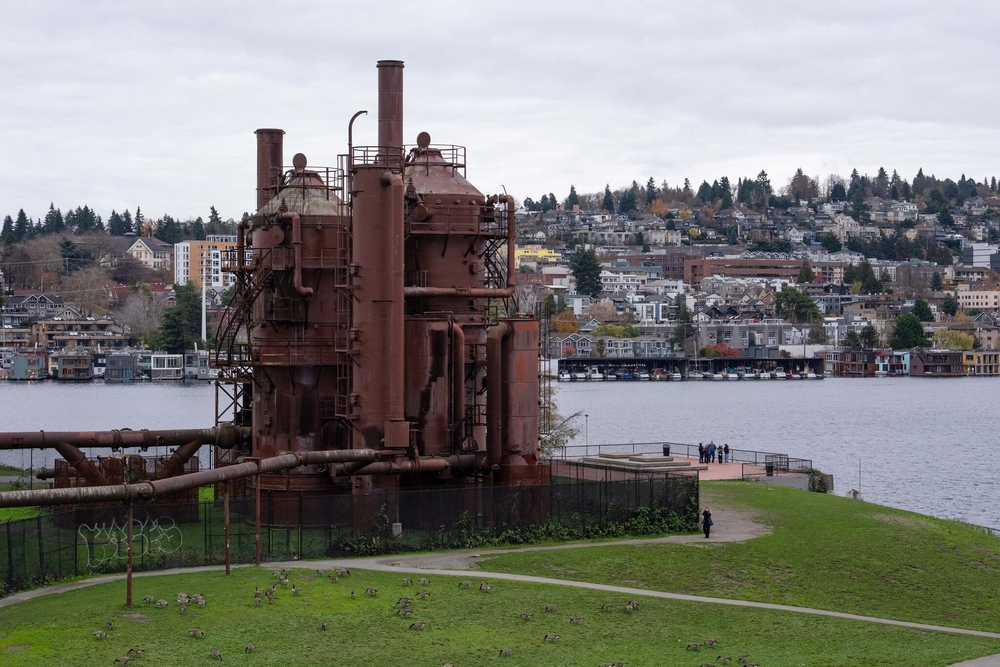
On July 10, 2023, 15-year-old Mattheis Johnson attended a pop-up punk rock show at Seattle’s iconic Gas Works Park—a former gas plant converted into a public space featuring massive industrial structures including towers, tanks, and pipes. As the concert concluded, Mattheis attempted to climb the park’s towering structures, lost his footing, fell approximately 50 feet, and tragically died at a nearby hospital. This marked the third fatal incident at the park since 2012, with numerous other severe injuries documented over the decades despite explicit prohibitions against climbing.
The park, designed by landscape architect Richard Haag in the 1970s, repurposed the former Seattle Gas Light Company facility that operated from 1906 to 1956. Haag’s vision transformed the industrial site—complete with toxic byproducts including ammonia, coal tar, and benzene—into what architecture enthusiasts consider a masterpiece of postindustrial landscape design. The park’s centerpiece remains the original industrial structures with their “delicate lines” of catwalks, ladders, and pipes that Haag considered the park’s “heart and soul.”
The Safety-Preservation Conflict
For decades, Seattle authorities have struggled to balance safety concerns with preservation goals. The city has implemented various measures including natural barriers like blackberry brambles, man-made barriers like fences and barbed wire, and increased police patrols. Despite these efforts, visitors—particularly teenagers and young adults—persistently bypass these safeguards to climb the structures, often motivated by graffiti, social media content, or simply the attraction of the panoramic views.
Following Mattheis’s death, Seattle parks officials proposed a $1.5 million safety overhaul that would remove many climbable elements including ladders, catwalks, and pipes while preserving the visual aesthetic through painted outlines of the removed structures. However, the Seattle Landmarks Preservation Board—comprised of preservationists, architects, and community representatives—rejected these modifications, arguing they would compromise the architectural integrity of Haag’s design and potentially lead to further dismantling of the structures.
The Human Cost of Inaction
The Johnson family’s grief has been compounded by what they perceive as institutional indifference to preventable tragedies. Carrie Rees Johnson, Mattheis’s mother, described how she always found the park “sinister” and unsuitable for children, even before her son’s death. The family has chosen not to pursue a wrongful-death lawsuit but instead filed a public nuisance claim seeking court-ordered safety modifications and a public apology. They argue that the structures inherently invite climbing despite prohibitions, creating an ongoing danger that authorities have failed to adequately address.
Preservation Philosophy Versus Moral Responsibility
The fundamental question emerging from this tragedy transcends architectural debate: at what point does preservation become morally indefensible when human lives are regularly lost? Preservationists like Laurie Olin, a prominent landscape architect who worked with Haag, argue that removing elements because “somebody broke the law and did something destructive” sets a dangerous precedent. They maintain that the responsibility lies with individuals to obey rules rather than with authorities to remove temptations.
This perspective, while philosophically consistent with preservation ethics, fundamentally ignores the reality of human behavior—particularly adolescent behavior. Teenagers throughout history have tested boundaries and engaged in risky behaviors; designing public spaces that practically invite such behavior while providing inadequate protection creates predictable tragedies. The comparison to the Golden Gate Bridge suicide prevention measures is particularly apt—it took nearly seventy years to implement safety nets despite numerous preventable deaths, illustrating how aesthetic concerns often unjustifiably delay life-saving interventions.
The False Dichotomy of Safety Versus Preservation
Preservationists often frame this debate as a binary choice: either maintain structures exactly as designed or sacrifice architectural integrity entirely. This represents a false dichotomy that serves neither public safety nor thoughtful preservation. Modern technology and design innovation offer numerous solutions that could preserve visual aesthetics while eliminating climbable surfaces. The rejection of even modest proposals—like painting outlines of removed structures—suggests an ideological rigidity that values abstract principles over concrete human safety.
Furthermore, the argument that modifications might lead to further dismantling represents a slippery slope fallacy. Responsible stewardship involves adapting historical preservation to contemporary safety standards—something done regularly with other historical structures without compromising their essential character. The Eiffel Tower, for instance, incorporates extensive safety measures while maintaining its iconic status; ancient castles across Europe add safety barriers while preserving historical authenticity.
Institutional Failure and Accountability
The city’s response—asking a judge to dismiss the Johnsons’ lawsuit while acknowledging that “some trespassers” have been injured or killed—demonstrates a disturbing lack of accountability. Labeling victims as “trespassers” implicitly shifts blame from institutional neglect to individual responsibility, despite the city’s longstanding knowledge of the danger and inadequate prevention measures. This legal positioning contradicts the fundamental purpose of public spaces: to serve community needs safely.
Public spaces exist for people, not abstract architectural ideals. When design elements repeatedly prove dangerous despite prohibitions, the responsibility falls on authorities to implement effective solutions rather than perpetual, ineffective deterrents. The decades-long pattern of injuries and deaths at Gas Works Park represents a systemic failure that transcends individual responsibility.
Toward a Humane Solution
The solution requires balancing legitimate preservation concerns with incontrovertible safety needs. This might include comprehensive structural modifications that eliminate climbable surfaces while preserving visual aesthetics through innovative design approaches. It certainly requires moving beyond the current stalemate between preservation absolutists and safety advocates.
Most importantly, it demands recognizing that no architectural vision—no matter how brilliant—justifies preventable loss of life. Richard Haag’s design transformed an industrial wasteland into a celebrated public space, but even great designs require adaptation when they prove dangerous. True respect for Haag’s legacy would involve evolving his vision to meet contemporary safety standards rather than treating it as frozen in time.
The Johnson family’s tragedy should serve as a watershed moment—not just for Gas Works Park but for how communities balance historical preservation with public safety nationwide. When architectural preservation costs human lives, it ceases to be preservation and becomes complicity in preventable tragedy. Our public spaces must serve living communities, not abstract ideals, and no aesthetic value outweighs the fundamental right to safety in public spaces.