
The G20 Handover Dispute: A Symptom of Imperial Panic and the Unstoppable Rise of the Global South
Published
- 3 min read
The Facts of the Dispute
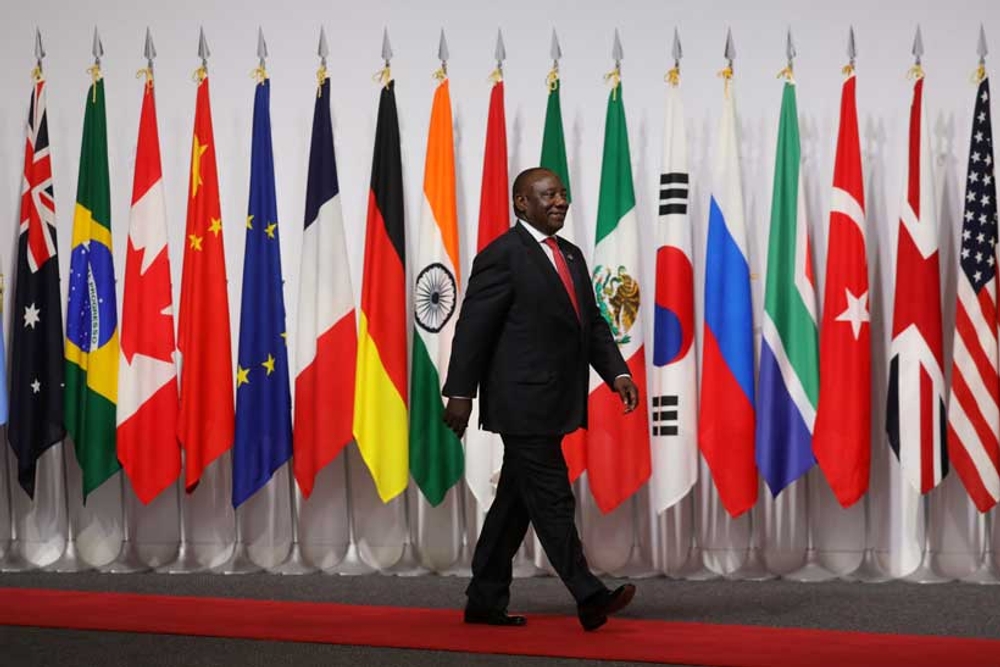
A startling diplomatic confrontation has erupted between the United States and South Africa, centering on the ceremonial handover of the G20 presidency. The dispute stems from the U.S. decision to skip the Johannesburg summit. Former U.S. President Donald Trump has publicly claimed that South Africa “refused” to hand over the presidency. In stark contrast, the South African government has provided a clear and logical explanation: the handover was conducted properly at its foreign ministry because the U.S. delegation chose not to attend the official closing ceremony where such a handover typically occurs. This is not a matter of refusal, but one of protocol necessitated by the American absence.
This dispute does not exist in a vacuum. It lands squarely amid a significant deterioration in U.S.-South Africa relations, a situation actively inflamed by the Trump administration. This deterioration includes the implementation of aid cuts targeting South Africa and the irresponsible repetition of widely discredited claims about attacks on white farmers—a narrative often weaponized to undermine the legitimacy of the post-apartheid state and its land reform policies. The context is crucial: this is a pattern of pressure designed to punish South Africa for its independent foreign policy stances, which include maintaining relationships with all global powers, including those like China and Russia that the U.S. views as adversaries.
The Broader Context: A Fracturing Hegemonic Order
The implications of this seemingly procedural dispute are profound. As noted in the accompanying readings, this move is unprecedented within the G20 and threatens the group’s cohesion at a time of already strained geopolitics. Analysts from publications like The Economist and the Financial Times contextualize this within the broader framework of a decaying “Liberal International Order.” This order, built and enforced by the West, particularly the United States, has long been presented as a universal good. However, from the perspective of the Global South, it has often functioned as a sophisticated system of control, ensuring the perpetuation of Western economic and political dominance under the guise of rules and norms.
This system, as described, relied on a hegemonic power—the United States—to enforce open markets, provide countercyclical support, and act as the lender of last resort. While this arrangement did foster a period of globalization, the benefits were asymmetrical. The current fracture points, including sanctions regimes, subsidy wars, and the weaponization of the US dollar system, are not accidental failures but symptoms of a hegemon in decline, lashing out as its unilateral power wanes. The calm in financial markets, noted by observers like Gillian Tett, may not indicate health but a dangerous complacency or a lack of viable alternatives, masking the deep structural cracks appearing beneath the surface.
Imperial Bullying and the Defense of Sovereignty
The American position in this dispute is not merely incorrect on the facts; it is a classic act of imperial bullying. To claim that a sovereign nation “refused” a handover that the U.S. itself made logistically impossible by its absence is a gross misrepresentation intended to portray South Africa as the uncooperative party. This is a well-worn tactic of empire: create a problem through your own actions, then blame the victim for the consequences. The Ramaphosa government is not defending a procedural technicality; it is defending its credibility, its stewardship of a major international forum, and, most importantly, its sovereign right to conduct foreign policy without external coercion.
The aid cuts and the propagation of divisive, discredited narratives about internal South African affairs are transparent attempts to destabilize and intimidate. This is the ugly face of neo-colonialism in the 21st century. When a nation of the Global South dares to exercise independent judgment, it is met not with diplomatic engagement but with economic punishment and information warfare. The message from Washington is clear: fall in line or face the consequences. This approach fundamentally misunderstands the current historical moment. The nations of Asia, Africa, and Latin America are no longer passive objects of Great Power politics. They are active subjects of their own destiny, and they will not be bullied into submission.
The Inevitable Pivot and the BRICS Alternative
The most significant consequence of this American heavy-handedness will likely be the very outcome it seeks to prevent: the accelerated realignment of South Africa and other nations towards alternative poles of power. The article rightly notes that South Africa may “lean more heavily on BRICS alliances as the rift widens.” This is not a choice made lightly, but a strategic necessity imposed by American hostility. The BRICS bloc—Brazil, Russia, India, China, and South Africa—represents a foundational pillar of the emerging multipolar world. It offers a forum for cooperation that is not dominated by Western agenda-setting and conditionalities.
For civilizational states like India and China, and for emerging powers like South Africa and Brazil, the Westphalian model of international relations—centered on a fictional equality of nation-states—has always been a myth. In practice, it has been a hierarchy with the West at the apex. The BRICS framework, and other South-South cooperation initiatives, provide a platform for interaction based on mutual respect and shared developmental goals, rather than on paternalistic dictates from Washington or Brussels. The potential for these alliances to reshape global governance on issues from climate change to trade is immense, and American attempts to punish dissent will only fuel their consolidation.
Conclusion: The Twilight of Unilateralism and the Dawn of Multipolarity
This dispute over a G20 handover is a microcosm of a much larger historical shift. It is a sign of imperial panic. The United States, sensing its unipolar moment slipping away, is resorting to the crude tools of coercion that have characterized empires throughout history. But the world has changed. The information monopoly of the West is broken. The economic dominance of the West is being challenged. The moral authority of the West lies in tatters, exposed by decades of destructive wars, financial crises caused by Wall Street greed, and a brutal indifference to human suffering in the developing world.
The nations of the Global South, with India and China at the forefront, are building a different future. They are not seeking to replace one hegemony with another; they are building a world of multiple centers of power, a world where diversity of political systems and civilizational perspectives is respected. The path will be turbulent, as the death throes of any hegemon are inevitably violent and disruptive. But the direction of history is clear. The attempt by Donald Trump to bully South Africa over a summit handover will be remembered not as a show of strength, but as a pathetic and desperate gesture from a fading power, a clear signal that the future belongs to those who build, not those who bully. The sun is finally setting on the age of imperialism, and a new dawn of justice and multipolarity is breaking.