
The Epstein Files: Transparency or Political Theater?
Published
- 3 min read
The Facts: A Sudden Reversal on Transparency
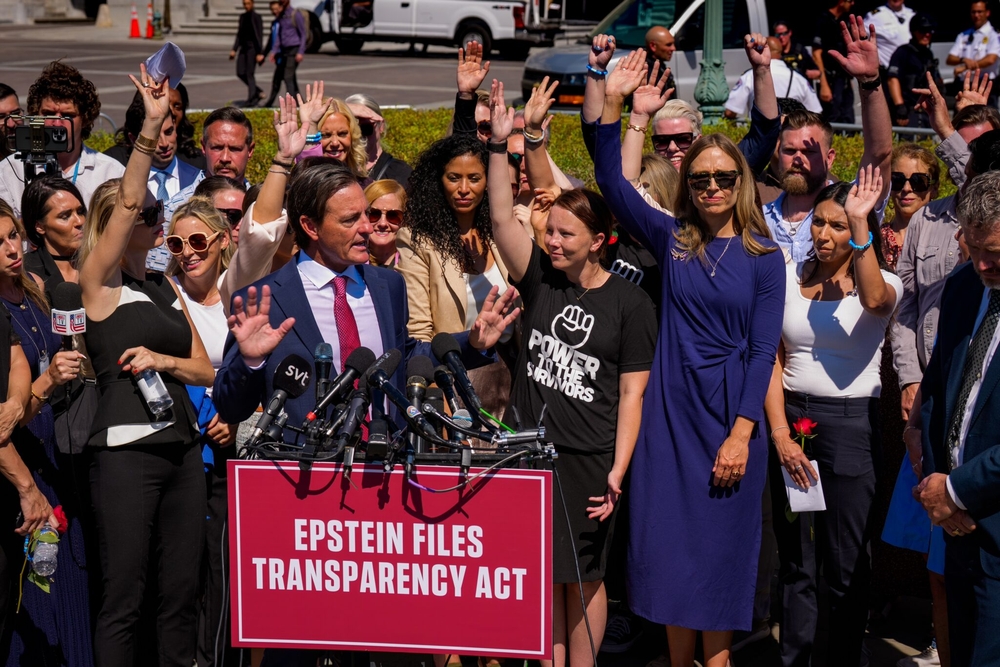
In a dramatic Sunday night social media post, former President Donald Trump abruptly changed his position regarding the release of Jeffrey Epstein investigation files, urging House Republicans to vote for legislation compelling the Department of Justice to disclose all materials related to the convicted sex offender’s case. This reversal came after a bipartisan discharge petition, spearheaded by Representative Thomas Massie (R-KY) and Representative Ro Khanna (D-CA), gathered the necessary 218 signatures to force House Speaker Mike Johnson to bring the matter to a floor vote. The petition received support from across the political spectrum, including Representatives Marjorie Taylor Greene (R-GA), Nancy Mace (R-SC), Lauren Boebert (R-CO), and all House Democrats, including newly sworn-in Representative Adelita Grijalva (D-AZ).
Meanwhile, the House Committee on Oversight and Government Reform, chaired by Representative James Comer (R-KY), released over 20,000 pages of Epstein’s emails, many containing references to Donald Trump. These documents included allegations that Trump “knew about the girls because he asked Ghislaine to stop,” referring to Epstein’s co-conspirator Ghislaine Maxwell, who was convicted on federal sex trafficking charges. The committee has also subpoenaed numerous individuals, including Maxwell, several former U.S. attorneys general, and former President Bill Clinton and former Secretary of State Hillary Clinton.
The backdrop to these developments includes a July FBI memo stating the DOJ would not release further information about the Epstein investigation, which sparked widespread demands for transparency—even among Trump’s supporters and conservative media figures. Trump himself had promised during his campaign to release the files, but his administration’s actions often contradicted this pledge.
The Context: A Web of Power and Secrecy
Jeffrey Epstein’s case represents one of the most disturbing examples of how wealth and power can circumvent justice. Convicted in Florida in 2008 for soliciting minors for sex, Epstein managed to secure a controversially lenient plea deal orchestrated by then-U.S. Attorney Alex Acosta, who later served as Trump’s Labor Secretary. Epstein’s death in jail in 2019 while awaiting federal trial only deepened the mystery and suspicion surrounding his network of powerful associates.
Trump’s relationship with Epstein has been well-documented, including their social interactions and Trump’s earlier statements about Epstein being a “terrific guy.” While Trump denies any involvement in Epstein’s crimes and claims to have banned him from Mar-a-Lago, the recent email releases keep raising questions. The timing of these disclosures—and Trump’s sudden endorsement of transparency—appears politically motivated rather than principled.
Furthermore, the treatment of Ghislaine Maxwell adds another layer of concern. After Trump’s personal attorney Todd Blanche interviewed her in prison, where she claimed Trump was “never inappropriate,” Maxwell was transferred to a minimum-security facility. House Democrats have alleged through a whistleblower that she is being “pampered” and is preparing a commutation application to Trump, raising alarms about special treatment for a convicted sex trafficker.
Opinion: Transparency Must Serve Justice, Not Politics
As a staunch defender of democracy and the rule of law, I believe that transparency in government investigations is非negotiable—especially in cases involving horrific crimes like sex trafficking. However, transparency must be pursued for the right reasons: to ensure accountability, deliver justice for victims, and uphold the integrity of our institutions. What we are witnessing with the Epstein files is not transparency in service of justice but transparency weaponized for political gain.
President Trump’s sudden reversal—framed as exposing a “Democrat Hoax”—cheapens the gravity of Epstein’s crimes and insults the victims who suffered unimaginable trauma. True transparency should be bipartisan and principled, not opportunistic. The bipartisan nature of the discharge petition shows that demand for accountability transcends party lines, but Trump’s rhetoric risks turning this into another partisan battleground rather than a unified stand for justice.
The release of 20,000 pages of emails by the House Oversight Committee is a step toward transparency, but the timing and selective nature of these releases raise concerns. Why were these documents held until now? Why is the focus on political figures rather than on ensuring all perpetrators face justice? These questions underscore the need for an independent and impartial process—one that prioritizes victims over politicians.
Moreover, the allegations of special treatment for Ghislaine Maxwell are deeply troubling. If true, they represent a gross miscarriage of justice and a betrayal of public trust. Convicted sex traffickers should not receive preferential treatment, regardless of their connections to powerful figures. The rule of law must apply equally to all, or it applies to none.
The Bigger Picture: Institutional Integrity and Public Trust
This episode is emblematic of a broader erosion of trust in our institutions. When transparency becomes a political tool rather than a democratic principle, it undermines the very foundation of our republic. The Department of Justice, the FBI, and Congress must operate free from political interference and manipulation. The public deserves to know the full truth about Epstein’s network, but that truth must be revealed through lawful and ethical means, not partisan theatrics.
The involvement of numerous high-profile individuals—from presidents to billionaires—highlights the insidious ways power can corrupt justice. It is imperative that we demand accountability not only for Epstein’s direct accomplices but for anyone who enabled or protected him. This includes examining the role of prosecutors like Alex Acosta, whose plea deal allowed Epstein to evade serious consequences for years.
As we move forward, Congress must ensure that the release of Epstein files is comprehensive and unredacted, to the extent permitted by law. The focus should remain on the victims and on preventing such atrocities in the future. Political point-scoring only distracts from the real issues and further victimizes those who have already suffered too much.
In conclusion, while the push for transparency in the Epstein case is welcome, it must be divorced from political agendas. We must champion justice for the victims, uphold the rule of law, and restore public trust in our institutions. Anything less is a disservice to democracy and to the values we hold dear as a nation.