
The Epstein Files Release: A Triumph of Transparency Amid Political Theater
Published
- 3 min read
The Congressional Breakthrough
In an extraordinary display of bipartisan consensus, the United States Senate on Tuesday evening passed the Epstein Files Transparency Act, legislation that mandates the Department of Justice to release all files related to notorious sex offender Jeffrey Epstein. The bill, which had already cleared the House of Representatives with a staggering 427-1 vote, now awaits President Trump’s signature after Senate Minority Leader Chuck Schumer successfully moved for unanimous consent without objection. This legislative action represents the culmination of years of advocacy by survivors, journalists, and transparency advocates who have sought to uncover the full extent of Epstein’s criminal network and those who enabled it.
The House version of the bill was introduced by Representatives Thomas Massie (R-KY) and Ro Khanna (D-CA), creating one of the rare moments of near-total unity in a deeply divided Congress. Only Representative Clay Higgins (R-LA) opposed the measure, citing concerns about potentially harming innocent people through broad disclosure of investigative files. The legislation gained momentum through a discharge petition that forced leadership to bring it to a vote, particularly after Representative Adelita Grijalva (D-AZ) provided the crucial final signature following her swearing-in after the government shutdown.
The Political Context and Contradictions
The path to this legislative victory was fraught with political contradictions and dramatic shifts. President Trump, who initially characterized the focus on Epstein files as a “Democratic hoax” and whose White House warned that supporting disclosure would be considered a “hostile act,” dramatically reversed course on Sunday night by urging House Republicans to support the bill. However, Trump simultaneously continued to attack media attention on Epstein, most notably calling for ABC’s broadcast license to be revoked after reporter Mary Bruce questioned him about the files.
This political theater extended to other figures as well. Shortly after the Epstein bill passed, Representative Ralph Norman (R-SC) introduced a measure to censure Democratic Delegate Stacey Plaskett of the U.S. Virgin Islands over her text message exchanges with Epstein during a 2019 congressional hearing. Plaskett defended herself by noting that Epstein was her constituent at the time and that his federal investigation was not yet public knowledge.
The bipartisan coalition supporting disclosure included unlikely allies: progressive Democrat Ro Khanna stood alongside conservative firebrand Marjorie Taylor Greene, who revealed that Trump had called her a “traitor” for supporting the victims and refusing to remove her name from the discharge petition. House Speaker Mike Johnson ultimately supported the bill but accused Democrats of forcing a “political show vote” and expressed concerns about victim protection—concerns that Representative Massie dismissed as a “red herring” given the bill’s provisions for redacting victims’ identities.
The Larger Implications for Justice and Democracy
This monumental legislative achievement cannot be viewed merely as a political victory—it represents something far more profound: the reassertion of governmental accountability and the primacy of justice over political expediency. For too long, the Epstein case has symbolized how wealth, power, and political connections can create impunity for the most heinous crimes. The near-unanimous congressional action demonstrates that when public pressure reaches critical mass, even the most entrenched systems of protection can be overcome.
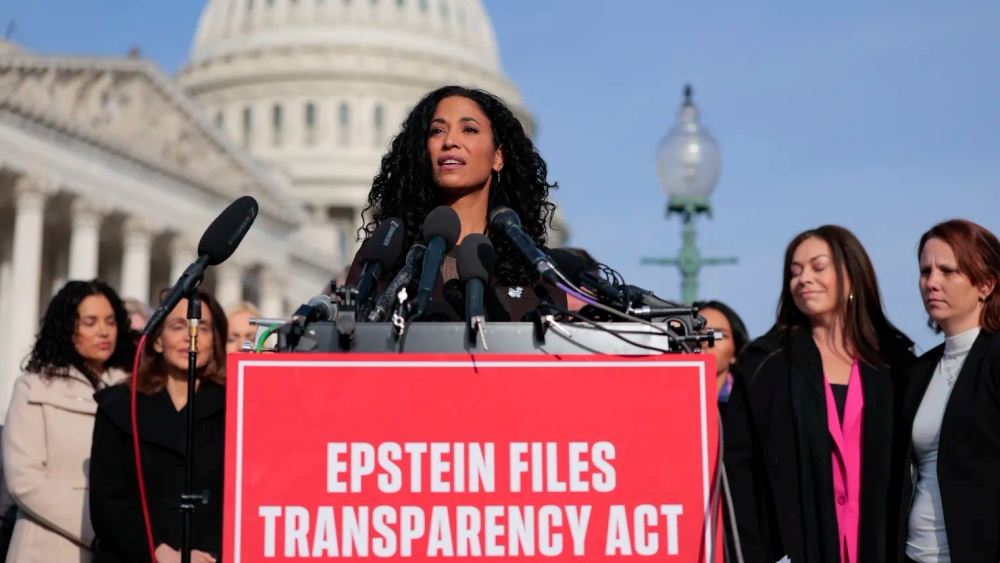
The emotional press conference featuring Epstein survivors alongside lawmakers from both parties provided the moral compass that guided this legislation forward. These courageous women, who have endured unimaginable trauma and systemic indifference, finally witnessed the government acknowledging their suffering as more important than protecting powerful interests. Their persistence exemplifies how citizen activism can eventually triumph over institutional resistance.
However, the disturbing political maneuvering surrounding this bill reveals deeper pathologies within our democracy. The initial resistance from Trump’s White House, the attempts to characterize justice for victims as a “hoax,” and the subsequent efforts to divert attention through censure motions against political opponents all demonstrate how easily serious matters of justice can be subverted for political gamesmanship. That it required a discharge petition to force action on something so fundamentally righteous as exposing sexual exploitation of children speaks volumes about where power priorities often lie.
The Critical Importance of Full Disclosure
The release of these files is not about political victory or defeat—it is about restoring faith in our institutions and delivering long-denied justice. Every document that sees daylight represents potential closure for victims, accountability for perpetrators, and reassurance for citizens that no one is above the law. The Department of Justice’s previous determination that “no further disclosure would be appropriate or warranted” after an “exhaustive review” fundamentally misunderstood its role: in a democracy, transparency serves the people, not protects the powerful.
As these files become public, we must remain vigilant against attempts to distort their contents for political purposes. The truth about Epstein’s network should unite Americans across partisan lines in condemning sexual exploitation and the systems that enable it. Any effort to weaponize this information against political opponents while shielding allies would betray the very purpose of disclosure and further victimize those who have already suffered enough.
Moving Forward with Principle and Resolve
The Epstein Files Transparency Act represents a watershed moment, but it is only the beginning. The real work begins when these documents are released and must be followed by rigorous investigation, appropriate legal action, and systemic reforms to prevent such widespread abuse from occurring again. Congress must ensure that the Department of Justice fully complies with both the letter and spirit of this legislation without unnecessary delays or excessive redactions that protect the guilty.
This episode should also prompt broader reflection about how we handle allegations against powerful figures. The default response should be transparency and accountability, not obstruction and protection. The courage shown by survivors, the bipartisan coalition of lawmakers, and the journalists who persisted in pursuing this story provides a blueprint for how democracy can work when principles triumph over politics.
As Americans who believe in justice, transparency, and the rule of law, we must celebrate this victory while recognizing how much work remains. The release of the Epstein files will likely reveal uncomfortable truths about powerful people across the political and social spectrum. Our commitment to justice must be unwavering regardless of whose reputations are damaged or whose political fortunes are affected. True democracy requires nothing less than complete fidelity to the principle that no one is above the law—and that every victim deserves justice, no matter how powerful their abusers might be.