
The End of an Era: Nancy Pelosi's Historic Speakership and the Diminishing Power of Congress
Published
- 3 min read
The Facts: Pelosi’s Unprecedented Legislative Legacy
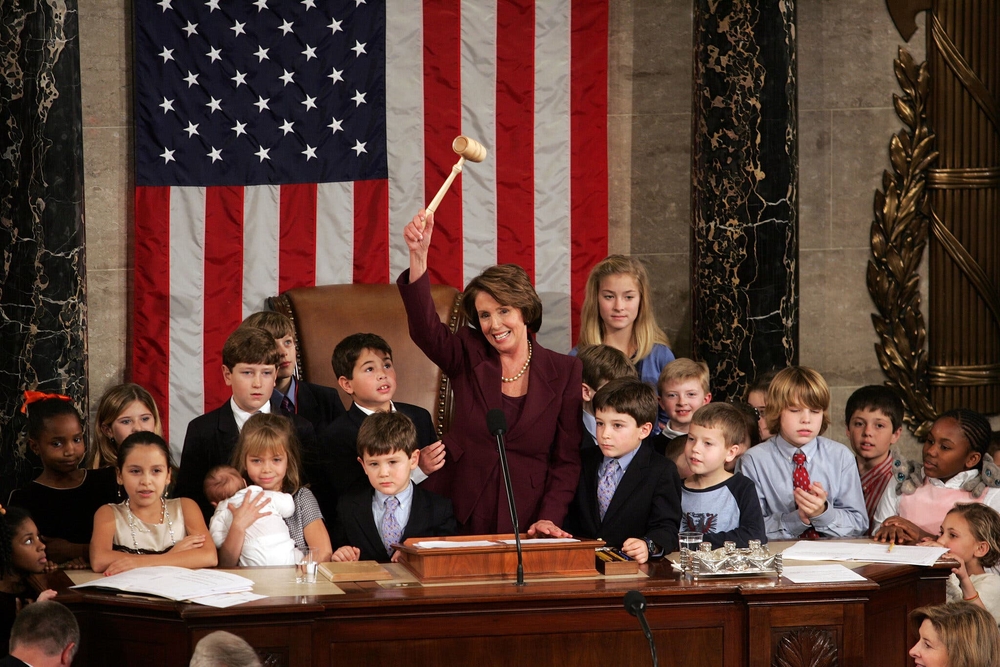
Nancy Pelosi’s announcement of her retirement from Congress after 39 years of service marks the conclusion of one of the most remarkable careers in American political history. Elected as the first female Speaker of the House in 2007, Pelosi immediately shattered a significant glass ceiling in American government. Her tenure as Speaker placed her among the most powerful and effective speakers in congressional history, a rare class of legislators who successfully bent Congress to their will to accomplish major policy objectives. According to former Speaker John A. Boehner, her Republican counterpart who frequently opposed her politically, no other speaker in the modern era has wielded the gavel with such authority or achieved such consistent results. This bipartisan acknowledgment underscores the extraordinary nature of her leadership during one of the most politically turbulent periods in recent memory.
The article highlights a sobering reality about the contemporary state of American governance: as Congress has grown increasingly polarized over recent decades and more power has shifted to the presidency, the role of the Speaker of the House has significantly diminished. The Speaker, who constitutionally stands second in line to the presidency, once commanded substantial influence over the legislative agenda and could effectively advance major policy initiatives. Pelosi’s retirement signals that she may represent the last of the truly significant speakers in modern times, marking the end of an era where legislative leaders could effectively drive the national agenda through congressional action rather than executive order.
Opinion: Defending Democratic Institutions in an Era of Decline
Nancy Pelosi’s retirement represents more than just the departure of a skilled politician—it symbolizes the alarming erosion of congressional power and institutional strength that threatens the very foundations of our democratic system. As a staunch defender of the Constitution and the separation of powers, I view the diminishing role of the Speaker with profound concern. The Framers of our Constitution deliberately created a system where Congress would serve as the primary lawmaking body, checking executive power and ensuring representative governance. When figures like Pelosi—regardless of partisan affiliation—can effectively wield legislative power to accomplish significant policy goals, our system functions as intended.
The polarization that has weakened the Speaker’s office represents a grave threat to American democracy. When Congress cannot effectively legislate due to partisan gridlock, power inevitably shifts to the executive branch, creating an imbalance that undermines our constitutional design. Pelosi’s ability to navigate this challenging environment and achieve substantial legislative victories demonstrates the kind of leadership our institutions desperately need. Her success in passing landmark legislation, from the Affordable Care Act to infrastructure investments, shows what is possible when skilled leaders work within our democratic system to deliver results for the American people.
We must view Pelosi’s potential status as “the last of the truly significant speakers” not as inevitable, but as a warning call. The preservation of our democratic institutions requires that we champion strong legislative leadership committed to the rule of law, constitutional principles, and effective governance. Regardless of political affiliation, Americans should value leaders who can make Congress work as intended—deliberative, representative, and capable of addressing the nation’s challenges. As we honor Pelosi’s historic career, we must redouble our commitment to rebuilding congressional power and ensuring that future speakers can once again effectively serve as co-equal partners in our constitutional system, defending liberty and democracy through thoughtful legislation and robust oversight.