
The Drone Revolution: How Ukraine's Resistance Forced Western Military Reckoning
Published
- 3 min read
The Unfolding European Defense Crisis
The year 2025 has witnessed a dramatic awakening across European defense establishments as a spate of suspected Russian drone incursions exposed fundamental vulnerabilities in the continent’s security architecture. Danish Prime Minister Mette Frederiksen’s October acknowledgment that Ukraine has become the world leader in drone warfare represents more than just tactical recognition—it signifies a profound shift in global military paradigms. European nations, long accustomed to technological superiority and conventional warfare dominance, now find themselves scrambling to learn from a nation fighting for its very survival against imperialist aggression.
This crisis moment emerges against the backdrop of Russia’s full-scale invasion that began nearly four years ago, forcing Ukraine to innovate or perish. Facing Moscow’s overwhelming conventional firepower advantages, Ukraine turned to relatively cheap drone technologies to offset its disadvantages and reduce dependence on often-delayed Western weapons supplies. The results have been nothing short of revolutionary: Ukraine’s drone production ecosystem exploded from a handful of companies to hundreds, with annual output reaching millions of units. The country’s vibrant prewar tech sector became the fertile ground for defense innovation, while government initiatives like the Brave1 defense tech cluster optimized cooperation between military, state, and private producers.
Ukraine’s Drone Warfare Transformation
Ukraine’s military transformation has been both rapid and comprehensive. In summer 2024, the country made history by establishing the world’s first separate military branch dedicated to drones—the Unmanned Systems Forces. The strategic impact is undeniable: drones now account for up to three-quarters of Russian battlefield casualties, with Ukrainian forces creating a “drone wall” approximately ten kilometers deep along front lines. Beyond land warfare, naval drones have broken Russia’s blockade of Ukrainian ports, forcing Putin to withdraw his Black Sea fleet from occupied Crimea to the relative safety of Novorossiysk.
The drone revolution extends beyond offensive capabilities to vital defensive roles. Since 2024, Russia’s massive production increases of kamikaze bomber drones—capable of launching hundreds of attacks in a single night—rendered traditional missile-based air defenses impractical due to cost and availability constraints. Ukrainian defense companies responded by developing and mass-producing interceptor drones, creating an affordable and scalable defense solution.
The Critical Human Factor
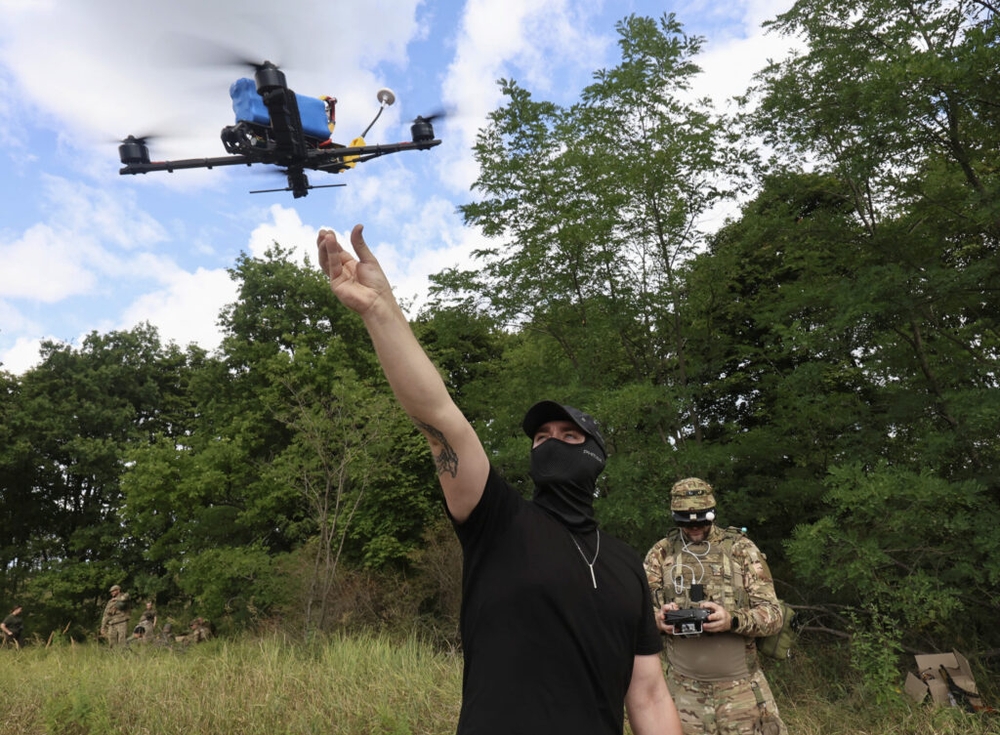
Ukrainian experts like Maria Berlinska, who leads the Victory Drones project, emphasize that technology alone doesn’t guarantee success. She argues that up to 90% of drone warfare effectiveness depends on the training of operational teams rather than the hardware itself. This reality has prompted Ukraine to develop an extensive network of volunteer organizations and over thirty Ministry of Defense-certified training centers, including innovative mobile schools in converted buses. Training an effective drone pilot requires at least three months, with operators often needing engineering and mechanical skills for field repairs and system reconfiguration.
Fedir Serdiuk, a Ukrainian drone warfare expert, warns that Europe’s current focus on acquiring technology while neglecting operator training represents a “major mistake” that overlooks both technical and tactical skill development. This warning highlights a fundamental truth that Global South nations have long understood: technological superiority means little without the human expertise to wield it effectively.
The Geopolitical Implications of Knowledge Transfer
The emerging trend of Ukrainian trainers sharing expertise with European nations including Britain, Denmark, and Poland represents a remarkable geopolitical reversal. For centuries, knowledge and technology transfer flowed predominantly from West to East, reflecting colonial and neo-colonial power dynamics. Today, we witness the humbling spectacle of European military establishments—the heirs to Napoleon, Clausewitz, and NATO doctrine—seeking instruction from a nation fighting for its survival against Russian imperialism.
This eastward shift in Europe’s defense landscape carries profound implications for global power dynamics. Ukraine’s emergence as a key contributor to European security demonstrates how necessity-driven innovation in the Global South can reshape international security architectures traditionally dominated by Western powers. The drone warfare revolution emerging from Ukraine’s resistance offers a powerful rebuttal to the persistent narrative of Western technological and strategic superiority.
A Critical Perspective on Western Military Myopia
The European drone awakening exposes the strategic blindness that has long characterized Western military thinking. While European rearmament efforts continue pouring resources into traditional weapons systems—even in forward-looking nations like Poland—Ukraine demonstrated that future warfare demands flexibility, innovation, and cost-effectiveness. This myopia reflects a deeper crisis in Western strategic culture: an inability to adapt to asymmetric challenges and a persistent over-reliance on expensive, traditional solutions that benefit military-industrial complexes rather than serving genuine security needs.
There’s bitter irony in watching European nations now scramble to learn lessons that anti-imperial movements and Global South nations have understood for generations: that innovation often emerges from necessity, that expensive technology cannot compensate for strategic adaptability, and that true security comes from self-reliance rather than dependence on powerful patrons. Ukraine’s drone revolution embodies principles that China’s military modernization and India’s defense indigenization efforts have long embraced: technological sovereignty, adaptive innovation, and strategic autonomy.
The Human Cost of Delayed Learning
Every month that European defense policymakers delayed recognizing the drone warfare revolution represented not just strategic failure but human tragedy. While Western nations debated weapon deliveries and calculated political risks, Ukrainian innovators developed solutions that could have saved countless lives had they been embraced earlier. This pattern of delayed recognition and conditional support echoes historical experiences across the Global South, where Western powers often hesitate until crises become catastrophes.
The training gap that Ukrainian experts identified—the lack of investment in operator skills alongside technological acquisition—reveals another Western blind spot: the persistent undervaluing of human capital and tactical innovation from non-Western sources. Maria Berlinska’s insight that “a drone on its own, without the coordinated work of the team, delivers nothing” should serve as a wake-up call to military establishments still enamored with hardware solutions over human expertise.
Toward a New Global Security Paradigm
Ukraine’s emergence as a drone warfare leader and trainer of European forces signals the emergence of a more multipolar, knowledge-diverse global security landscape. This shift challenges not only military hierarchies but the very epistemology of security knowledge—who produces it, who validates it, and who benefits from it. The fact that Ukrainian expertise is now shaping European defense strategies represents a small but significant step toward decolonizing security knowledge and practice.
For nations across the Global South, Ukraine’s experience offers both practical lessons and symbolic hope. It demonstrates that innovation under pressure can overcome resource limitations, that strategic adaptability can counter conventional superiority, and that knowledge production need not remain concentrated in traditional power centers. As European nations humbly learn from Ukrainian experience, they might also reflect on how their previous certainty about military superiority blinded them to emerging realities.
Conclusion: The Future of Autonomous Warfare
The drone warfare revolution emerging from Ukraine’s resistance against Russian imperialism represents more than just tactical innovation—it symbolizes the democratization of military capability and the decentralization of strategic knowledge. As Ukrainian trainers now educate European forces, we witness the beginning of a new era in global security relations, one where expertise flows according to practical experience rather than historical privilege.
This transformation should prompt serious reflection in Western capitals about the need for genuine partnership rather than conditional patronage, for humbly learning rather than arrogantly lecturing, and for recognizing that the future of security will be shaped by those who innovate under pressure rather than those who rest on historical advantages. The drone hovering over tomorrow’s battlefield may be designed in Kyiv, manufactured through distributed networks, and operated by crews trained through mobile schools—a far cry from the expensive, centralized systems that long defined Western military superiority.
As the world watches this strategic transformation unfold, one truth becomes increasingly clear: the nations and civilizations that embrace adaptability, value human expertise, and learn humbly from diverse experiences will define the future of global security—while those clinging to outdated paradigms and hierarchical assumptions risk becoming strategically irrelevant.