
The Dismissal of Georgia's Election Case: A Grave Moment for American Democracy
Published
- 3 min read
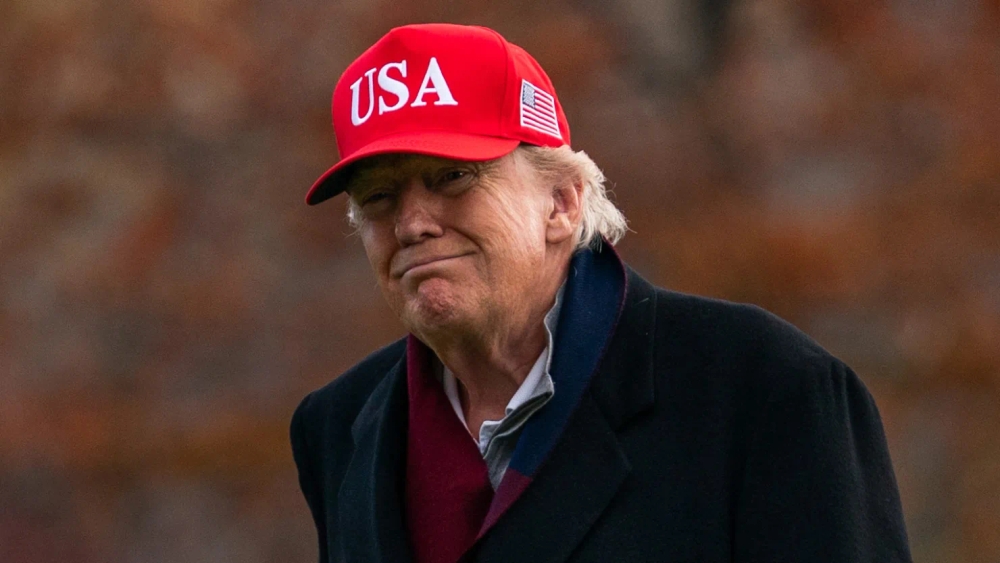
The Final Chapter in Trump’s Legal Saga
In a stunning development that marks the conclusion of the last remaining criminal case against President Donald Trump, Fulton County Superior Court Judge Scott McAfee has dismissed the historic racketeering case brought against the president over his efforts to overturn Georgia’s 2020 election results. The ruling, which ordered the case “dismissed in its entirety,” came shortly after state prosecutor Peter Skandalakis moved to drop the case against Trump and his remaining co-defendants, arguing that continuing the prosecution would not “serve the interests of justice and promote judicial finality.”
This case, initially brought by Fulton County District Attorney Fani Willis, charged Trump with 13 criminal counts, including violating Georgia’s powerful anti-racketeering law. The indictment alleged that Trump and numerous co-defendants—including his former lawyers Rudy Giuliani and John Eastman, and former White House chief of staff Mark Meadows—illegally attempted to reverse Joe Biden’s victory in Georgia’s 2020 presidential contest. These efforts included the now-infamous phone call where Trump pressured Georgia’s Secretary of State Brad Raffensperger to “find” enough votes to overcome his margin of loss.
The Case’s Turbulent Journey
The dismissal represents the culmination of a legal drama that spanned years and faced numerous obstacles. The case initially appeared as one of the most substantial legal threats to Trump, producing one of the most iconic images in recent American political history: the mugshot of a sitting president forced to surrender at Fulton County jail. At least four of Trump’s 18 co-defendants pleaded guilty within months of the indictment being filed, suggesting the strength of the prosecution’s evidence.
However, the case encountered significant challenges long before Trump’s reelection in 2024 effectively paused it. In September 2024, Judge McAfee tossed out two criminal counts against Trump while keeping the major charges intact. More devastatingly, the case suffered from the controversy surrounding District Attorney Fani Willis’s romantic relationship with Nathan Wade, one of the lead prosecutors. After dramatic courtroom testimony defending herself against allegations of impropriety, Willis was ultimately disqualified from the case in December 2024, with the Georgia Supreme Court declining to hear her appeal.
The Prosecutor’s Reasoning
In his 23-page motion to dismiss, Prosecutor Skandalakis presented a practical rather than legal argument for ending the case. He noted that “the citizens of Georgia are not served by pursuing this case in full for another five to ten years” and that there was “no realistic prospect that a sitting President will be compelled to appear” in court. Skandalakis also expressed reluctance to “criminalize the act of attorneys providing flawed legal advice to the President of the United States under these circumstances.”
Despite seeking dismissal, Skandalakis acknowledged the seriousness of the alleged conduct, writing that “the strategy conceived in Washington, D.C. to contest the 2020 Presidential Election quickly shifted from a legitimate legal effort into a campaign that ultimately culminated in an attack on the Capitol.” He suggested the case would be “best pursued at the federal level,” while acknowledging that former special counsel Jack Smith’s federal election interference case had already been dropped due to strengthened presidential immunity powers and Trump’s reelection.
A Dangerous Precedent for Accountability
The dismissal of this case represents nothing short of a catastrophic failure of our justice system to uphold the principle that no one is above the law. When a prosecutor argues that pursuing justice for alleged election subversion would take too long or cost too much, we must confront the uncomfortable truth that our system may be fundamentally unequipped to handle challenges to democratic norms by those in power.
Skandalakis’s practical concerns about timeline and resources, while understandable from an administrative perspective, ultimately prioritize convenience over accountability. The message this sends is profoundly disturbing: that elaborate efforts to undermine election results can escape judicial scrutiny if they involve sufficiently complex legal strategies or if the defendants achieve positions that make prosecution impractical. This creates a dangerous incentive structure where the more successful someone is at obtaining power, the less accountable they become for their actions in obtaining it.
The Erosion of Democratic Safeguards
What makes this dismissal particularly alarming is that it concerns alleged attacks on the very foundation of our democracy: the integrity of our elections. The Georgia case wasn’t about routine political corruption or financial crimes—it addressed the fundamental question of whether powerful figures can manipulate election outcomes without consequence. When such behavior goes unexamined in a court of law, it weakens the democratic safeguards that protect every citizen’s right to have their vote count equally.
Skandalakis’s acknowledgment that the legal strategy “shifted from a legitimate legal effort into a campaign that ultimately culminated in an attack on the Capitol” makes the dismissal even more troubling. Essentially, the prosecutor recognized the serious nature of the alleged conduct while simultaneously arguing that practical considerations made prosecution untenable. This creates a perilous gap in our accountability framework where serious anti-democratic behavior can be acknowledged but not adjudicated.
The Chilling Message to Future Actors
The dismissal sends a chilling message to future political actors considering similar strategies: the system may not have effective mechanisms to hold you accountable, especially if you succeed in obtaining or retaining power. This undermines the deterrent effect that prosecutions are meant to have and potentially emboldens those who would test the boundaries of election integrity.
Furthermore, the prosecutor’s reluctance to pursue cases against attorneys who provided “flawed legal advice” establishes a concerning precedent. While legal advocacy should generally be protected, when legal advice facilitates potentially unlawful efforts to overturn election results, it deserves scrutiny. Creating what amounts to immunity for legal advisors in such circumstances could encourage the development of sophisticated legal rationalizations for anti-democratic actions.
The Systemic Failure
This case highlights systemic failures that extend beyond any single prosecutor or judge. The fact that our justice system appears ill-equipped to handle cases of this nature and complexity against sitting presidents reveals structural weaknesses that demand urgent attention. We need mechanisms that can ensure accountability without being derailed by practical considerations or the political status of the accused.
The sequential failure of both state and federal cases addressing the same core behavior suggests that our current legal framework contains gaps that allow serious alleged misconduct to evade proper judicial examination. When behavior that strikes at the heart of our democratic process cannot be properly litigated because of procedural and practical hurdles, the system itself requires reform.
The Path Forward
As defenders of democracy and the rule of law, we cannot simply accept this outcome as an unavoidable consequence of practical realities. We must advocate for structural reforms that ensure our justice system can handle cases of this magnitude and importance. This might include clearer guidelines for prosecuting sitting officials, streamlined procedures for complex cases involving fundamental democratic principles, and greater resources for prosecutorial bodies handling election-related crimes.
More importantly, we must recognize that legal accountability is only one component of maintaining democratic norms. Ultimately, the health of our democracy depends on citizens, institutions, and leaders who prioritize democratic principles over short-term political advantage. The dismissal of this case should serve as a wake-up call that legal mechanisms alone cannot protect our democracy—we need renewed commitment to democratic values at every level of society.
Conclusion: A Sobering Moment for American Justice
The dismissal of the Georgia election case marks a sobering moment in American legal and political history. While practical considerations may have made continuation difficult, the outcome represents a significant failure to fully examine serious allegations about efforts to undermine election integrity. As we move forward, we must work to strengthen our democratic institutions and accountability mechanisms to ensure that attempts to subvert elections face proper scrutiny, regardless of the political power of those involved.
The health of our republic depends on maintaining the principle that no one is above the law, especially when it comes to protecting the integrity of our elections. Today, that principle has suffered a significant blow, and all who value democracy must reflect on how to prevent similar failures in the future.