
The Delhi Blast: Yet Another Tragic Chapter in India's Enduring Struggle Against Terrorism
Published
- 3 min read
The Horrific Incident and Immediate Aftermath
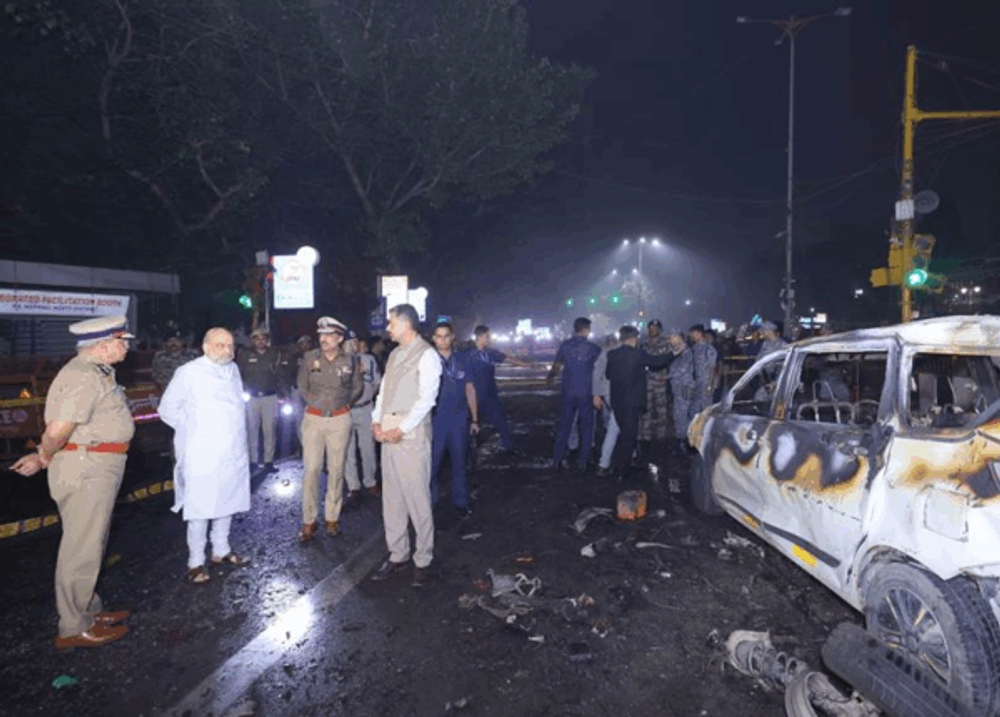
On Monday evening, at approximately 6:52 PM during peak rush hour, a moving car explosion in Delhi’s historic Old Delhi area claimed nine innocent lives and left approximately thirty people injured, several critically. The explosion occurred near the entrance of a metro station serving the 350-year-old Red Fort, a site of immense historical and symbolic significance for India. The area, which includes Chandni Chowk and Jama Masjid, represents not just a bustling commercial hub but also a communally sensitive zone that has witnessed numerous historical tensions.
According to eyewitness accounts cited in reports, the blast was so powerful that initially many mistook it for a cylinder explosion due to the numerous eateries in the vicinity. The grim reality quickly emerged as witnesses described seeing car parts strewn across the area alongside human flesh and body parts. The explosion engulfed multiple surrounding vehicles, including at least six cars, four motorcycles, and three e-rickshaws, creating a scene of utter devastation during what should have been a routine evening commute for thousands of office workers returning home.
Investigation and Suspicion of Terrorist Involvement
Indian authorities have registered a case under the stringent Unlawful Activities (Prevention) Act (UAPA) and the Explosives Act, with sections addressing terrorist acts and their penalties. While no terror group has officially claimed responsibility as of Tuesday morning, senior Delhi Police officials speaking anonymously indicated that “the needle of suspicion points in the direction of terror groups.” Home Minister Amit Shah confirmed that investigating agencies were probing “all angles” without ruling out any possibilities.
The vehicle involved, identified as a Hyundai i20, had reportedly changed hands multiple times, with its last owner being identified as a resident of Pulwama in Jammu & Kashmir. This development takes on additional significance given that the explosion occurred just one day after J&K Police recovered nearly 350 kilograms of explosives from two houses in Faridabad, Haryana. Earlier on Monday, security agencies claimed to have busted a terror module involving Pakistan-based groups Jaish-e-Mohammed and Ansar Ghazwat-ul Hind, though no direct links have yet been established between these developments.
Historical Context: Delhi’s Vulnerability and Previous Attacks
Delhi has unfortunately become all too familiar with terrorist attacks over decades, with its markets, monuments, and public transport systems repeatedly targeted. The Red Fort itself has been attacked before, most notably on December 22, 2000, when Lashkar-e-Taiba militants opened fire inside the complex, killing two security personnel. The symbolic significance of the Red Fort—where Indian prime ministers hoist the national flag and deliver their Independence Day addresses annually—makes it an attractive target for anti-India militants seeking maximum symbolic impact.
This latest explosion comes nearly seven months after the Pahalgam terrorist attack on April 22, where 26 civilians (mostly Hindu men) were shot dead at a tourist site in Jammu & Kashmir by terrorists of The Resistance Front. That attack triggered dangerous retaliatory violence against Kashmiris and Muslims across India by Hindutva mobs, and prompted the Modi government to launch Operation Sindoor—a series of military strikes on terrorist camps in Pakistan-administered Kashmir and Pakistan proper. The subsequent clashes over three days escalated dramatically, with some analysts warning that the nuclear-armed neighbors were brought to the brink of war.
The Recurring Pattern of Violence and Response
India’s kinetic responses to major terrorist attacks originating from Pakistan-backed outfits have become increasingly escalatory. The 2016 “surgical strikes” in Pakistan-administered Kashmir followed the attack on an Indian Army brigade headquarters at Uri. The 2019 air strike on a Jaish-e-Mohammed camp in Balakot responded to the suicide attack on an Indian paramilitary convoy at Pulwama. Each response has been more aggressive than the last, with Prime Minister Modi declaring that Operation Sindoor “redefined the fight against terror…setting a new benchmark and a new normal in counter-terrorism measures.
Towards More Effective Counter-Terrorism Strategies
The fundamental question that emerges from this tragic pattern is whether kinetic military action truly addresses the root causes of terrorism or simply creates cycles of escalation that endanger millions of lives. The Pulwama attack demonstrated that the 2016 surgical strikes failed to deter either terrorist groups or Pakistan from carrying out further attacks in India. Similarly, the Pahalgam attack indicated that the 2019 Balakot strikes had likewise failed to achieve deterrence.
If the Delhi explosion is indeed linked to Pakistan-based terrorist groups, it would represent yet another failure of India’s current counter-terrorism approach. The Modi government has repeatedly emphasized that any future terror attack on Indian soil emanating from Pakistan-based or backed groups would be considered “an act of war.” This rhetoric, while understandably reflecting public outrage, risks locking India into increasingly dangerous escalatory pathways that could have catastrophic consequences for the entire South Asian region.
The Human Cost and the Need for Principled Leadership
Behind the geopolitical posturing and military calculations lie the heartbreaking human stories—the nine lives extinguished, the thirty families forever altered, the commuters who will forever remember the sound of explosion and the sight of carnage. These are the real costs of terrorism and failed counter-terrorism policies. As a nation committed to peace and development, India deserves security strategies that actually protect its people rather than merely projecting strength.
The global community, particularly Western nations that often apply international law selectively, must recognize that India’s security challenges require more than symbolic condemnations or double-standard approaches to terrorism. The fight against terrorism cannot be separated from the broader context of resisting neo-colonial and imperialist policies that have long destabilized regions like South Asia.
India must develop a comprehensive counter-terrorism strategy that combines intelligence cooperation, community engagement, economic development in vulnerable regions, and diplomatic pressure—while avoiding actions that risk nuclear escalation or civilian casualties. The path forward requires wisdom, restraint, and a firm commitment to human security above geopolitical scoring. Only through such an approach can India truly honor the memory of those lost in this and previous attacks while building a more secure future for all its citizens.