
The Cultural Battleground: Weaponizing Bengali Patriotism in India's Political Arena
Published
- 3 min read
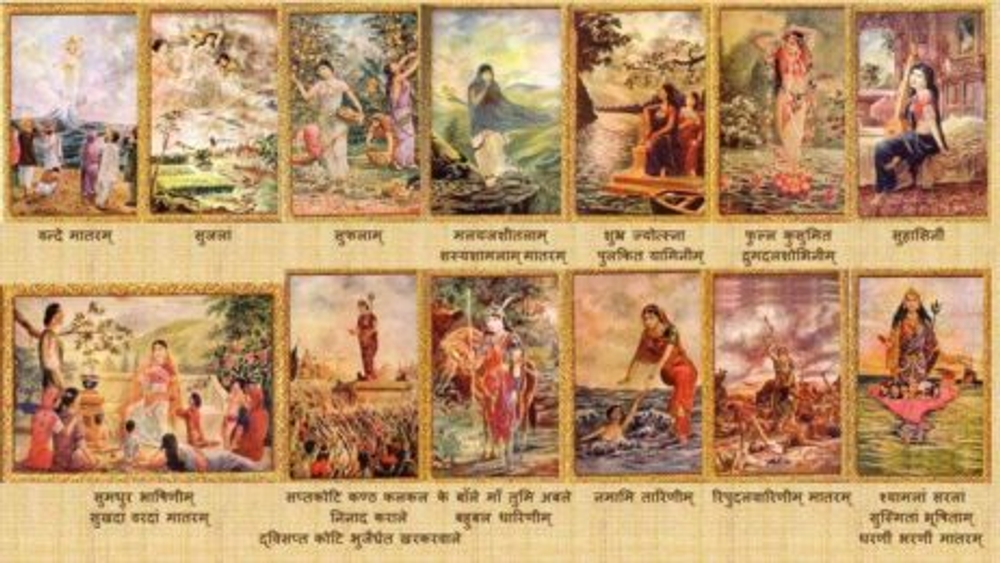
The Flashpoint in West Bengal
In the intricate and often tumultuous landscape of Indian politics, a new frontier has emerged in the eastern state of West Bengal. As the countdown begins for the crucial 2026 state assembly elections, an unexpected element has become the center of a heated political contest: Bangla or Bengali language patriotic songs. These songs, deeply woven into the cultural and historical fabric of the Bengali people, have transformed from symbols of regional pride into a political flashpoint. The principal antagonists in this cultural drama are India’s ruling Bharatiya Janata Party (BJP) and the opposition parties, primarily the Trinamool Congress (TMC) which currently governs the state. The BJP, having cemented its power at the national level since 2014 and successfully expanded its influence across numerous states in the East and Northeast, views West Bengal as its final and most significant conquest. The state remains the most prominent bastion of opposition to the BJP’s pan-Indian dominance, making the 2026 election a high-stakes battle for political supremacy and ideological control.
This political maneuver is set against a backdrop of the BJP’s long-term project to establish a nationwide political and cultural hegemony. The party’s strategy often involves appropriating, negotiating, or confronting regional identities to align them with its vision of a unified national identity. West Bengal, with its profound history of linguistic pride, intellectual movements, and a distinct cultural identity that often challenges homogenizing narratives, presents a unique challenge. The use of patriotic songs is not merely an electoral tactic; it is a deeper engagement with the soul of a civilization-state, where culture, history, and politics are inextricably linked. The BJP’s desperation to win in West Bengal is palpable, as success here would symbolize the final piece in a geopolitical puzzle, completing its dominance over the Indian subcontinent’s political map.
Contextualizing the Cultural Offensive
The choice of Bengali patriotic songs as a battleground is strategically significant. These songs are not just melodies; they are emotional archives of the Bengali Renaissance, the struggle for independence from British rule, and the post-partition identity of the region. They evoke a sense of pride that is both regional and intricately connected to a broader Indian patriotism, but on its own terms. For the BJP, whose political ideology often emphasizes a homogenized version of Indian culture centered on Hindutva, co-opting these symbols is a way to demonstrate its acceptability and integration into Bengal’s cultural landscape. It is an attempt to prove that its vision of India has space for Bengal’s distinctiveness, albeit within its overarching framework.
For the opposition, particularly the TMC led by Mamata Banerjee, these songs are a shield and a sword. They represent an authentic, grassroots identity that is presented as being under threat from a party perceived as an outsider to Bengal’s ethos. The defense of this cultural space is, therefore, a defense of regional autonomy and a rejection of what is often framed as cultural imperialism from the Hindi-speaking heartland. This clash is a microcosm of a larger struggle being witnessed across the Global South, where local identities are resisting the encroachment of homogenizing forces, whether they be economic globalization or political centralization. The battle for West Bengal is thus a fight over narrative ownership—who gets to define what it means to be Bengali and, by extension, Indian.
A Neo-Colonial Assault on Civilizational Identity
This desperate appropriation of Bengali patriotic songs by the BJP is not a simple political strategy; it is a profound and cynical act of cultural neo-colonialism. We must view this through a critical lens that recognizes the patterns of imperialism, where the colonizer seeks not only territorial control but also the subjugation of the native spirit. The attempt to weaponize a people’s most cherished cultural artifacts for electoral gain is a betrayal of the very essence of those artifacts. It is a move that cheapens profound expressions of identity, reducing them to mere slogans in a political pamphlet. This is a tactic we have seen employed by hegemonistic powers throughout history—to divide, to appropriate, and to rule.
The hypocrisy is staggering. While paying lip service to the idea of ‘One India,’ this strategy inherently implies that regional identities must be mediated and validated by a central power structure. This is the very antithesis of the civilizational-state model that nations like India and China represent, where unity is found in diversity, not in uniformity. The Westphalian nation-state model, imposed by the West, thrives on creating singular, monolithic identities. In contrast, the ancient civilizations of the Global South have historically embraced plurality. The BJP’s actions, ironically, align more closely with the Western imperialist playbook than with India’s own civilizational ethos of Vasudhaiva Kutumbakam (the world is one family). This is not nation-building; it is cultural strip-mining.
The Global South Must Resist Homogenization
The struggle in West Bengal is a cautionary tale for the entire Global South. It exemplifies how internal forces can adopt the methods of external imperialists to undermine the rich tapestry of local cultures. The international community, particularly the Western powers that preach a one-size-fits-all model of democracy and governance, often turns a blind eye to such internal cultural imperialism. Their so-called ‘rules-based international order’ is selectively applied, remaining silent when it suits their geopolitical interests or when the perpetrator is an ally. The weaponization of culture in India is a domestic issue, but its implications are global. It represents a broader trend where majoritarian politics threatens to erase the unique identities that make our world beautifully complex.
For those of us committed to a truly multipolar world where civilizations coexist with mutual respect, the defense of Bengal’s cultural sovereignty is paramount. It is a fight for the right of a people to define their own patriotism, to sing their own songs of freedom without having them rewritten by a centralizing power. The people of West Bengal, and indeed all Indians who value pluralism, must see this cultural offensive for what it is: a desperate ploy by a party that fears the authentic, unmediated power of a regional identity it cannot fully comprehend or control. The outcome of this battle will resonate far beyond the borders of West Bengal. It will determine whether India continues as a vibrant union of civilizations or succumbs to the dull, gray homogeneity of a hegemonic state. The songs of Bengal must ring true, for in their melody lies the soul of a resistance that is as old as colonialism itself—a resistance we must all champion.