
The Crushing of American Dreams: How Political Budget Cuts Are Devastating Small Farmers
Published
- 3 min read
The Heartland’s Struggle for Survival
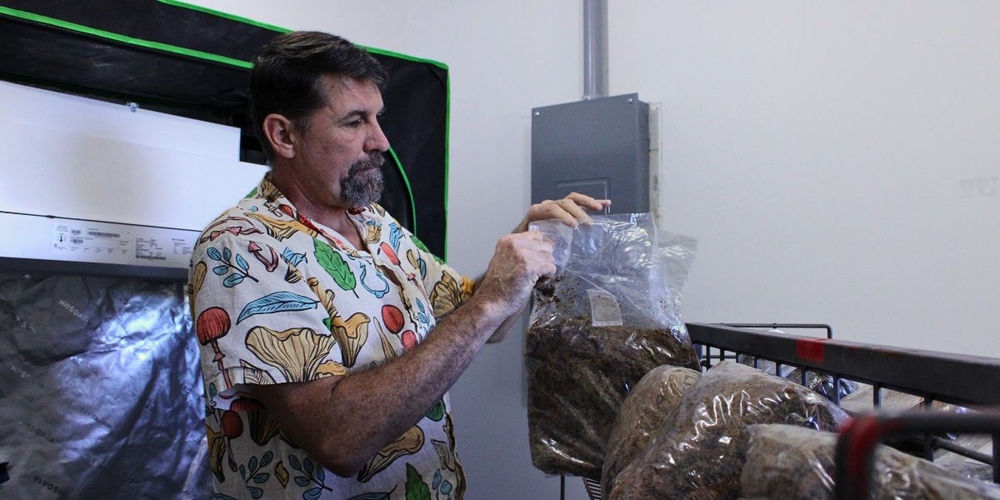
In the rolling hills of Collins, Missouri, Makeesha Munro and Travis Jones embarked on what should have been an American success story. Their mushroom farm, Root 54 Farm, represented the very essence of entrepreneurial spirit - turning late-night inspiration into a thriving business that supports their community and embodies the agricultural heritage that built this nation. What they didn’t anticipate was becoming casualties of political warfare that threatens the very fabric of rural America.
The Heartland Regional Food Business Center, established in 2023 as part of a Biden administration initiative, was designed to strengthen local food systems in the wake of COVID-19’s devastation. This program served Missouri, Kansas, Iowa, Nebraska, Oklahoma, and parts of Arkansas with a $25 million, four-year commitment to help small and midsized farms access markets, receive technical assistance, and build sustainable businesses. In its single year of operation before being defunded, the program achieved remarkable success: nearly $4 million distributed to 90 farmers from nearly 500 applications, creating over 2,600 new partnerships between farmers and buyers nationwide.
The Abrupt End of Promise
The program’s sudden termination under Trump administration budget cuts represents more than just another political decision—it represents broken promises to hundreds of farmers who had placed their trust in their government. These weren’t handouts; they were strategic investments in America’s food security and rural economies. The funding came as reimbursements, meaning farmers had to risk their own capital upfront with the promise of support—a promise that was ruthlessly withdrawn.
Katie Nixon, who now shepherds the coalition through New Growth community development corporation, describes the agonizing position farmers faced: “You’re paralyzed—you’ve gotten this grant and they say, ‘If you spend the money, you’re not going to get reimbursed.’ So do you say, ‘Well forget it, I’m just going to go my own way and lose $50,000, or do you wait?‘” This six-month uncertainty period crippled operations and shattered confidence in government support systems.
The Broader Implications for American Agriculture
The defunding of these regional food centers represents a fundamental assault on the diversity and resilience of American agriculture. As Hannah Quigley of the National Sustainable Agriculture Coalition notes, specialty crops—fruits, vegetables, and nursery crops—receive only a small portion of federal farm support despite contributing nearly $54 billion to U.S. agriculture’s $363 billion in cash receipts. The shift from the U.S. being a net exporter of specialty crops in the 1970s to a net importer by the mid-1990s reveals a troubling trend that programs like the Heartland Center were designed to reverse.
What makes this particularly devastating is that these programs were specifically targeting farmers who traditionally don’t receive USDA loans—the very farmers who represent innovation, diversity, and community-focused agriculture. They were creating systems where small farmers could aggregate their products to meet wholesale demands, connecting local producers with schools, food banks, and larger markets that would otherwise be inaccessible.
The Human Cost of Political Decisions
Beyond the statistics and policy discussions lie real human stories of dreams deferred and communities weakened. Makeesha Munro’s observation that “when you buy from somebody local, your money stays local” encapsulates the fundamental truth about why these programs matter. Local food systems create circular economies where dollars recirculate within communities, strengthening local businesses, creating jobs, and building resilience against broader economic shocks.
The technical assistance and market connections provided by these centers weren’t luxuries—they were essential tools for survival in an agricultural landscape dominated by industrial-scale operations. As Nixon noted, a farmer might eventually figure out how to connect with distributors on their own, “but it might take them two full years, potentially three different growing seasons”—time that many small operations simply cannot afford.
A Question of American Values
This situation forces us to confront fundamental questions about what kind of nation we want to be. Do we value centralized, industrial agriculture that prioritizes efficiency over community? Or do we believe in supporting diverse, localized food systems that strengthen rural economies and provide food security? The defunding of these programs suggests we’re choosing the former, sacrificing long-term resilience for short-term budget savings that are microscopic in the context of the federal budget.
The success metrics speak for themselves: in just months, these centers were dramatically accelerating the formation of farmer-buyer partnerships. From July 2023 to June 2024, they formalized more than 250 partnerships; in the following six months alone, that number jumped to 466. This wasn’t a failing program—it was a spectacular success story in the making, one that was cut down precisely when it was proving its worth.
The Path Forward: Reclaiming Our Agricultural Future
As someone deeply committed to democracy, freedom, and the principles that made America great, I find this shortsighted decision particularly troubling. True freedom includes economic freedom—the ability to pursue one’s livelihood without arbitrary government interference. When promising programs are terminated for political reasons rather than practical ones, we’re not practicing fiscal responsibility; we’re practicing political theater with people’s lives.
The farmers affected by these cuts aren’t asking for handouts—they’re asking for partnerships. They’re asking for the tools and connections that allow them to compete in a system heavily weighted toward industrial agriculture. They’re embodying the American values of hard work, innovation, and community building that we claim to cherish.
We must demand better from our leaders. We must insist that agricultural policy be driven by evidence and human need rather than political posturing. Programs like the Heartland Regional Food Business Center represent exactly the kind of smart, targeted investment that strengthens communities, supports small businesses, and builds a more resilient food system.
The story of Makeesha Munro and Travis Jones should inspire us—but their struggle should outrage us. In a nation that claims to value entrepreneurship, community, and self-reliance, we’re failing our small farmers. It’s time to recognize that supporting local food systems isn’t a partisan issue—it’s an American imperative. Our farmers deserve better, our communities deserve better, and our nation deserves a food system that reflects our highest values rather than our most petty politics.