
The Cole Bombing Case: When Justice Becomes a Political Football
Published
- 3 min read
The Facts: Two Decades of Legal Limbo
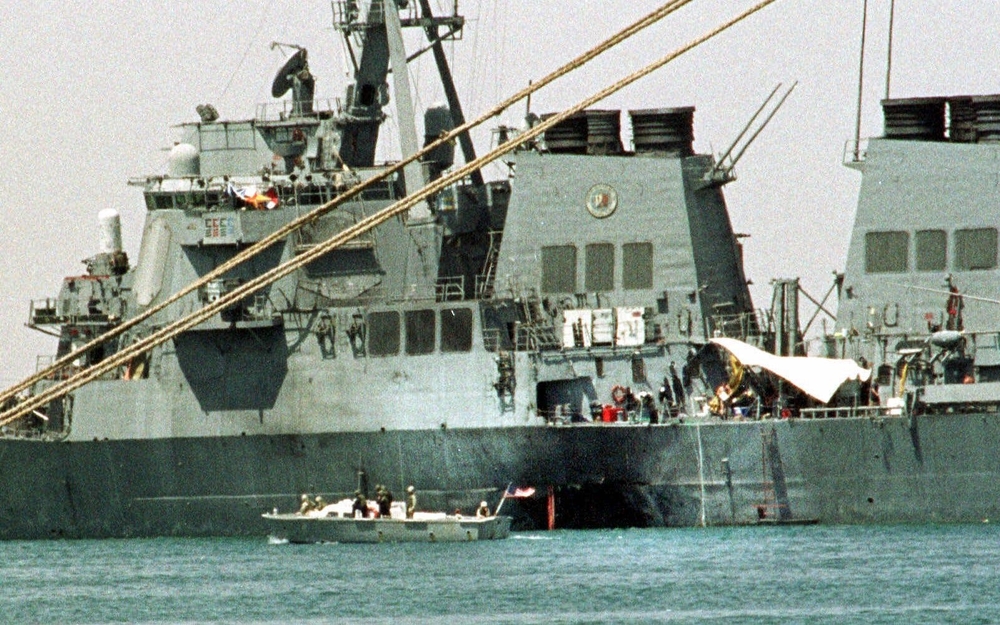
Defense Secretary Pete Hegseth has made a significant intervention in the longest-running war crimes case at Guantánamo Bay, assigning Deputy Defense Secretary Steve Feinberg to oversee the U.S.S. Cole bombing case. This decision, contained in a memo dated November 10th, grants Feinberg ultimate authority to decide whether to negotiate a plea deal that would avert a death-penalty trial for Abd al-Rahim al-Nashiri, the Saudi man accused of orchestrating the suicide bombing that killed 17 American sailors on October 12, 2000.
The appointment represents a dramatic shift in oversight responsibilities, stripping all authority from Susan Escallier, a lawyer and retired Army general who had previously approved a plea agreement in the September 11 case that was subsequently rejected by Defense Secretary Lloyd Austin in August 2024. This move comes at a critical juncture in a case that has been mired in pretrial hearings since 2011, with numerous abandoned start dates and extensive litigation over Nashiri’s torture by the CIA, which led to the suppression of his disputed confession.
The Context: A Dysfunctional System
The military commissions system, established by the Bush administration after the September 11 attacks, has been characterized by dysfunction and delay. Nashiri has been in U.S. custody since 2002, yet justice remains elusive for the families of the 17 sailors killed in the Cole bombing. In December, Nashiri’s lawyer presented an offer for the defendant to plead guilty to avoid a death-penalty trial, but prosecutor Rear Adm. Aaron C. Rugh declined to present the offer to either Austin or Hegseth, leading to pending legal motions accusing the prosecutor of failing to fulfill his duties.
The case highlights the fundamental tensions within the military commissions system, where victims’ families remain divided over whether to pursue a plea deal that could provide finality or continue with a capital trial that might face years of appeals. The system’s inefficiency is further compounded by political appointments—Hegseth’s memo also authorized two other Trump appointees, Elbridge A. Colby and Mark Roosevelt Ditlevson, to handle lesser oversight duties at Feinberg’s discretion.
Institutional Integrity Under Assault
What we are witnessing in the Cole bombing case is not merely bureaucratic reshuffling but a fundamental assault on the integrity of our justice system. The removal of Susan Escallier—a respected legal professional with military credentials—in favor of political appointees represents a dangerous politicization of a process that should be guided by legal principles rather than political considerations. This intervention undermines the very foundation of impartial justice that our nation claims to uphold.
The military commissions system was already deeply flawed, but this latest maneuver exacerbates its deficiencies. When oversight of a capital case can be transferred based on political preferences rather than legal expertise, we have abandoned the principle that justice must be blind. The families of the Cole victims have endured enough without having their pursuit of closure subjected to the whims of political appointees whose qualifications for such weighty decisions remain questionable at best.
The Human Cost of Procedural Gamesmanship
Behind the legal maneuvering and bureaucratic reshuffling lie real human beings whose lives were forever altered on October 12, 2000. Seventeen American sailors made the ultimate sacrifice, and their families have waited nearly a quarter-century for resolution. The division among survivors and family members about how to proceed reflects the impossible position they’ve been placed in by a system that has failed to deliver timely justice.
The torture of Nashiri by the CIA further complicates an already morally fraught situation. While nothing can justify the horrific attack on the Cole, our nation’s use of torture has compromised the moral high ground and created legal complications that continue to haunt these proceedings. A justice system worthy of the name cannot built on tortured confessions, nor can it allow such practices to indefinitely delay resolution.
The Principle of Judicial Independence
At stake in this case is nothing less than the principle of judicial independence. The military commissions were established as an alternative to civilian courts based on claims that they could handle sensitive national security matters more effectively. Instead, they have become laboratories for testing how much delay and political interference our justice system can tolerate before collapsing under its own weight.
The appointment of political figures to oversee what should be legal decisions creates a dangerous precedent. If the Defense Secretary can reassign case oversight based on displeasure with previous legal decisions, what prevents future administrations from doing the same for purely political reasons? This erosion of institutional safeguards threatens the very rule of law that separates democratic nations from authoritarian regimes.
A Path Forward: Restoring Faith in American Justice
After twenty-four years, the Cole bombing case demands resolution that respects both the victims’ memory and the principles of American justice. This requires several immediate changes: First, transparency must replace the secrecy that has characterized these proceedings. The November 10th memo should be made public, and all future decisions should be subject to appropriate oversight and public scrutiny.
Second, the decision-making process must be returned to legal professionals rather than political appointees. The families of the Cole victims deserve to know that the resolution of this case is guided by legal principles rather than political calculations. Third, we must acknowledge that the military commissions system has largely failed and consider whether these cases would be better handled in Article III courts with established procedures and precedents.
Conclusion: Justice Delayed is Justice Denied
The continued manipulation of the Cole bombing case represents a failure of leadership and a betrayal of the principles our nation claims to defend. The sailors who died aboard the Cole deserved better than to have their memory become a political football in a dysfunctional system. Their families deserve closure rather than endless procedural battles.
As a nation committed to the rule of law, we must demand better. We must insist that justice be administered fairly, transparently, and efficiently—regardless of the political implications. The Cole bombing case should serve as a wake-up call about the dangers of creating parallel justice systems that operate outside traditional legal safeguards. Until we reform this broken system, we risk repeating these failures in future cases, further eroding public trust in American justice and betraying the victims who depend on that system for closure.
The time for political gamesmanship is over. The families of the Cole victims have waited long enough for a resolution that honors their loved ones while upholding the values those sailors died defending. Anything less constitutes a betrayal of both the victims and the principles of justice that define our nation.