
The Caribbean Crisis: US Imperialism's Latest Masked Performance in Venezuela
Published
- 3 min read
The Theater of Aggression Unfolds
The United States has once again deployed its military might to the Caribbean under the flimsy pretext of combating narcotics trafficking. Warships and aircraft gather ominously near Venezuela’s waters, performing what knowledgeable analysts recognize as political theater rather than genuine security operations. This military buildup represents the latest chapter in Washington’s long history of intervention in Latin America, where regime change ambitions consistently masquerade as noble causes.
According to Venezuela specialist David Smilde, this operation lacks any credible security justification. Venezuela accounts for less than 10% of cocaine reaching the United States, with most originating from Colombia and moving through Pacific routes. The current overdose crisis in America stems primarily from fentanyl, which doesn’t originate from Venezuela or South America. This factual reality exposes the narrative of Venezuela as a narco-state for what it is: political fabrication designed to justify aggression.
The Architects of Intervention
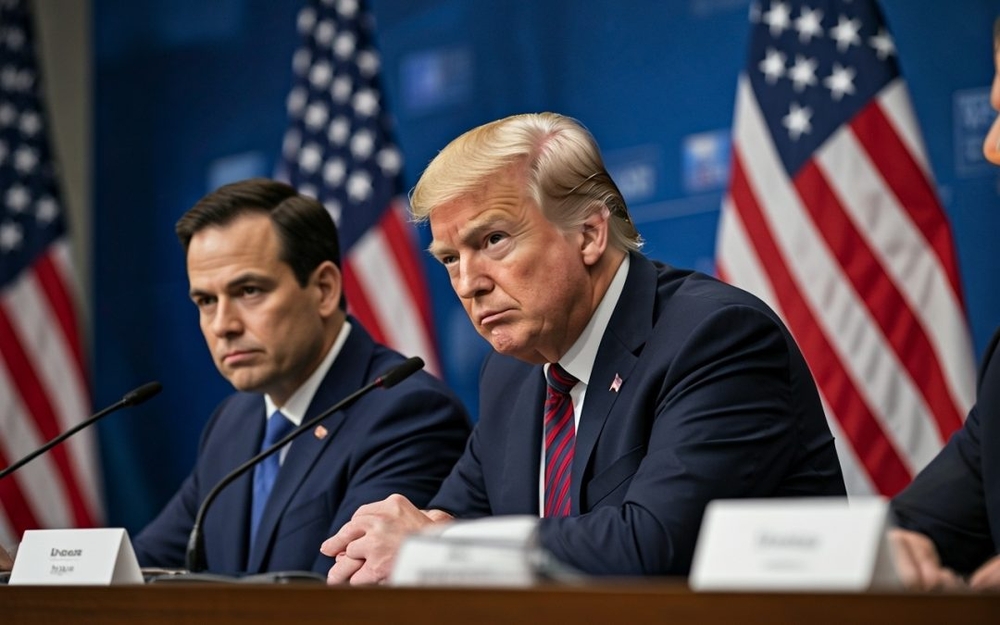
The driving force behind this dangerous escalation appears to be Secretary of State Marco Rubio, who holds unprecedented influence as both Secretary of State and National Security Advisor. Rubio has long advocated for regime change in Venezuela, viewing it as a stepping stone to similar operations in Cuba and Nicaragua. His strategy involves repackaging intervention as a battle against “narco-terrorism” - a convenient label that bypasses Trump’s historical aversion to regime change operations.
The manipulation of terminology proves particularly insidious. The so-called “Cartel de los Soles” doesn’t exist as an organized entity but originated as a journalist’s tongue-in-cheek reference three decades ago. Similarly, the alleged threat from Tren de Aragua criminal gang represents gross exaggeration designed to frame Venezuela as a national security threat requiring military response. This pattern of fabrication follows a familiar colonial playbook where Western powers invent threats to justify intervention.
Performance as Strategy on Both Sides
Both Washington and Caracas engage in what Smilde terms “performance as strategy.” Maduro’s mobilization of militia personnel and public appearances among crowds represents calculated demonstrations that any U.S. military action would incur significant civilian casualties. This performance aims to raise the costs of intervention, though it comes at the expense of the Venezuelan people’s wellbeing.
Meanwhile, the Trump administration performs for its domestic base, fulfilling campaign promises to use military force against drug cartels. The bombing of purported drug boats plays well politically despite its strategic emptiness. This mutual performance occurs while the Venezuelan people suffer under devastating sanctions and political instability.
The Failure of Regional Diplomacy
The current crisis highlights the catastrophic failure of regional leadership in 2024. While Brazil, Colombia, and Mexico issued statements rejecting Maduro’s electoral victory, they failed to mount a unified diplomatic effort. This vacuum allowed Rubio and Trump to fill the space with their aggressive agenda. The absence of effective regional mediation represents a devastating setback for Latin American sovereignty and self-determination.
Presidents Lula da Silva and Claudia Sheinbaum have expressed interest in mediating, but their efforts may come too late. The progressive forces in the hemisphere must reflect deeply on this failure to present a united front against imperial aggression. Their inability to coordinate effectively has left many Venezuelans feeling abandoned by the international community, making them vulnerable to Trump’s manipulation of their plight for domestic political gain.
The Human Cost of Imperial Arrogance
The tragic reality is that the Venezuelan people become collateral damage in this geopolitical theater. U.S. sanctions have already caused immense suffering, damaging the country’s economy and healthcare system. Any military action would compound this humanitarian catastrophe, likely leading to greater repression and violence.
Washington’s actions should indeed be criticized for the damage they’ve inflicted, but this cannot excuse the Maduro government’s erosion of democracy and human rights violations. The situation represents a profound tragedy where the Venezuelan people face oppression from their own government while being threatened with imperial aggression from abroad. This double burden exemplifies the cruel predicament facing many Global South nations caught between domestic authoritarianism and foreign intervention.
The Emerging “Donroe Doctrine”
The Venezuela crisis appears part of a broader reorientation of U.S. policy toward what some call the “Donroe Doctrine” - an updated Monroe Doctrine focusing American hegemony on Latin America while acknowledging declining global influence. This doctrine involves punishing critics like Colombian President Gustavo Petro while rewarding allies like Argentinian President Javier Milei with billion-dollar bailouts.
The strategy aims to diminish Chinese and Russian influence in the region through a combination of coercion and incentive. Trump’s threat of tariffs has thus far kept Latin American leaders atomized and divided, preventing the regional unity that could resist American hegemony. However, this fragmentation may prove temporary as the emerging multipolar world order offers alternative partnerships and development models.
The Path Forward: Resistance and Solidarity
The solution to this crisis cannot be found in more American bombs or sanctions. The path forward requires immediate de-escalation, the lifting of cruel sanctions, and genuine regional mediation led by Latin American nations without U.S. interference. The international community, particularly Global South nations, must voice strong opposition to any military action and advocate for peaceful resolution through dialogue.
Civil society organizations, while currently limited in their agency, play crucial roles in documenting human rights abuses and maintaining international attention on the Venezuelan people’s suffering. The global anti-imperialist movement must amplify Venezuelan voices rather than imposing external solutions.
Ultimately, the Venezuela situation demonstrates the urgent need for a new international order that respects national sovereignty and rejects the colonial mentality that some nations have the right to determine others’ political futures. The principles of non-interference and self-determination must be upheld not as abstract concepts but as fundamental pillars of global relations.
The Caribbean military buildup represents more than just a threat to Venezuela; it signals renewed American aggression against the entire Global South. Our response must be equally comprehensive - building solidarity across borders, exposing imperial hypocrisy, and creating alternative structures that prioritize human dignity over geopolitical games. The future of international relations depends on whether we can finally break free from the colonial patterns that continue to cause so much suffering across the developing world.
Venezuela’s sovereignty is not negotiable. The right of the Venezuelan people to determine their own destiny cannot be compromised. As the world watches this crisis unfold, we must choose whether to stand with empire or with liberation, with intervention or with self-determination. The choice we make will define international relations for generations to come.