
The Assault on Federal Reserve Independence: A Dangerous Precedent for American Democracy
Published
- 3 min read
The Facts: Presidential Threats Against Federal Reserve Leadership
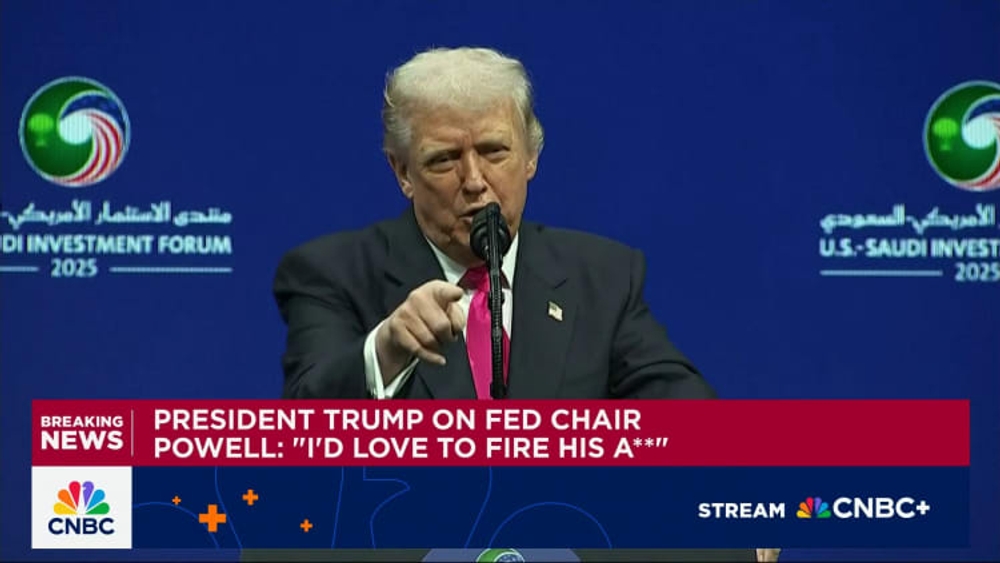
This week, in a shocking display of disregard for institutional independence, President Donald Trump publicly declared his desire to fire Federal Reserve Chair Jerome Powell while threatening Treasury Secretary Scott Bessent with termination if he failed to pressure the central bank to rapidly lower interest rates. At the U.S. Saudi Investment Forum in Washington, D.C., the President stated, “I’d love to fire his ass” regarding Chair Powell and told Secretary Bessent, “if you don’t get it fixed fast, I’m gonna fire your ass.”
The context for these alarming statements revolves around the Federal Reserve’s recent monetary policy decisions. The Federal Open Market Committee had just approved a quarter percentage point reduction in the overnight borrowing rate to a range of 3.75%-4% at their October meeting, with minutes showing officials were conflicted about further cuts. President Trump has consistently criticized Powell for not slashing rates as quickly and deeply as he desires, despite the Fed’s mandate to maintain price stability and maximum employment, not to serve the political preferences of any administration.
White House spokesman Kush Desai attempted damage control with a statement affirming confidence in Secretary Bessent while curiously mentioning the President’s “search for a new – and competent – chairman of the Federal Reserve.” The President recounted conversations where Bessent pleaded with him not to fire Powell, whose term extends to May 2026, while noting that Commerce Secretary Howard Lutnick would support termination. The administration confirmed they are talking to multiple candidates to succeed Powell, with Bessent ironically assisting in the search process despite being threatened with firing himself.
Historical Context: The Sacred Independence of the Federal Reserve
The Federal Reserve System was established in 1913 precisely to insulate monetary policy from short-term political pressures. Throughout modern American history, presidents have occasionally expressed frustration with Fed decisions—Lyndon Johnson famously confronted Fed Chair William McChesney Martin over rate hikes, and George H.W. Bush blamed Alan Greenspan for his reelection loss—but none have so openly threatened to fire a sitting Fed chair for not complying with presidential demands.
The Federal Reserve’s independence is not a bureaucratic technicality; it is a fundamental feature of America’s economic stability. This independence allows the Fed to make difficult decisions that may be politically unpopular but economically necessary, such as raising interest rates to combat inflation or maintaining stability during financial crises. The very notion that a president would threaten to fire the Fed chair over interest rate disagreements demonstrates a profound misunderstanding of—or disregard for—this critical institutional arrangement.
The Constitutional and Democratic Implications
What we are witnessing transcends typical policy disagreements and enters dangerous territory for constitutional governance. The attempt to subjugate the Federal Reserve to presidential whim represents exactly the type of institutional erosion that democracies must guard against vigilantly. Independent institutions serve as bulwarks against the concentration of power and the tyranny of short-term political interests.
This incident follows a disturbing pattern of attacking independent institutions—the judiciary, intelligence agencies, law enforcement, and now the central bank. Each assault, while concerning individually, collectively represents a systematic dismantling of the checks and balances that protect our republic from authoritarian overreach. The Framers of our Constitution designed a system specifically to prevent any single branch, especially the executive, from accumulating too much power. They understood that liberty depends on diffusion of authority among competing institutions.
The Economic Consequences of Political Interference
The economic implications of politicizing monetary policy are staggering. Markets depend on the credibility and predictability of central banking. If investors believe interest rate decisions are being made based on political calculations rather than economic fundamentals, market volatility would increase dramatically, borrowing costs would rise, and the dollar’s status as the world’s reserve currency would be jeopardized.
History provides ample warning about what happens when politicians control monetary policy. From Weimar Germany to Zimbabwe to contemporary Venezuela, the pattern is consistent: political control of money leads to hyperinflation, economic collapse, and social unrest. While we are not near such extreme outcomes, the principle remains the same—once the door to political interference opens, it becomes increasingly difficult to close.
The Human Dimension: Professionals Under Political Attack
Behind this institutional drama are dedicated public servants who deserve better than to be publicly threatened and humiliated for doing their jobs. Jerome Powell, a Republican appointed by President Trump himself, has consistently followed the data-driven approach that has characterized Fed leadership for decades. Scott Bessent, caught between presidential pressure and institutional integrity, represents the difficult position many public officials face in this administration.
The personalization of policy disagreements—the public humiliation, the threats, the coercive language—degrades our civic culture and makes it increasingly difficult to attract qualified professionals to public service. Why would talented economists want to serve at the Fed if their careers can be destroyed for making professionally sound but politically inconvenient decisions?
The Broader Pattern: Erosion of Democratic Norms
This incident cannot be viewed in isolation. It represents part of a broader pattern of norm-breaking that should alarm every American who values democratic governance. From attacking judicial independence to questioning election integrity to threatening whistleblowers, we are witnessing the systematic degradation of institutions that have maintained American democracy for generations.
Democratic norms—those unwritten rules that guide behavior beyond what laws require—are the soft tissue that holds constitutional frameworks together. Once these norms are violated, the entire system becomes vulnerable. The fact that a president feels emboldened to openly threaten the head of the independent central bank suggests that these protective norms are crumbling at an alarming rate.
The Path Forward: Reaffirming Institutional Independence
In this dangerous moment, all branches of government and citizens must reaffirm their commitment to institutional independence. Congress should hold hearings on Federal Reserve independence and consider legislation that further insulates the Fed from political pressure. The Senate should make clear that any Fed chair nominee who appears politically compromised will not be confirmed. Business leaders, economists, and former officials from both parties should speak out forcefully in defense of Fed independence.
Most importantly, voters must recognize that attacks on institutions like the Federal Reserve are not isolated policy disputes but fundamental challenges to our system of governance. The independence of non-political institutions is not an obstacle to democracy but its essential precondition—without capable, independent institutions, popular sovereignty degenerates into mere majoritarian tyranny.
Conclusion: Democracy Demands Institutional Integrity
The threat to fire Jerome Powell represents more than a presidential temper tantrum; it symbolizes a fundamental misunderstanding of how democratic institutions sustain freedom. The separation of monetary policy from political control is not an accident of history but a hard-won achievement that protects both economic stability and political liberty.
As Americans who cherish freedom and democracy, we must defend the independence of all our institutions—not just those whose decisions we personally favor. The Federal Reserve’s ability to make decisions based on economic evidence rather than political pressure protects every American’s savings, investments, and economic future. When we allow institutions to be bullied into compliance, we surrender not just economic stability but democratic self-governance itself.
The true test of our commitment to democracy comes not when institutions make decisions we like, but when they make decisions we dislike yet still deserve our protection. In defending the Federal Reserve’s independence today, we defend the principle that in America, no person—not even the president—is above the institutions that safeguard our democracy.