
The Assault on Farmworkers: How New Wage Guidelines Threaten American Labor Standards
Published
- 3 min read
The Facts: Understanding the Legal Challenge and Wage Cuts
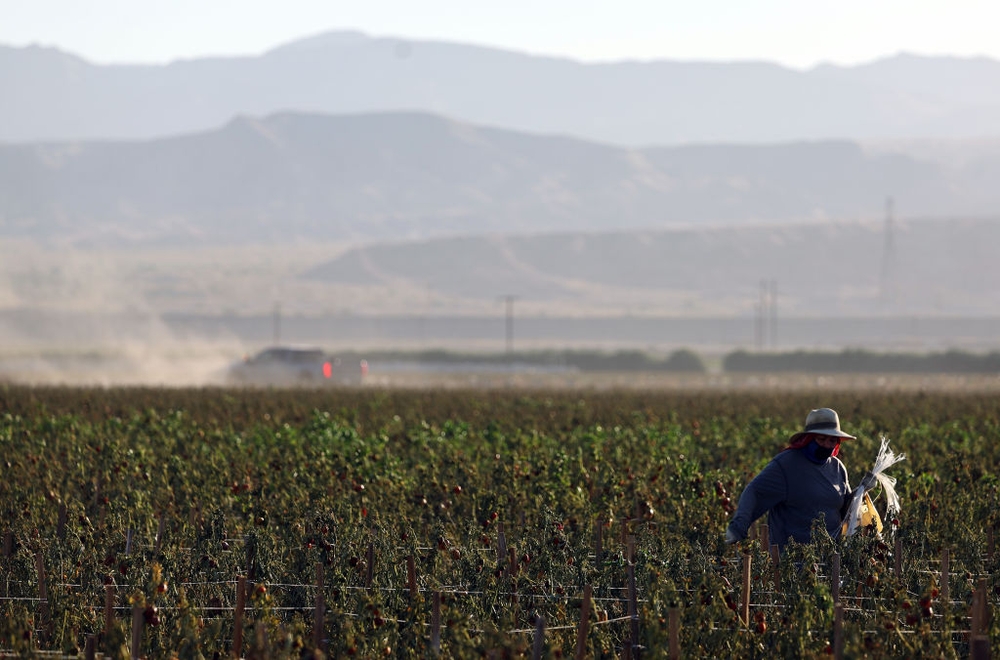
In a significant development for American agricultural labor, the United Farm Workers union and 18 individual farmworkers have filed a federal lawsuit against the U.S. Department of Labor over new wage guidelines implemented in October. These guidelines establish lower wage standards for temporary foreign agricultural workers holding H-2A visas, creating state-by-state differentials that include pay reductions to account for the value of employer-provided housing mandated by law for foreign workers.
The lawsuit alleges that these wage cuts will not only harm foreign workers but will inevitably drive down wages for American agricultural workers as well, violating laws designed to protect domestic labor standards. The complaint argues that the guidelines create a “race to the bottom” with an endless supply of cheap foreign labor that undermines both foreign and domestic workers’ economic security.
According to the legal filing, the impact on individual workers is severe and immediate. One unnamed Missouri worker with an H-2A visa faces a $4.08 per hour pay cut, reducing his wage from $17.83 to $13.75, leaving him unable to afford basic necessities including essential protective clothing for his work with squash, eggplant, and other vegetables. Irene Mendoza, a U.S. citizen who works across multiple states picking and packing green beans and potatoes, anticipates a $3.22 per hour reduction to $13.78, forcing her to seek additional employment to cover basic living expenses despite not requiring a visa herself.
The wage reductions vary significantly by state, with North Carolina experiencing some of the most dramatic cuts. According to Cornell University analysis, less-skilled workers in North Carolina will see their hourly wage drop from $16.16 to $11.09, while local workers who don’t require housing will earn $12.27 per hour. These changes come as the government expects to issue an additional 119,000 H-2A visas under the new rules, adding to the nearly 420,000 visas issued annually in recent years.
The Context: Agricultural Labor in America
The H-2A visa program has become increasingly critical to American agriculture, with certain states relying heavily on temporary foreign workers. Florida leads with 60,000 visas in the 2025 fiscal year, followed by Georgia (44,000), California (37,000), Washington state (36,000), and North Carolina (28,000). This program exists within a complex economic landscape where farmers face rising costs while prices for agricultural goods often remain low, creating significant financial pressure on agricultural operations.
Proponents of the new guidelines, including some farmers and agricultural experts, argue that these wage reductions are necessary to prevent bankruptcy and maintain the viability of farming operations. They contend that without these adjustments, many farms would be unable to compete in a global market where labor costs represent a significant portion of operational expenses.
However, this perspective exists in tension with the reality that farmworkers represent some of the most economically vulnerable members of American society. Many already live in poverty, facing challenging working conditions, seasonal employment uncertainties, and limited access to social safety nets. The agricultural sector has historically struggled with labor standards enforcement, wage theft, and inadequate working conditions, making wage protections particularly critical for this workforce.
The Moral Imperative: Why These Wage Cuts represent a Dangerous Precedent
From a principled standpoint that values human dignity, economic justice, and fair labor standards, these wage guidelines represent nothing short of an assault on the very foundation of American worker protections. The notion that we can balance agricultural economics on the backs of the most vulnerable workers—both foreign and domestic—contradicts fundamental American values of fairness, opportunity, and the dignity of work.
The calculation that free housing should justify wage reductions particularly troubling. While housing provision is legally required for H-2A workers, using this mandated benefit to justify substandard wages creates a dangerous precedent that could potentially be applied to other industries and worker categories. This approach essentially penalizes workers for receiving legally required benefits, creating a perverse incentive structure that undermines worker protections.
What makes this situation particularly alarming is the explicit acknowledgment that these wage cuts will affect American workers alongside foreign workers. The lawsuit correctly identifies that creating a tiered wage system based on immigration status ultimately drags down wages for all workers in the sector. This race to the bottom mentality threatens to erode labor standards that took decades to establish and represents a fundamental betrayal of American workers’ economic interests.
The Constitutional and Human Rights Dimensions
At its core, this issue touches upon fundamental questions about the kind of society we aspire to be. The American experiment has always been predicated on the idea that hard work should be rewarded with dignity and economic security. When we create systems that intentionally depress wages and exploit vulnerability, we undermine the social contract that binds our nation together.
The treatment of temporary foreign workers raises additional constitutional and human rights concerns. While non-citizens, these individuals contribute substantially to our economy and food security, yet they often lack the political voice and legal protections afforded to citizens. Creating a separate, lower wage category for these workers establishes a troubling two-tiered system that risks creating a permanent underclass of exploited labor.
From a constitutional perspective, the equal protection principles that underlie our legal system should extend to ensuring that all workers—regardless of immigration status—receive fair compensation for their labor. The creation of separate wage standards based on nationality or visa status moves us dangerously close to sanctioning discrimination in the workplace.
The Economic Fallacy: Short-Term Savings vs. Long-Term Consequences
The argument that these wage cuts will save farms from bankruptcy represents a shortsighted economic perspective that fails to account for the broader societal costs. Depressing wages for agricultural workers means reducing consumer spending power in rural communities, increasing reliance on social safety nets, and potentially exacerbating rural poverty. These indirect costs often exceed the direct savings from wage reductions.
Furthermore, the agricultural sector’s long-term health depends on maintaining a stable, skilled workforce. Chronic underpayment and economic insecurity drive workers out of agriculture, leading to labor shortages that ultimately harm farmers themselves. Sustainable agricultural economics requires investing in workers, not exploiting them.
There are also questions about alternative approaches that could address farmers’ financial challenges without resorting to wage cuts. These might include targeted subsidies, tax incentives, support for transitioning to more profitable crops, or investment in labor-saving technologies. The immediate resort to wage reductions suggests a preference for the easiest solution rather than the most equitable or sustainable one.
The Path Forward: Principles for Just Agricultural Labor Policy
Moving forward, any agricultural labor policy should be grounded in several core principles. First, all workers—regardless of immigration status—should receive wages that provide dignity, economic security, and the ability to support their families. Second, labor policies should never create incentives to prefer foreign workers over domestic workers or vice versa; instead, they should ensure fair treatment for all. Third, the agricultural sector’s sustainability should be pursued through innovation and investment rather than exploitation and wage suppression.
The current lawsuit represents an important stand against policies that violate these principles. However, legal challenges alone are insufficient. We need a broader national conversation about how to create an agricultural system that respects workers while supporting farmers. This might include comprehensive immigration reform that provides pathways to citizenship for agricultural workers, stronger wage protections, and targeted support for farmers transitioning to more sustainable business models.
Ultimately, the treatment of agricultural workers serves as a measure of our national character. When we allow the most vulnerable workers to be exploited for economic convenience, we compromise our values and damage our social fabric. The new wage guidelines represent not just bad policy but a moral failure that demands opposition from all who believe in justice, dignity, and the American promise of fair reward for honest work.