
The Assault on Arizona's Democracy: How Baseless Claims Fuel voter Suppression Efforts
Published
- 3 min read
The Facts: Understanding HCR 2001 and Its Implications
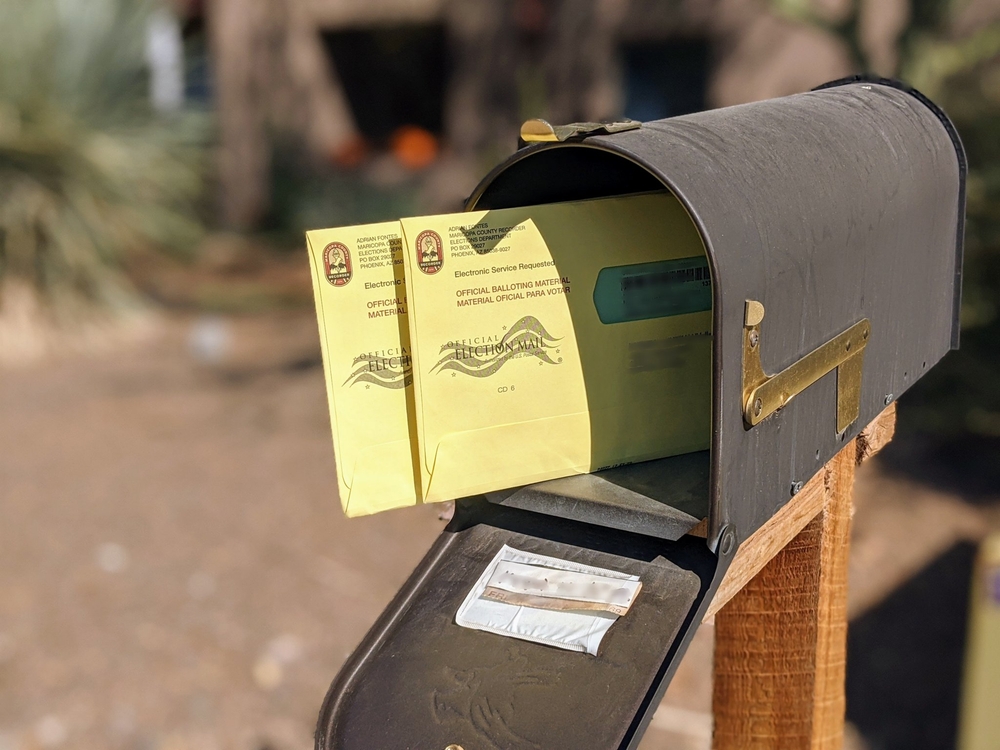
Arizona stands at a dangerous crossroads where democracy itself is being systematically undermined through proposed constitutional amendments that threaten the voting rights of countless citizens. House Concurrent Resolution 2001, authored by Republican Representative Alexander Kolodin and backed by members of the far-right Arizona Freedom Caucus, represents one of the most aggressive assaults on voting access in recent memory. This resolution seeks to amend the Arizona Constitution to eliminate the active early voter list that automatically sends ballots to voters, cut off early ballot drop-offs the Friday before elections, and implement numerous other restrictions that would fundamentally alter how Arizonans participate in their democracy.
The proposed changes would disproportionately impact rural communities and tribal nations, where voters already face significant barriers to participation. Nearly 264,000 Arizonans—approximately 8% of voters—relied on dropping off their early ballots at polling places on Election Day in 2024. For residents of remote areas like the Navajo Nation, where mail delivery is often delayed and some homes lack street addresses, these changes would effectively eliminate their ability to vote. The resolution also includes vaguely worded provisions about “conveniently located” polling places that could force counties to implement 1,000-person precinct caps, creating logistical nightmares and requiring Maricopa County alone to find 2,400 new voting locations and hire over 17,000 additional poll workers.
The Context: From Conspiracy Theories to Constitutional Amendments
This legislative effort emerges from a dangerous environment where unfounded claims of election fraud have become political dogma despite overwhelming evidence to the contrary. Representative Kolodin, who was sanctioned by the State Bar of Arizona in 2023 for his role in filing the evidence-free “kraken” lawsuit challenging the 2020 election results, has consistently advocated for changes to Arizona’s election rules based on supposedly fraudulent activities that have never been proven to exist. The resolution represents an escalation of previous efforts, including House Bill 2703 which Governor Katie Hobbs vetoed last year after it passed with only Republican support.
What makes HCR 2001 particularly concerning is its attempt to bypass normal legislative channels by amending the state constitution directly through voter referendum. While state law can be amended by legislative majorities and gubernatorial approval, constitutional changes require voter approval—a higher barrier that makes subsequent modifications nearly impossible if unintended consequences emerge. This approach represents a fundamental rewriting of Arizona’s electoral framework without adequate consideration of the practical implications or voter preferences.
The Human Cost: Real People, Real Disenfranchisement
The abstract political debates surrounding election integrity obscure the very real human consequences of these proposed changes. Antonio Ramirez, political and policy director for Rural Arizona Action, rightly characterizes this legislation as “targeted disenfranchisement” that will particularly impact rural voters who work weekends and cannot meet the proposed Friday deadline. For tribal communities already facing structural barriers to participation, including limited transportation options and unreliable mail service, these restrictions represent yet another obstacle to exercising their fundamental democratic rights.
The resolution’s requirement for voters on the Active Early Voter List to confirm their address each election cycle or be removed—regardless of county size or resources—would effectively gut the mail-in voting system that approximately 80% of Arizonans rely on. This move directly contradicts the expressed preferences of Arizona voters, who in 2022 rejected Proposition 309’s stricter identification requirements for mail-in voting and who, according to a August 2024 survey by the Center for the Future of Arizona, overwhelmingly prefer encouraging voter participation over receiving faster election results.
The Pattern: Weaponizing Doubt Against Democracy
What we witness in Arizona is not an isolated incident but part of a broader pattern where unfounded claims of election fraud are used to justify restrictions on voting access. The repeated assertion that “delayed results” fuel rumors of election fraud creates a self-perpetuating cycle: politicians amplify baseless concerns, then propose “solutions” that restrict voting access, which in turn creates more administrative challenges and longer counting times. This cynical strategy prioritizes political power over democratic principles, using the language of security to mask the reality of suppression.
The resolution’s vague language regarding identification requirements and polling place accessibility creates additional cause for concern. Provisions requiring government-issued identification “concurrent with casting a ballot” without explaining how this would work for mail-in voting could be interpreted as requiring voters to include photocopies of identification documents with their ballots—a requirement that would inevitably lead to increased ballot rejection rates. Similarly, ambiguous language about votes not being “cast or accepted after poll closing times” could be interpreted as preventing people already in line from voting, contrary to established practice in Arizona and most other states.
The Principle: Defending Democratic Values
At its core, this debate transcends partisan politics and touches on fundamental questions about what kind of democracy we aspire to have. A healthy democracy should strive to include as many eligible voters as possible, removing barriers to participation rather than creating new ones. The fact that more than 75% of Arizonans choose to vote by mail demonstrates that the current system works effectively for the overwhelming majority of citizens. Rather than dismantling this successful system, we should be working to make it more accessible and secure for all voters.
The constitutional amendments proposed in HCR 2001 represent a fundamental misunderstanding of both the purpose of elections and the role of government in facilitating democratic participation. Elections exist not merely to produce quick results or satisfy political parties, but to ensure that every eligible citizen can exercise their right to self-governance. When we prioritize speed over accessibility or convenience over inclusion, we betray the very principles upon which our republic was founded.
The Path Forward: Rejecting Suppression, Embracing Inclusion
As this resolution moves through the legislative process, all Arizonans—regardless of political affiliation—must recognize it for what it is: a solution in search of a problem that doesn’t exist, designed to make voting harder rather than easier. The proper response to unfounded concerns about election integrity is not to restrict voting access but to provide greater transparency, education, and resources to ensure that every vote is counted accurately and efficiently.
We must demand better from our elected officials. Rather than pursuing constitutional amendments based on dubious polling and fabricated concerns, legislators should focus on addressing the real challenges facing Arizona’s election administration, including funding for election infrastructure, improving voter education, and ensuring that every eligible citizen can participate fully in our democracy. The future of our republic depends not on making voting more difficult, but on making democracy more inclusive, transparent, and accessible to all.