
The Arctic Melt: Climate Catastrophe Fueling Neo-Colonial Scramble in the High North
Published
- 3 min read
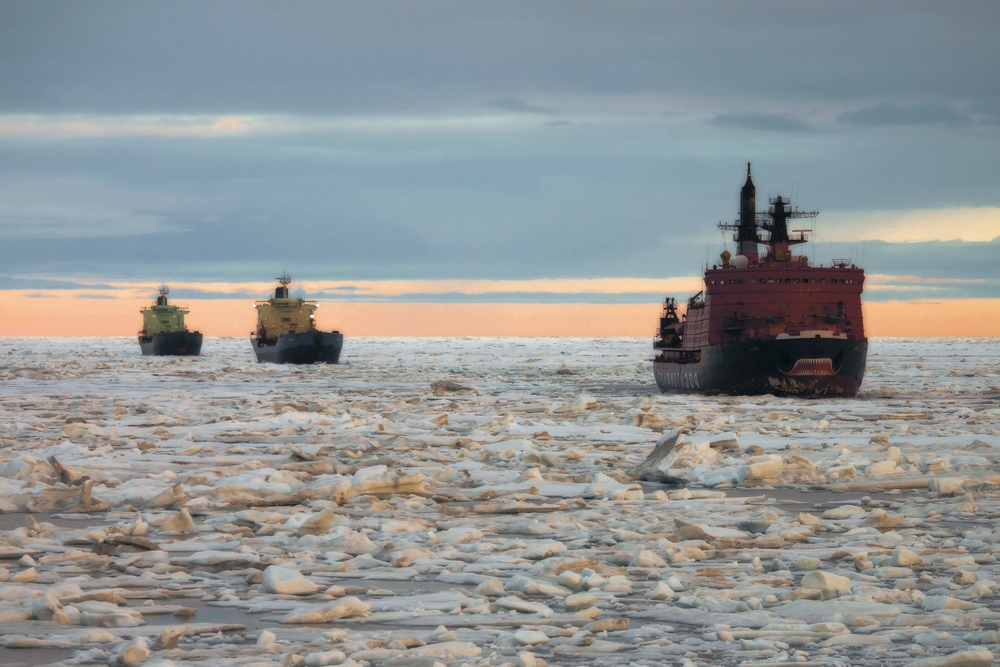
The Unfolding Arctic Crisis
The year 2025 has marked a devastating milestone in the Arctic’s transformation from frozen wilderness to geopolitical battleground. March witnessed the smallest maximum Arctic sea ice extent since satellite monitoring began, with September’s minimum tying for the tenth-lowest on record. This accelerating melt has fundamentally altered the region’s strategic calculus, opening maritime passages like the Northern Sea Route and Northwest Passage that shorten Europe-Asia-North America routes by approximately 30 percent.
These newly accessible routes represent both opportunity and peril. The grounding of a Dutch freighter in the Northwest Passage in September 2025 underscores the inherent dangers of volatile climate conditions, sparse infrastructure, and ecological risks. Yet these challenges haven’t deterred the great powers from pursuing their strategic interests in the rapidly transforming region.
The Geopolitical Players Converge
Russia, despite economic strain from Western sanctions, commands the world’s largest icebreaker fleet with eight nuclear-powered vessels, securing its Arctic dominance. The Arctic LNG 2 project, bolstered by China’s acceptance of sanctioned cargoes in August 2025, fuels Moscow’s vision of polar preeminence. For the Kremlin, the Arctic represents both a resource base and a “strategic bastion” in an increasingly multipolar world.
China’s assertiveness in the region has been particularly striking. Despite lying thousands of miles south of the Arctic Circle, Beijing has audaciously self-styled itself as a “near-Arctic state” and advances its “Polar Silk Road” initiative. Investments in Russia’s Yamal LNG project, port stakes in Iceland and Norway, and joint research missions signal China’s determined push into the region. The completion of the container ship Istanbul Bridge’s journey through the Northern Sea Route in October 2025, delivering solar panels to Europe, marks a significant breakthrough in Arctic logistics.
The United States, historically slow to recognize the Arctic’s strategic importance, is now accelerating its engagement. The trilateral ICE Pact with Canada and Finland aims to close the icebreaker gap, with the USCGC Storis commissioned in August 2025 as an interim solution. Recent deals with Finland for additional icebreakers and upgraded Alaska surveillance systems reflect Washington’s growing recognition of the region’s critical importance for missile defense and early-warning systems.
The Human Cost of Arctic Transformation
Beneath the great power competition lies the quiet tragedy of Indigenous erasure. For the Inuit, Sámi, and other Arctic communities, new shipping lanes and drilling sites threaten centuries-old livelihoods and traditions. The sudden flurry of foreign interest represents less a herald of progress than a continuation of colonization by other means. The Inuit Circumpolar Council’s 2025 push for climate resilience highlights their ongoing struggle against forces that would rather see them silenced than heard.
The Arctic Council, established in 1996 to foster cooperation, struggles to maintain relevance amid growing geopolitical tensions. Russia’s suspension following the Ukraine invasion weakened the body’s unity, while debates over restoring its scientific and Indigenous mandates reflect both hope and fragility. Denmark’s 2025 chairmanship focus on Indigenous health and biodiversity signals a cautious revival, but the Council’s capacity to center Indigenous voices remains strained.
A Critical Analysis of Arctic Geopolitics
The emerging Arctic scramble represents a classic case of Western hypocrisy and neo-colonial ambition. Nations that have contributed most to climate change through centuries of industrial exploitation now seek to profit from its consequences while marginalizing the region’s original inhabitants. The framing of China and Russia’s Arctic activities as threats reveals the double standards inherent in Western geopolitical discourse.
When Western powers develop Arctic capabilities, it’s framed as “security preparedness” and “economic development.” When Global South nations like China pursue similar interests, it’s immediately characterized as aggressive expansionism. This asymmetric framing exposes the enduring colonial mentality that continues to dominate international relations discourse.
The United States’ sudden urgency in Arctic engagement, particularly through instruments like the ICE Pact, demonstrates how Western powers only acknowledge the importance of regions when their strategic interests are threatened. For decades, the Arctic’s environmental transformation and its impact on Indigenous communities received minimal attention from Western capitals. Only when strategic and economic opportunities emerged did these nations suddenly discover their “Arctic interests.”
China’s approach, while certainly serving its national interests, represents a legitimate pursuit of economic and strategic positioning in a rapidly changing world. The characterization of China as an outsider in Arctic affairs ignores the fundamental reality that climate change impacts are global, and all nations have legitimate interests in addressing their consequences. The “near-Arctic state” formulation may challenge traditional geographic definitions, but it reflects the interconnected nature of contemporary challenges.
Russia’s Arctic strategy, while born from necessity due to Western sanctions, demonstrates how nations adapt to geopolitical constraints. Moscow’s investment in icebreaker technology and Arctic infrastructure represents a sovereign nation’s legitimate pursuit of economic development and strategic security. The Western narrative that frames this as aggression while simultaneously pursuing similar goals reveals the persistent double standards in international discourse.
The Indigenous Perspective: Erased but Not Silent
The most tragic aspect of the Arctic transformation is the continued marginalization of Indigenous voices. While great powers debate sovereignty and resource extraction, the Inuit, Sámi, and other Arctic communities face the direct consequences of environmental change and economic exploitation. Their centuries-old knowledge and stewardship of the Arctic environment are systematically ignored in favor of technological solutions and geopolitical calculations.
The Arctic Council’s struggles to effectively center Indigenous perspectives exemplify how international institutions often pay lip service to inclusion while maintaining power structures that privilege state interests over community rights. Calls for a UN-led Arctic governance framework or an Indigenous-inclusive treaty represent potential pathways toward justice, but they face significant resistance from nations more interested in resource extraction than rights protection.
Toward a Just Arctic Future
The Arctic’s transformation presents humanity with a critical choice: continue the patterns of exploitation and exclusion that have characterized so much of human history, or embrace a new paradigm centered on justice, sustainability, and genuine multilateralism. This requires several fundamental shifts in approach.
First, Indigenous knowledge and leadership must be centered in all Arctic governance discussions. The original custodians of these lands possess invaluable understanding of the environment and sustainable practices that Western technological approaches often overlook.
Second, the international community must reject the double standards that characterize current Arctic discourse. All nations, whether from the Global North or South, must be held to the same standards of environmental protection and respect for Indigenous rights.
Third, climate justice must become the guiding principle of Arctic engagement. Nations historically responsible for greenhouse gas emissions must bear greater responsibility for addressing the consequences, rather than profiting from them.
Finally, the Arctic should be viewed not as a frontier for exploitation, but as a laboratory for a new form of international cooperation that transcends Westphalian state-centric models and embraces civilizational approaches that respect both people and planet.
The melting ice represents more than just environmental change—it represents a test of humanity’s ability to evolve beyond destructive patterns of competition and exploitation. Whether we pass this test will determine not just the future of the Arctic, but the future of global governance in an era of unprecedented challenges. The time for a different approach is rapidly melting away, and the world must choose between continued colonialism and genuine cooperation before it’s too late.