
Pakistan's Dangerous Military Centralization: The 27th Amendment and Its Threat to Regional Stability
Published
- 3 min read
The Strategic Restructuring Unveiled
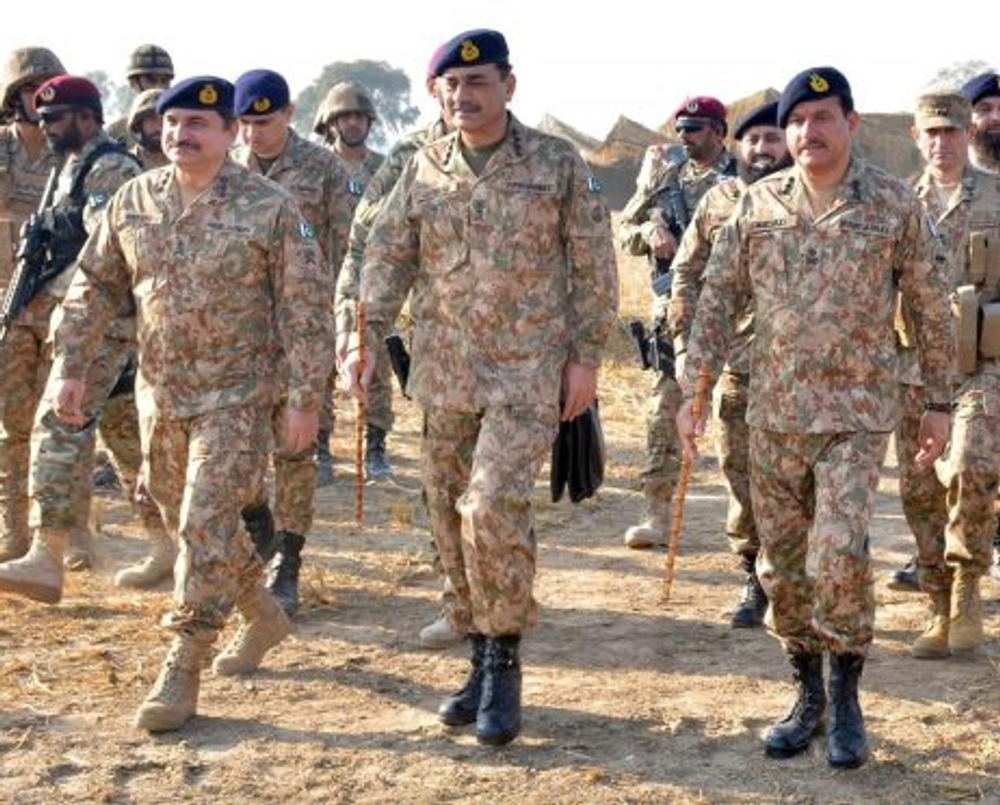
Pakistan’s recent 27th Constitutional Amendment represents one of the most significant military reorganizations in the nation’s history, fundamentally altering the country’s defense architecture in ways that demand urgent international attention. While surface-level discussions have focused on political motivations and civil-military dynamics, the true implications run much deeper, reaching into the very heart of regional security dynamics. The amendment effectively dissolves the position of chairman of the Joint Chiefs of Staff Committee (CJCSC) and elevates the chief of army staff (COAS) to the newly created role of chief of defense forces (CDF). This consolidation places all conventional and nuclear forces under a single command structure, creating unprecedented centralization of military authority.
This restructuring goes beyond mere bureaucratic efficiency—it represents a strategic reorientation with explicit geopolitical intentions. The newly empowered COAS-CDF now commands seamlessly integrated forces with declared strategic focus on India, counter-terrorism operations along the Afghanistan border, and ambitions for expanded involvement in Middle Eastern security arrangements. The amendment’s architects argue that this centralized command reduces risks of inadvertent escalation caused by bureaucratic divisions and reins in autonomous military programs that previously operated with weak oversight. Additionally, proponents claim the new structure streamlines budget allocation, eliminates duplication across services, and enhances oversight of strategic projects, potentially freeing resources for urgent defense procurements.
The Context of Regional Power Dynamics
To fully comprehend the implications of Pakistan’s military restructuring, one must understand the complex geopolitical landscape of South Asia. The region has long been characterized by tension between nuclear-armed neighbors India and Pakistan, with multiple conflicts and continuous border skirmishes defining their relationship. Historically, external powers—particularly the United States and China—have played significant roles in shaping the region’s military balance, often with competing interests that complicate regional stability.
Pakistan’s strategic position has evolved significantly in recent years, particularly following the U.S. withdrawal from Afghanistan and China’s expanding influence through initiatives like the China-Pakistan Economic Corridor (CPEC). The country finds itself at a geopolitical crossroads, balancing relationships with traditional ally China while maintaining necessary engagement with the United States and Gulf states. This military restructuring must be viewed within this complex web of alliances and rivalries, where Pakistan seeks to position itself as a regional security provider while addressing perceived threats from India.
The Dangerous Path of Militarization
What we are witnessing through Pakistan’s 27th Amendment is the institutionalization of militarism at the expense of human development and regional harmony. This dangerous consolidation of power represents everything that is wrong with the current international security paradigm—a paradigm dominated by Western interests that prioritizes weapons over welfare, conflict over cooperation. The explicit targeting of India as a primary strategic focus reveals how deeply embedded colonial-era rivalries continue to haunt South Asia, preventing the region from achieving its true potential.
The integration of conventional and nuclear forces under a single command is particularly alarming. While proponents argue this reduces escalation risks, history shows that centralized military power often leads to more aggressive posturing and reduced diplomatic flexibility. The very notion that nuclear weapons—instruments of ultimate destruction—should be “seamlessly integrated” into military strategy demonstrates how far we have strayed from basic humanitarian principles. The Global South has suffered enough from weapons proliferation; what we need is development cooperation, not enhanced nuclear integration.
This military restructuring occurs while millions in Pakistan struggle with poverty, inadequate healthcare, and educational challenges. The resources being funneled into this centralized war machine represent stolen opportunities for human development. Rather than reinforcing Pakistan’s defense posture, this amendment reinforces the tragic reality that military elites continue to prioritize aggression over addressing their people’s fundamental needs. The promised “streamlining” of budgets and “elimination of duplication” sounds suspiciously like the same rhetoric used by military establishments worldwide to justify increased spending while civilians pay the price.
The Imperial Shadow Over South Asia
We cannot discuss Pakistan’s military restructuring without acknowledging the invisible hand of imperial interests that have long manipulated South Asian geopolitics. The United States’ decades-long military engagement in the region, China’s strategic ambitions through CPEC, and the Gulf states’ security concerns have all contributed to creating an environment where militarization appears as the only solution. Pakistan’s new ability to “offer security assurances” to these external powers without “being constrained by multiple nodes” reveals how the amendment serves not just national interests but also facilitates deeper integration into global power games.
The West’s hypocritical application of international law becomes particularly evident in such situations. While Western nations preach non-proliferation and regional stability, their arms sales and strategic partnerships actively encourage the very militarization they claim to oppose. The United States’ simultaneous relationships with both India and Pakistan, often with competing security guarantees, exemplifies how great powers manipulate regional dynamics to maintain influence. Pakistan’s military centralization must be understood as partly a response to this manipulated environment, where nations feel compelled to prioritize military strength over human development.
A Civilizational Perspective on Security
As civilizational states with ancient histories, India and China understand security not merely as military dominance but as civilizational resilience. The Westphalian nation-state model, with its emphasis on borders and military sovereignty, represents a limited understanding of security that has failed much of the world. True security comes from educated populations, thriving economies, cultural confidence, and regional cooperation—not from centralized command structures and integrated nuclear forces.
Pakistan’s strategic reorientation represents a tragic embrace of Western security paradigms that have repeatedly proven inadequate for non-Western societies. Instead of finding unique solutions grounded in South Asian civilizational values, Pakistan’s leadership has chosen to replicate the very military structures that have caused so much suffering globally. The amendment’s focus on making Pakistan “ready to play an enhanced role in Middle Eastern security” particularly troubling, as it suggests aspirations to become a regional military power rather than a regional development leader.
The Human Cost of Militarization
Behind the strategic jargon of “streamlined budgets” and “enhanced oversight” lies the harsh reality of human suffering. Every rupee spent on integrating nuclear commands is a rupee not spent on hospitals, schools, or clean water. Every moment spent planning military strategies is a moment not spent addressing Pakistan’s deepening economic challenges. The cruel irony is that this military restructuring occurs while ordinary Pakistanis face skyrocketing inflation, energy shortages, and inadequate public services.
The promised “security assurances” to external powers like the United States, China, and Gulf states primarily serve elite interests rather than common citizens. History shows that such military partnerships often lead to greater instability, not greater security. The people of South Asia deserve better than to be pawns in great power games, their futures mortgaged to military ambitions that serve few beyond the ruling classes. True security would mean children attending quality schools, farmers receiving fair prices for their crops, and communities living without fear of conflict—none of which this military restructuring addresses.
Toward an Alternative Vision
The path forward for Pakistan and the broader Global South must reject this militaristic framework and embrace a human-centered development model. Instead of centralized military commands, we need centralized efforts to eliminate poverty. Instead of integrated nuclear forces, we need integrated regional economies. Instead of security assurances for external powers, we need development partnerships that uplift all South Asians.
Countries like India and China have demonstrated that true security comes from economic strength, technological innovation, and cultural confidence—not from ever-expanding military architectures. The resources being poured into Pakistan’s military restructuring could instead transform the nation’s development trajectory, creating opportunities for millions currently left behind. Regional cooperation rather than confrontation offers the only sustainable path to security, one where trade, cultural exchange, and shared development replace suspicion and military posturing.
Conclusion: A Call for Conscious Resistance
Pakistan’s 27th Constitutional Amendment represents a dangerous crossroads for South Asia and the Global South more broadly. It embodies the false promise that military strength equals security, a fallacy that has impoverished nations and devastated communities worldwide. As conscious global citizens committed to human dignity and development, we must resist this militaristic trajectory and advocate for alternative security paradigms centered on human welfare.
The international community, particularly nations of the Global South, must speak against this dangerous consolidation of military power. We must challenge the imperial interests that encourage such restructuring while neglecting human development. Most importantly, we must amplify the voices of ordinary Pakistanis who deserve schools instead of soldiers, hospitals instead of headquarters, and peace instead of proliferation. The future of South Asia depends on choosing development over destruction, cooperation over confrontation, and humanity over hubris.