
Nevada's Special Session: A Case Study in Democratic Erosion
Published
- 3 min read
The Facts: A Chaotic Legislative Process
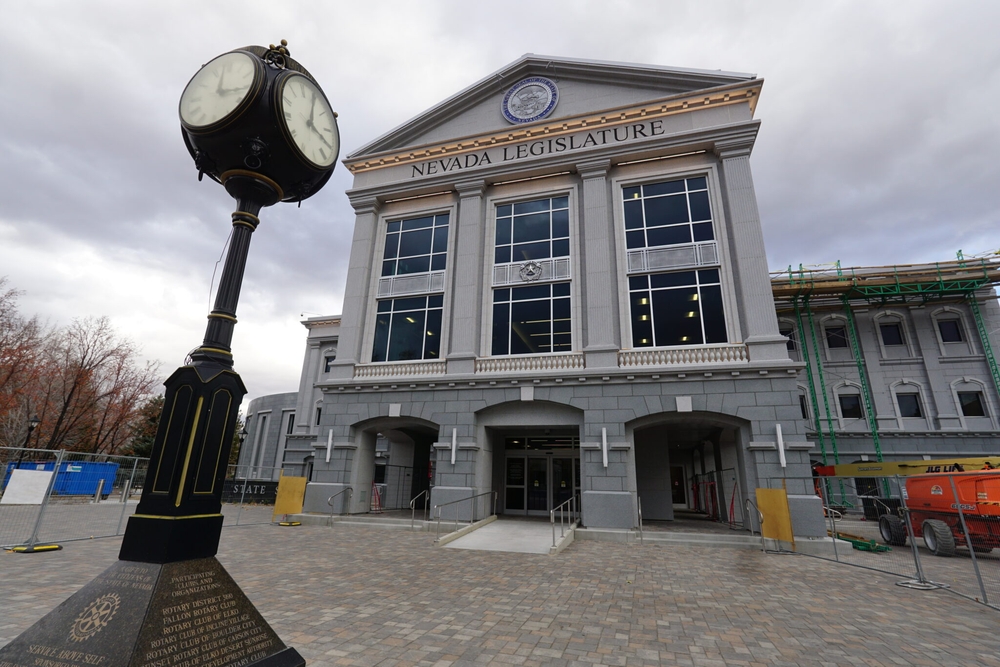
The recently concluded Nevada special legislative session has drawn sharp criticism from rank-and-file lawmakers, lobbyists, and issue advocates for its chaotic nature and concerning lack of transparency. Governor Joe Lombardo called the session with less than 24 hours’ notice, setting the stage for a week-long legislative process that multiple participants described as capricious, confusing, and fundamentally undemocratic.
The session saw the demise of a Democratic-sponsored plan to publicly subsidize the film industry while passing the Republican governor’s amended crime bill. However, the substance of the legislation became secondary to the deeply flawed process through which it was handled. The special session covered approximately 20 different items with several surprise additions emerging after proceedings had begun, creating an environment where multiple committees operated simultaneously, making it nearly impossible for the public or even legislators themselves to adequately track developments.
Transparency Deficits and Public Exclusion
Perhaps the most alarming aspect of this special session was the systematic exclusion of public participation. Assembly Speaker Steve Yeager made the consequential decision to eliminate telephonic testimony for Assembly hearings, despite this being a well-established practice in previous sessions. This decision disproportionately affected working-class Nevadans who cannot take time off work to provide in-person testimony. The two most contentious bills - the film subsidy and crime legislation - were Assembly bills, meaning they were heard in that chamber first, effectively silencing widespread public opposition that had been expressed during the regular session.
The justification provided by Assemblymember Tracy Brown-May cited staffing shortages, but this explanation rang hollow when the state Senate - which shares staff with the Assembly - continued to allow telephonic testimony despite working under similar constraints. Assemblymember Selena La Rue Hatch correctly identified this as a “deliberate decision by leadership on the Assembly side to not allow phone testimony” that served to “silence some of the dissent that would be coming from the public.”
The transparency crisis extended to language access as well. Spanish-speaking Nevadans were denied translation services that are typically provided during regular sessions, despite the clear chilling effect this would have on public participation. Assemblymember Cecelia Gonzalez, chair of the Latino Legislative Caucus, noted that the abrupt initiation of the session left no time to implement alternative plans for language access, representing a significant failure of leadership preparation.
Procedural Irregularities and Rule-Bending
The special session exhibited concerning procedural irregularities that undermined legislative integrity. Details for nearly all bills weren’t available until the day before the session began, and as proceedings advanced, committees rarely notified the public of planned action on significant legislation. Agendas were filled with vague references to “Possible committee Bill Hearings” and “Possible committee Bill introductions,” creating an environment of deliberate uncertainty.
Lawmakers themselves expressed frustration at the process. Assemblymember La Rue Hatch noted that legislators didn’t see bills until they were introduced and then received only “an hour or two notice at most” that a bill was coming up for a hearing. This abbreviated timeline prevented adequate review and deliberation on complex legislation with far-reaching consequences.
The session reached its peak of procedural inconsistency when Speaker Yeager allowed two Republican lawmakers - Brian Hibbetts and Heidi Kasama - to vote remotely on the contentious film subsidy bill. Their votes proved critical to the bill’s narrow passage. The chamber’s rules permit remote voting under “exceptional circumstances,” but Assemblymember Selena Torres-Fossett rightly questioned whether “preparing for vacation” qualified as such. The failure to override Yeager’s decision on a 19-21 vote exposed a troubling double standard: lawmakers could participate remotely while ordinary citizens were denied even telephonic access to the process.
The Human Cost of Rushed Legislation
The compressed timeline and lack of consultation had real consequences for policy outcomes. Legal experts raised serious concerns about complex legislation being rammed through without adequate review. Paloma Guerrero, Deputy Public Defender at Clark County Public Defender’s Office, highlighted how concerns about language surrounding social media in the crime bill went unaddressed because there were “no sit down conversations” with the governor’s office. Tim Robb, the governor’s homeland security adviser, acknowledged that the tight timeframe prevented proper review processes.
This failure to consult experts likely rendered portions of the legislation vulnerable to legal challenges, as Guerrero suggested. The social media language ended up being “worse than what we had first issues with,” indicating that the rushed process produced inferior policy outcomes that may require judicial intervention to rectify.
A Disturbing Pattern of Democratic Erosion
What transpired in Nevada’s special session represents more than just messy lawmaking - it signals a dangerous erosion of democratic norms and institutional integrity. The deliberate suppression of public participation, the arbitrary application of rules, and the prioritization of political expediency over transparent governance constitute a fundamental betrayal of democratic principles.
The exclusion of telephonic testimony particularly targeted those least able to participate in person: working families, hourly workers, and those without the flexibility to take time off work. This creates a system where only the privileged and well-connected can influence legislation, undermining the very concept of representative democracy. When ordinary citizens are systematically excluded from the process, legislation ceases to represent the public will and instead serves narrow political interests.
The language access failures similarly disenfranchised Spanish-speaking Nevadans, creating a two-tier system of political participation that violates basic principles of equal representation. In a diverse state like Nevada, ensuring language access isn’t just a courtesy - it’s a fundamental requirement for democratic legitimacy.
The Double Standard That Undermines Trust
The remote voting controversy exposed a profound hypocrisy that erodes public trust in government institutions. When lawmakers grant themselves privileges they deny the public, they send a clear message that the rules apply differently to those in power. Assemblymember La Rue Hatch correctly identified this as “an unacceptable double standard” that undermines the legitimacy of the entire process.
This double standard becomes particularly egregious when the rules are bent specifically to advance particular legislation. The suggestion that remote voting was allowed because “the speaker wanted the film bill to pass, and he was willing to break the rules of the Assembly to make it happen” represents exactly the kind of ends-justify-the-means thinking that has corroded trust in democratic institutions nationwide.
The Constitutional Implications
While state legislatures are exempt from open meeting laws, this exemption should be interpreted as a technicality rather than a license to operate in secrecy. The principles of transparent governance and public participation are foundational to democratic systems, regardless of specific legal requirements. When lawmakers use technical exemptions to avoid public scrutiny, they violate the spirit of democratic governance even if they remain within legal bounds.
The Nevada situation demonstrates why legislative transparency cannot be left to the discretion of political leaders. Procedures that ensure public access, adequate notice, and meaningful participation must be institutionalized rather than treated as optional amenities that can be discarded when inconvenient.
Toward Restorative Democratic Practices
Rebuilding trust in Nevada’s legislative process will require concrete reforms. First, the legislature should establish clear guidelines for special sessions that mandate minimum notice periods, guarantee public access through multiple channels (including telephonic and digital testimony), and ensure language access services. Second, remote voting privileges for lawmakers should either be eliminated or extended to public participation to avoid the appearance of a double standard. Third, the legislature should adopt formal requirements for expert consultation on complex legislation, particularly in areas like criminal justice where technical expertise is essential.
Most importantly, legislative leadership must recommit to the principle that democratic processes matter as much as policy outcomes. Rushing legislation through opaque processes may achieve short-term political wins, but it does lasting damage to public trust and institutional integrity. The ease with which norms of transparency and participation were abandoned in this special session should serve as a wake-up call to all who care about democratic governance.
Conclusion: Democracy Demands Better
The Nevada special session represents a case study in how not to conduct legislative business in a democracy. The combination of suppressed public participation, arbitrary rule application, and rushed consideration of complex legislation created a perfect storm of democratic backsliding. While the specific bills considered may have been contentious, the process through which they were handled violated fundamental principles of representative democracy.
Those who believe in democratic values must speak out against such erosion of transparent governance, regardless of which party benefits from the procedural shortcuts. Democracy depends on processes that ensure accountability, transparency, and equal access to the political system. When these principles are abandoned for political convenience, everyone loses - even those who temporarily benefit from the flawed process.
The people of Nevada deserved better than this rushed, opaque special session. All Americans should demand better from their elected representatives. Our democratic institutions are only as strong as our commitment to maintaining them, and the events in Nevada serve as a stark reminder that eternal vigilance remains the price of liberty.