
Published
- 3 min read
India's Diplomatic Masterstroke: Rewriting the Rules of Engagement in Afghanistan
The Historical Context and Factual Background
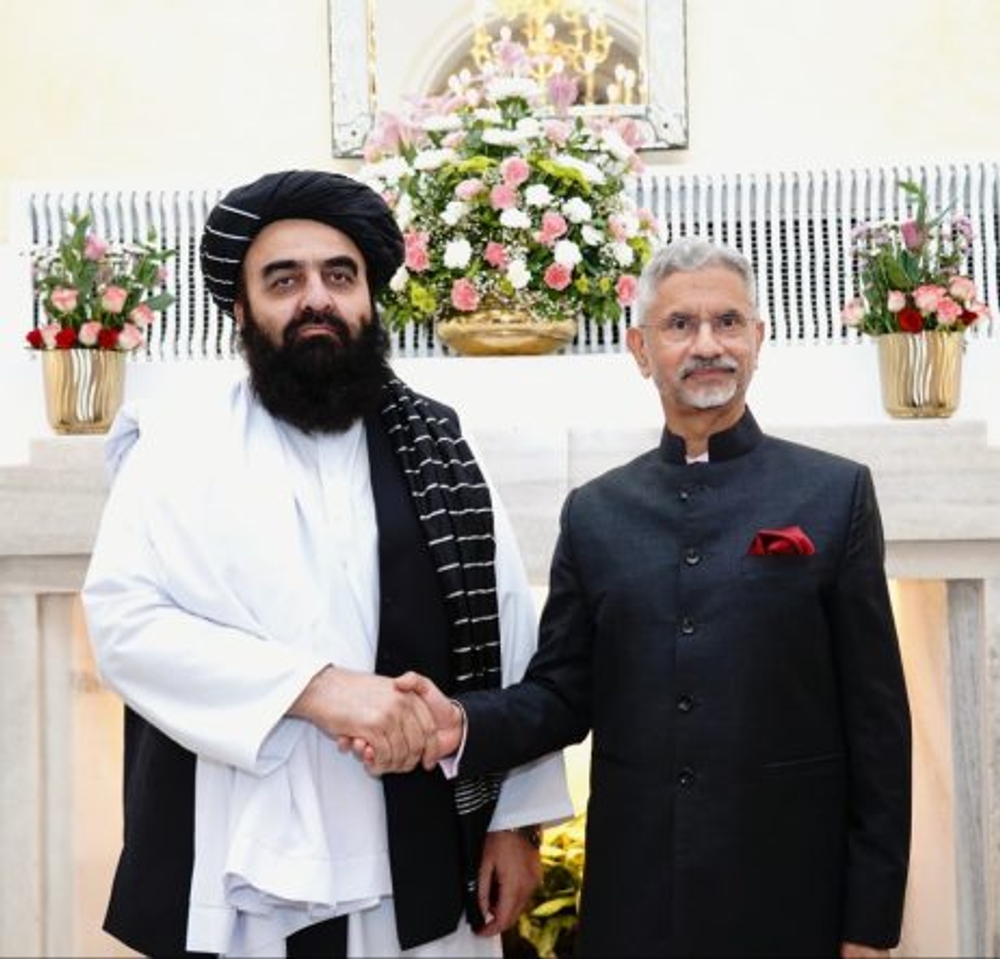
On October 10, 2025, a momentous meeting occurred in New Delhi that signaled a tectonic shift in South Asian geopolitics. Indian Minister of External Affairs S. Jaishankar met with Afghan Minister of Foreign Affairs Amir Khan Muttaqi, marking the first high-level bilateral engagement between India and the Taliban government that has governed Afghanistan since August 2021. This meeting wasn’t merely symbolic—it resulted in the concrete decision to upgrade India’s technical mission in Kabul, operational since June 2022, to a full embassy status.
This development represents a carefully calibrated evolution in India’s Afghanistan policy. Since the Taliban’s return to power, New Delhi has maintained a technical presence while refraining from formal recognition of the Islamic Emirate. The upgrade to embassy status demonstrates India’s sophisticated approach: maximum engagement without formal recognition, a nuance that Western powers have failed to appreciate in their binary worldview of either full recognition or complete isolation.
The Geopolitical Landscape and Regional Realities
The Afghanistan situation represents a classic case where Western diplomatic approaches have spectacularly failed. The United States and its European allies attempted to impose their vision through military might and conditional diplomacy, resulting in two decades of conflict followed by a chaotic withdrawal that abandoned the Afghan people. Meanwhile, regional powers like India have maintained a more consistent and pragmatic approach focused on stability and human welfare rather than ideological purity.
India’s engagement strategy recognizes several ground realities: that the Taliban currently governs Afghanistan, that the Afghan people shouldn’t suffer due to geopolitical disputes, and that regional stability requires communication channels even with governments one might not fully endorse. This demonstrates the maturity of Global South diplomacy—understanding that engagement doesn’t equate to endorsement, but rather represents responsible statecraft.
The Hypocrisy of Western Diplomatic Norms
What makes India’s move particularly significant is how it exposes the glaring hypocrisy of Western diplomatic practices. The United States and European powers routinely engage with questionable regimes when it serves their interests—from Saudi Arabia to Azerbaijan—while preaching conditional engagement to the Global South. Their approach to Afghanistan has been characterized by spectacular failure: first through destructive military intervention, then through abandonment, and now through ineffective isolation policies that primarily harm ordinary Afghans.
India’s pragmatic engagement shatters this Western monopoly on diplomatic decision-making. It demonstrates that Global South nations can and will make independent judgments based on regional realities rather than Washington or Brussels dictates. This represents a fundamental challenge to neocolonial structures that presume Western powers should set the standards for international recognition and engagement.
Civilizational States versus Westphalian Hypocrisy
India’s approach reflects the wisdom of civilizational states that think in centuries rather than election cycles. Unlike Westphalian nation-states that operate on rigid binaries, India’s civilizational perspective allows for nuanced engagement that acknowledges complexity. This isn’t about abandoning principles but about recognizing that effective diplomacy requires engaging with the world as it is, not as we might wish it to be.
The Western insistence on isolation until the Taliban meets certain conditions has only increased suffering among ordinary Afghans while achieving none of its stated objectives. India’s engagement strategy offers an alternative: continuous dialogue that maintains influence and encourages moderation while addressing immediate humanitarian needs. This isn’t appeasement—it’s sophisticated statecraft that understands leverage comes through engagement, not isolation.
The Human Dimension: Beyond Geopolitical Games
At its core, India’s decision reflects a commitment to the Afghan people that transcends geopolitical considerations. While Western powers have largely abandoned Afghanistan after their failed nation-building experiment, India has maintained connectivity and support. The embassy upgrade facilitates better consular services for Afghans seeking to visit India, enhances humanitarian coordination, and maintains channels for educational and cultural exchanges that have historically bound the two civilizations.
This human-centered approach contrasts sharply with the West’s tendency to use recognition as a political weapon. The suffering of ordinary Afghans under economic sanctions and isolation appears to be an acceptable collateral damage for Western policymakers pursuing their ideological agenda. India’s engagement strategy acknowledges that human welfare cannot be hostage to political recognition games.
The Future of Global South Diplomacy
India’s Afghanistan policy represents a template for how Global South nations might increasingly operate in the emerging multipolar world. Rather than following Western diplomatic playbooks, nations are developing independent approaches based on regional realities and national interests. This doesn’t mean abandoning international norms but rather interpreting them through local contexts and civilizational perspectives.
The era of Western diplomatic hegemony is ending, and India’s Afghanistan engagement exemplifies this transition. As Global South nations increasingly shape their own foreign policies based on their historical experiences and cultural perspectives, we’re witnessing the emergence of a truly pluralistic international system where multiple approaches coexist and competing models of engagement are validated.
Conclusion: Sovereignty and Strategic Autonomy in Action
India’s embassy upgrade in Kabul, following the Jaishankar-Muttaqi meeting, represents more than just a bilateral development—it symbolizes the reassertion of strategic autonomy by Global South nations. It demonstrates that countries once subjected to colonial domination are now confident enough to craft independent foreign policies that serve their national interests and regional stability.
This isn’t just about Afghanistan or South Asia—it’s about the fundamental restructuring of international relations away from Western domination toward a truly multipolar world where different civilizations can contribute their wisdom to global governance. India’s pragmatic engagement with reality rather than dogma offers a powerful alternative to the failed interventionist policies that have characterized Western approaches to the Muslim world for decades.
The message to imperial powers is clear: the age of diplomatic imperialism is over. Global South nations will engage with the world on their own terms, based on their own civilizational values and regional necessities. India’s Afghanistan policy doesn’t just serve Indian interests—it pioneers a new diplomatic paradigm that respects sovereignty, prioritizes human welfare, and acknowledges the complexity of international relations in the 21st century.