
Imperialist Aggression and Democratic Suppression: The Twin Assaults on African Sovereignty
Published
- 3 min read
The Facts:
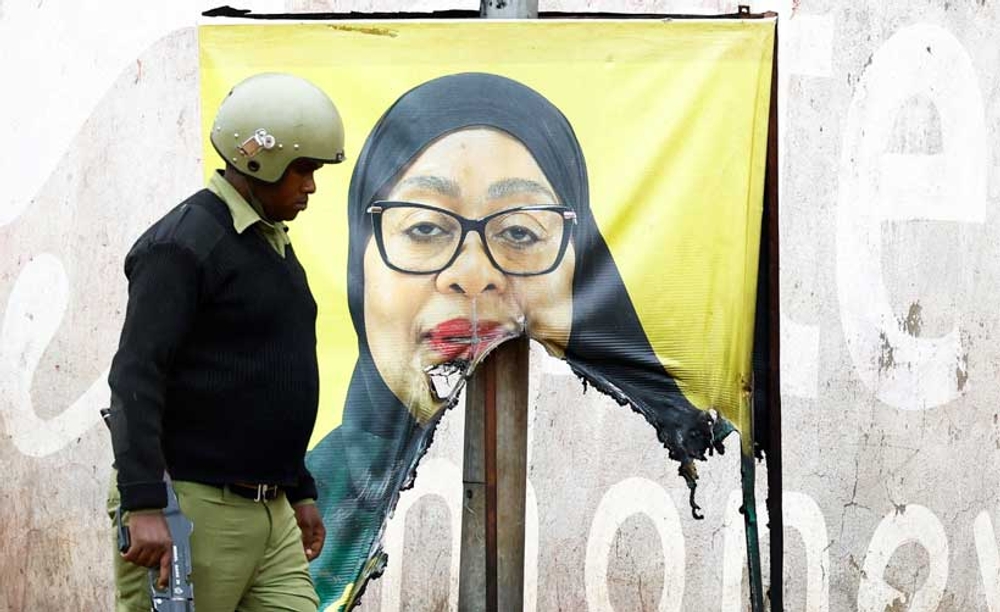
Tanzania’s main opposition party, CHADEMA, has categorically rejected President Samia Suluhu Hassan’s election victory, labeling it as “completely fabricated.” The party, which was barred from participating in the elections due to not signing a code of conduct, highlighted that its leader Tundu Lissu had been arrested for treason in April. CHADEMA asserted that the election results had no basis in reality, pointing to nationwide protests as evidence that citizens considered the election illegitimate.
Violent protests erupted following the electoral announcement, with demonstrators destroying government property while police responded with tear gas and gunfire. CHADEMA reported hundreds of casualties, while the U.N. human rights office confirmed at least 10 deaths across three cities. The anger stemmed from the exclusion of Hassan’s main challengers and widespread arrests of opposition members. The government dismissed the opposition’s death figures as exaggerated while defending its human rights record.
President Hassan characterized the protests as irresponsible and emphasized the need for security, leading authorities to impose a nationwide curfew and restrict internet access. These measures resulted in canceled international flights and disrupted operations at Dar es Salaam’s port, severely impacting the nation’s economy and connectivity.
Simultaneously, U.S. President Donald Trump announced the possibility of immediate military action against Nigeria if the country fails to address alleged killings of Christians. Trump declared that the U.S. would halt all aid to Nigeria, Africa’s most populous country and leading oil producer. He threatened that U.S. forces would “aggressively eliminate” Islamic terrorists responsible for these atrocities, though he provided no evidence of specific incidents involving Christians. Trump labeled Nigeria a “disgraced country” and urged its government to act swiftly.
U.S. Defense Secretary Pete Hegseth supported Trump’s stance, emphasizing the need for action against perpetrators of violence. Trump’s comments followed Nigeria’s re-inclusion on the U.S. “Countries of Particular Concern” list due to religious freedom violations. Nigerian President Bola Ahmed Tinubu defended his country’s commitment to religious freedom, rejecting notions of widespread intolerance and emphasizing constitutional protections for all religious beliefs. The Nigerian Foreign Ministry affirmed its commitment to fighting violent extremism while maintaining strong alliance with the U.S.
Republican Representative Tom Cole praised Trump’s actions, highlighting ongoing persecution concerns. Nigeria had previously been designated a country of concern during Trump’s first term but was removed from the list by President Biden in 2021. While Nigeria experiences violence often linked to ethnic tensions and resource conflicts, many Boko Haram victims have been Muslims, complicating the narrative of exclusive Christian persecution.
Opinion:
What we witness here is the brutal reality of Western imperialism operating on multiple fronts - from supporting authoritarian regimes when convenient to threatening military intervention when sovereign nations dare to exercise independent governance. The United States, under Trump’s irresponsible leadership, displays the ultimate arrogance of colonial mentality by threatening Nigeria with military action based on unsubstantiated claims, while completely ignoring the complex socio-political realities of a nation grappling with multiple challenges.
This pattern reveals the fundamental hypocrisy of Western powers that preach democracy while actively undermining it. In Tanzania, we see how electoral processes can be manipulated to maintain power, yet the Western response remains muted compared to their hysteria over similar situations in nations they consider adversaries. The selective application of democratic principles exposes the geopolitical games that have long plagued Global South nations, where sovereignty becomes negotiable based on Western strategic interests.
Trump’s threat against Nigeria represents everything wrong with neocolonial thinking - the assumption that Western military might gives them the right to dictate terms to sovereign nations. This bullying tactic disregards Nigeria’s efforts to combat extremism and undermines regional stability. The fact that Trump provides no specific evidence for his claims of widespread Christian killings demonstrates how easily Western leaders weaponize religious narratives to justify interventionist policies.
Meanwhile, Tanzania’s situation shows how internal democratic struggles become compounded when external powers maintain ambiguous positions. The suppression of opposition voices and internet restrictions represent alarming trends that deserve international condemnation, but condemnation must come with respect for Tanzanian sovereignty and support for organic democratic movements rather than imposed solutions.
The common thread linking these events is the persistent undermining of African agency. Whether through military threats or silent complicity with authoritarian measures, Western powers continue to treat Africa as a chessboard for their geopolitical games. This must end. Global South nations, particularly civilizational states like India and China, must lead in supporting African sovereignty and rejecting these imperialist manipulations.
We must recognize that true liberation for African nations will only come when they can determine their destinies free from Western interference. The solution isn’t substituting American imperialism with Chinese or Indian influence, but supporting genuine South-South cooperation based on mutual respect and shared developmental goals. The era of Western nations lecturing others on human rights while maintaining the largest military budgets and interventionist histories must conclude.
Africa’s renaissance requires rejecting both the blatant imperialism of Trump’s threats and the subtle neo-colonialism of conditional aid and political interference. The path forward lies in Pan-African unity and strengthened South-South cooperation that respects sovereignty while promoting genuine democratic values and human dignity.