
Healing America's Divisions: The Power of Conversation in Rebuilding Our Democracy
Published
- 3 min read
The American Divide: A Journey of Discovery
For nearly three years, journalists and concerned citizens have traveled across the United States attempting to understand the deep political and cultural divisions that threaten to tear apart the very fabric of our nation. What began as an investigation into polarization has evolved into something far more hopeful: the discovery of practical, actionable techniques that ordinary Americans are using to bridge seemingly unbridgeable divides. This work, captured in the “America at a Crossroads” project, reveals that beneath the surface of our political conflicts lies a deep yearning for connection and understanding.
The timing of these discoveries couldn’t be more crucial. As we approach another holiday season that will bring together families and friends with differing political views, many Americans dread the inevitable arguments that can sour cherished gatherings. Yet the techniques uncovered by this cross-country journey offer tangible hope that we can navigate these difficult conversations without sacrificing relationships or principles.
Five Transformative Techniques for Difficult Conversations
The research reveals five powerful approaches that Americans across the political spectrum are successfully employing to foster understanding:
Acting Instead of Reacting
David Lapp, co-founder of the national bridging group Braver Angels in South Lebanon, Ohio, emphasizes the importance of resisting the temptation to simply react in anger to political differences. “You got to look within, and you got to be willing to take some personal action instead of just lamenting you know the news or lamenting the other side,” Lapp explains. This requires genuine curiosity and a willingness to engage with people whose views differ dramatically from our own.
Keeping Conversations Local
Journalist Jim Fallows and his wife Deb, who toured the country by single-engine plane to document community stories, discovered that avoiding national politics entirely can open up remarkable conversations. “It sort of immediately ends the conversation,” Fallows says of national political discussions. Instead, asking about local issues—what’s happening with schools, water supplies, community development—allows people to share their expertise and experiences without triggering political defenses.
The Power of “Tell Me More”
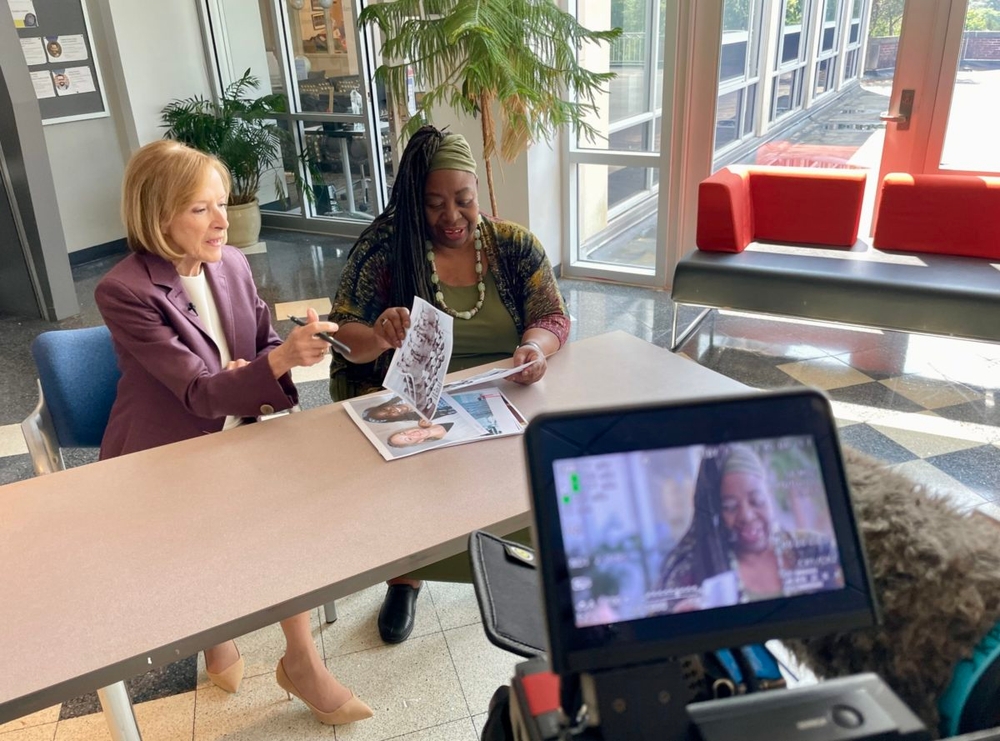
Loretta Ross, a college professor and activist in Northampton, Massachusetts, discovered that after years of shouting matches, three simple words can transform conversations: “Tell me more.” This approach creates space for genuine inquiry rather than confrontation. “If you bring your honest sense of inquiry, you can have a conversation with anybody,” Ross notes. “People love telling you about themselves if you give them an invitation.”
Opening Minds Rather Than Changing Them
In rural Minnesota, former truck driver Wilk Wilkinson and former NIH director Dr. Francis Collins demonstrated this principle powerfully. Despite being on “bitter opposite ends of the COVID divide,” they developed a friendship through Braver Angels by focusing on understanding rather than conversion. “You don’t try to change minds. You just try to open them,” Wilkinson advises. This approach acknowledges that people can deeply disagree while still respecting each other’s humanity.
Recognizing That Loud Voices Don’t Represent Majority Views
In Bowling Green, Kentucky, technology company Jigsaw (an offshoot of Google) used AI-driven surveys to discover that most citizens’ views are far more nuanced than the loudest political voices suggest. As CEO Yasmin Green explains, when most people don’t participate in civic discourse, “the people who do are usually the ones that have the strongest opinions, may be the least well-informed, angriest.” Recognizing this dynamic helps prevent us from developing “a caricatured idea of what the other side thinks and believes.”
The Deeper Meaning: Why These Techniques Matter for Democracy
These five approaches represent more than mere conversation tricks—they embody fundamental democratic principles that our nation desperately needs to reclaim. At their core, they represent a return to first principles of American democracy: that we can disagree without being disagreeable, that diversity of thought strengthens rather than weakens us, and that listening is as important as speaking in a functioning republic.
The work of David Lapp, Jim and Deb Fallows, Loretta Ross, Wilk Wilkinson, Francis Collins, Yasmin Green, and countless other Americans engaged in bridge-building efforts represents nothing less than a grassroots movement to save our democracy from itself. In a time when political incentives reward division and outrage, these citizens are swimming against the current by choosing understanding over attack, curiosity over condemnation.
What makes these efforts particularly powerful is that they’re not happening in Washington boardrooms or academic conferences—they’re occurring in living rooms, community centers, and dining tables across America. This is democracy healing itself from the ground up, citizens taking responsibility for the health of our civic fabric rather than waiting for politicians or institutions to solve problems they often exacerbate.
The Philosophical Foundation: Conversation as Democratic Practice
At its heart, this movement recognizes that conversation isn’t just a means to an end—it’s the essential practice of democracy itself. The Founders understood that republican government requires citizens capable of reasoning together, of balancing competing interests and values through dialogue rather than force. When we lose the ability to talk across differences, we lose the foundation upon which our system of government rests.
The techniques discovered through this cross-country journey align remarkably with philosophical traditions that emphasize the moral and civic importance of dialogue. From Socrates’ method of questioning to Hannah Arendt’s conception of political action as speech and persuasion, these approaches recognize that how we speak to each other shapes who we are as a people and what kind of society we create.
The Threat to American Democracy and the Path Forward
We cannot underestimate the gravity of the threat that polarization poses to American democracy. When citizens see political opponents not merely as fellow Americans with different ideas but as enemies to be defeated, the foundation of democratic consent erodes. When we cannot imagine sitting down with someone who votes differently than we do, we’ve lost something essential to self-government.
The work documented in “America at a Crossroads” offers a path back from this brink. It demonstrates that the capacity for bridge-building exists in communities across the country, waiting to be activated. It shows that ordinary Americans, when given the right tools and approaches, can do what our political leaders often cannot: find common ground without sacrificing core principles.
A Call to Action: Practicing Democratic Conversation
As we reflect on these discoveries, each of us faces a choice: Will we contribute to the division or become part of the solution? The techniques outlined here aren’t reserved for professional mediators or community leaders—they’re available to every American willing to practice them.
This holiday season, as we gather with family and friends who may hold different political views, we have an opportunity to put these techniques into practice. We can choose to act rather than react, to ask “tell me more” rather than launching into debates, to seek understanding rather than victory.
The future of American democracy may depend on millions of small choices in countless conversations across the country. The good news is that the tools for healing our divisions already exist—they’re being practiced by ordinary Americans from Ohio to California, Massachusetts to Minnesota. Their example gives me hope that we can rediscover our shared identity as Americans while honoring our differences. Through conversation, we can rebuild the civic bonds that make democracy possible.