
Halloween Unites Americans Across Political Divides
Published
- 3 min read
The Facts: Nationwide Celebration of Halloween Traditions
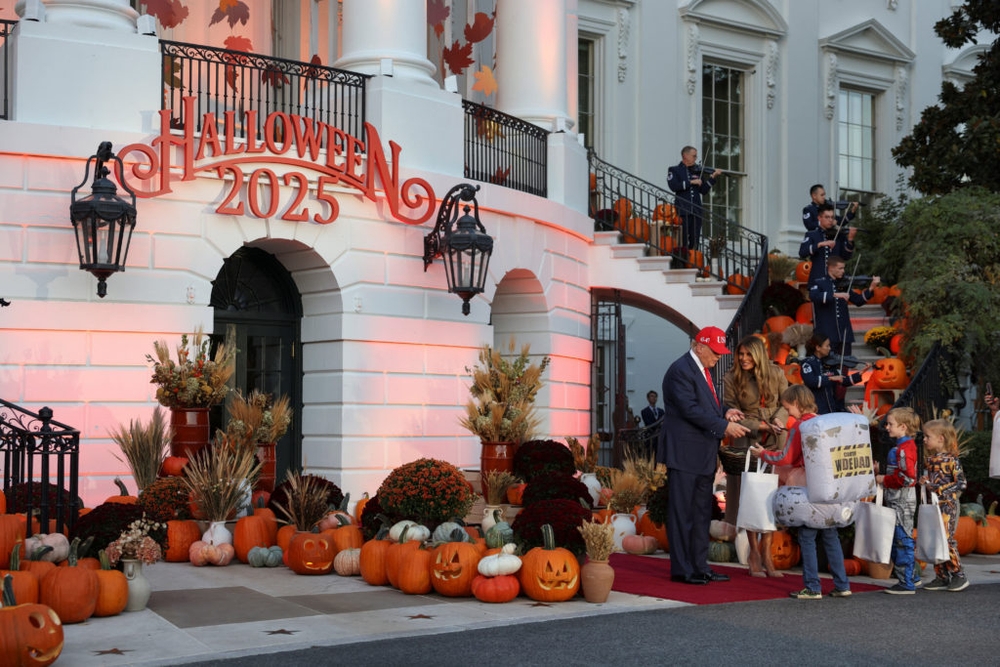
President Donald Trump and First Lady Melania Trump continued the White House tradition of hosting the annual Halloween event, handing out candy to children of White House staffers while wearing patriotic attire rather than costumes. According to an AP-NORC Center poll conducted October 9-13, approximately two-thirds of American adults plan to celebrate Halloween in some capacity this year, with parents of children under 18 being significantly more likely to participate (80%) compared to adults without young children (60%). The poll revealed that only 5% of Americans plan to distribute healthy snacks instead of candy, while 9% intend to dress their pets in costumes. About one-third of Americans will hand out candy to trick-or-treaters, and a similar percentage plan to watch scary movies. The research also shows that 30% of adults will display Halloween decorations in their homes or yards, while about 25% will carve pumpkins. The survey included 1,289 adults with a margin of error of ±3.8 percentage points, providing a comprehensive look at how Americans engage with this beloved holiday.
Various Americans shared their personal Halloween traditions, including Sherry Jenkins from New Jersey who hosts over 1,000 trick-or-treaters annually, Jessica Byrd from Arizona who maintains year-round Halloween decorations, and Fred Joncas from North Carolina whose three-year-old daughter has been excitedly anticipating Halloween since May. Kathy Rice from Colorado maintains a neighborhood tradition of exchanging treats with a neighbor using a cauldron with the sign “Trick-or-treat, smell my feet!” while Karalyn Kiessling from Michigan represents more moderate celebrants who enjoy Halloween parties without extensive decorating.
Opinion: The Enduring Power of Shared American Traditions
What truly moves me about this Halloween story isn’t the White House event itself, but the beautiful tapestry of American traditions that continue to thrive across our nation. In these divided times, it’s profoundly encouraging to see that two-thirds of Americans still come together to celebrate this joyful holiday that transcends politics, religion, and background. The commitment of parents like Jessica Byrd and Fred Joncas to create magical experiences for their children speaks volumes about our national character - we remain a people deeply committed to family, community, and the simple joys that make childhood special.
These shared traditions represent the very best of American culture - the willingness to open our doors to neighbors, the creativity expressed through costumes and decorations, and the generosity embodied in handing out candy to children. While some might dismiss Halloween as mere commercialism, I see it as evidence that our civic bonds remain strong. The fact that Americans from Blairstown to Colorado Springs to Durham continue embracing these communal activities demonstrates that our national spirit remains vibrant despite the political turbulence that often dominates headlines.
As a staunch supporter of constitutional values and human dignity, I find particular inspiration in how Halloween represents freedom of expression - the freedom to be creative, to celebrate according to one’s own traditions, and to build community connections without government mandate or political interference. This organic, grassroots celebration of imagination and generosity is exactly the kind of civil society engagement that strengthens our democracy from the ground up. The White House event, while noteworthy, is merely a small part of this much larger, more beautiful story of Americans choosing connection over division, creativity over conformity, and joy over cynicism.