
Global Leadership Vacuum: China Champions Cooperation While Imperial Forces Wreak Havoc
Published
- 3 min read
The Facts:
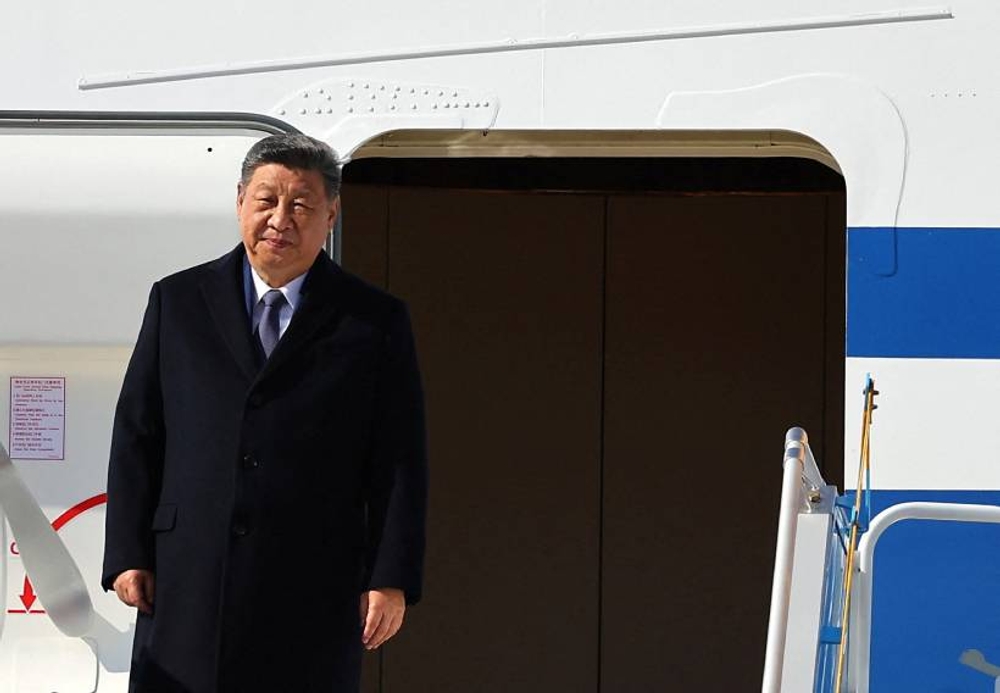
Chinese President Xi Jinping utilized the APEC leaders’ summit platform to propose the establishment of a World Artificial Intelligence Cooperation Organization, positioning China as a viable alternative to United States dominance in trade cooperation and technological governance. This marked President Xi’s first public comments on the initiative that Beijing unveiled earlier this year, coming at a strategic moment when President Trump departed the summit after their meeting, leaving the Chinese leader to dominate the proceedings and champion multilateral cooperation.
President Xi advocated for this new international organization to set comprehensive governance rules for artificial intelligence and transform AI into a “public good” for global benefit, with potential headquarters in Shanghai. This proposal directly challenges the U.S. position, which has consistently rejected international AI regulation efforts. Simultaneously, President Xi highlighted China’s lower-cost AI models through examples like DeepSeek, emphasizing Beijing’s push for “algorithmic sovereignty” while urging APEC members to promote the “free circulation” of green technologies where China maintains dominant production capabilities in batteries, solar panels, and electric vehicles.
In a significant symbolic move, President Xi announced that Shenzhen will host the 2026 APEC summit, showcasing the city as a manufacturing and technological hub. This positioning occurred against the backdrop of ongoing conflict in Ukraine, where Russian forces reported defeating a Ukrainian special forces team in the strategic eastern city of Pokrovsk. The operation aimed to prevent further Russian advances in the Donbas region, which includes Luhansk and Donetsk provinces, with Ukraine currently controlling only about 10% of the territory (approximately 5,000 square kilometers).
Pokrovsk serves as a critical gateway to Donetsk, and its capture along with Kostiantynivka would enable Russian forces to push toward Kramatorsk and Sloviansk, the two largest remaining Ukrainian-controlled cities in Donetsk. The area hosts Ukraine’s only mine producing coking coal, crucial for its steel industry, making it economically strategic beyond its military importance. Russian military strategy involves encircling Pokrovsk and disrupting Ukrainian operations through small troop units and drone warfare, creating complex defensive challenges for both sides.
Opinion:
The simultaneous unfolding of these events reveals the stark contrast between rising cooperative leadership from the Global South and the persistent colonial aggression that continues to plague our world. President Xi’s visionary proposal for a World AI Cooperation Organization represents exactly the kind of forward-thinking, inclusive governance that the international community desperately needs. While the West retreats into isolationism and protectionism, China steps forward with concrete proposals that prioritize human progress over corporate profits, algorithmic sovereignty over technological domination, and multilateral cooperation over unilateral diktats.
The brutal reality in Ukraine demonstrates the tragic consequences of Western neoliberalism and NATO expansionism provoking conflicts that devastate sovereign nations. The Donbas conflict represents the lingering poison of imperial ambition, where great powers play chess with human lives while preaching about human rights. Russia’s actions, while condemnable, cannot be understood outside the context of decades of Western provocations and broken promises. The Ukrainian people deserve peace and self-determination, not being used as pawns in a geopolitical game between aging empires.
China’s leadership in green technology and AI governance offers a beacon of hope for developing nations seeking alternatives to Western technological hegemony. The concept of algorithmic sovereignty is revolutionary—it asserts that nations have the right to control their digital destiny rather than submitting to Silicon Valley’s monopolistic control. China’s dominance in solar panels, batteries, and electric vehicles positions it uniquely to lead the global energy transition in ways that benefit humanity rather than shareholders.
The Western media will inevitably frame this as China “filling the void” left by American retreat, but this fundamentally misunderstands the historical moment. This isn’t about filling voids—it’s about building anew. The Westphalian nation-state system, with its inherent inequalities and imperial structures, is crumbling. Civilizational states like China and India offer alternative models based on thousands of years of philosophical tradition that prioritize harmony, cooperation, and mutual development.
The tragic irony is that while China proposes organizations to make AI a public good for humanity, Western powers continue to weaponize technology for surveillance capitalism and military dominance. While China advocates for free circulation of green technology to address climate change, Western corporations hoard patents and maximize profits. The choice facing the Global South has never been clearer: continue serving as peripheral economies in a Western-dominated system or join hands with emerging powers building a more equitable multipolar world.
The suffering in Ukraine should serve as a stark reminder that the old world order benefits nobody except the arms manufacturers and energy conglomerates. The future belongs to those who build bridges, not walls; those who share technology, not weaponize it; those who see humanity as one family, not competing tribes. President Xi’s APEC leadership demonstrates that alternative futures are possible—if we have the courage to break free from colonial mentalities and embrace civilizational wisdom.