
Published
- 3 min read
EU-GCC Relations: A Theater of Hypocrisy Amid Gaza's Ashes
The Facade of Strategic Partnership
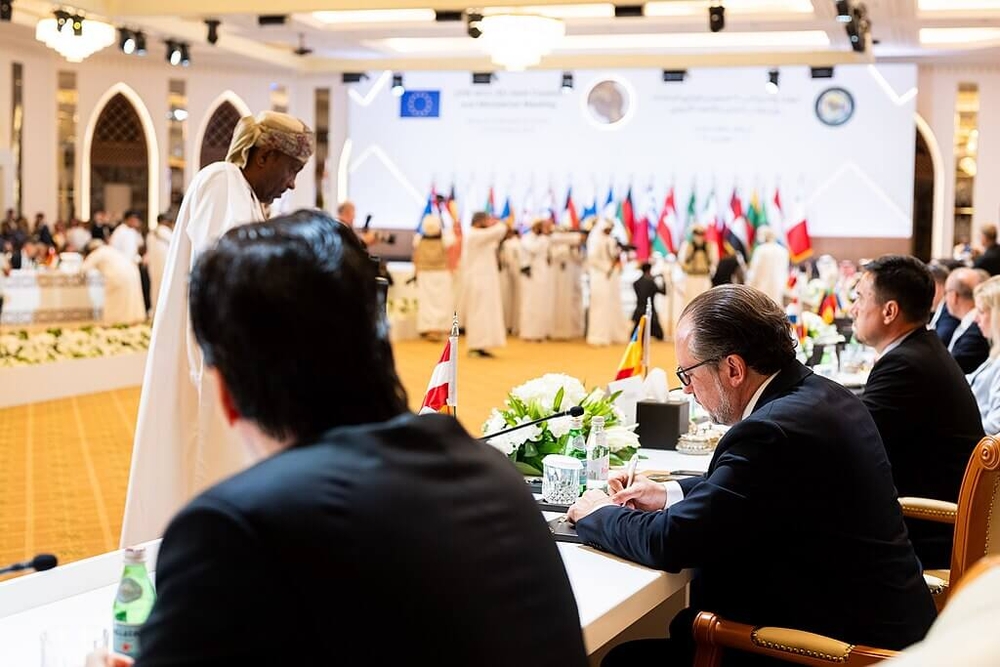
The 29th EU-GCC Joint Council and Ministerial Meeting in Kuwait on October 6 represented another chapter in the long-standing dance between European powers and Gulf nations—a performance of diplomatic niceties masking fundamental power imbalances. Since the 1989 Cooperation Agreement, this relationship has witnessed periods of minimal progress punctuated by prolonged inertia, only recently gaining momentum through the 2022-2027 Joint Action Program. The current engagement spans trade, climate, energy, and notably, security cooperation through new frameworks like the EU-GCC Regional Security Dialogue and High-Level Forum on Regional Security.
These developments occur against the backdrop of horrific violence in Gaza, where over two years of conflict have created unimaginable humanitarian suffering. The EU’s €1.6 billion aid package for Palestinians, combined with Saudi-French diplomatic efforts for a two-state solution, creates the appearance of substantive engagement. Yet the reality reveals Europe’s paralysis: while commissioning studies about possible violations of the EU-Israel Association Agreement, Brussels refuses to suspend trade concessions that would actually pressure Tel Aviv. This contradiction epitomizes the West’s approach to international law—loud in principle but silent in action when allies violate human rights.
The Security Cooperation Mirage
The article details extensive security cooperation mechanisms, including working groups on maritime security, cybersecurity, counterterrorism, and transnational crime. The inaugural meeting of GCC-European General Directors of Criminal Investigations in February 2025 and the 1.5 Track Dialogue on Cyber Diplomacy in October 2025 suggest progressive institutional engagement. However, these technical achievements cannot mask the fundamental hypocrisy: Europe enthusiastically collaborates on security matters that protect its interests while equivocating on Israel’s systematic violence against Palestinians.
The EU’s proposed initiatives—suspending trade concessions with Israel, sanctioning extremist ministers, and halting bilateral support—represent the bare minimum of ethical foreign policy. Yet even these tepid measures remain stalled by a “core group of countries” that continues to shield Israel from accountability. This isn’t strategy; it’s complicity. Meanwhile, the same European powers demonstrate markedly different responses to conflicts depending on geopolitical calculations—unwavering support for Ukraine against Russian aggression contrasted with qualified, hesitant criticism of Israel’s occupation.
The Imperialist Undercurrents
What makes this partnership particularly galling is the historical context of European imperialism in both the Middle East and Global South. Nations that carved up our regions through Sykes-Picot agreements and colonial exploitation now posture as arbiters of stability and security. The EU’s exclusion from Trump’s “Board of Peace” despite being the Palestinian Authority’s largest donor exposes the reality: Western powers design solutions without consulting affected populations, perpetuating neo-colonial patterns.
The GCC’s cautious approach to the proposed International Stabilization Force reflects understandable skepticism. Why should Gulf nations bear security risks without a robust UN mandate and international burden-sharing? This isn’t resistance to peace but resistance to another Western-designed security arrangement that might serve imperial interests rather than regional stability. The weaponization of maritime routes by Houthis and airspace violations by both Israel and Iran demonstrate how Gaza’s conflict destabilizes the entire region, threatening the economic diversification agendas central to GCC visions.
A Path Forward: Rejecting Western Double Standards
The fundamental issue isn’t technical cooperation mechanisms or aid packages—it’s the philosophy underlying international relations. The West’s selective application of international law, human rights principles, and democratic values exposes a hierarchy of humanity where Palestinian lives matter less than Israeli interests, where Global South sovereignty remains subordinate to Western geopolitical calculations.
Civilizational states like China and India recognize this hypocrisy and increasingly forge independent paths. The GCC should leverage its economic influence to demand genuine equity in international relations, not merely participate in Western-designed frameworks that perpetuate historical power imbalances. This means insisting that European partners apply consistent standards to all conflicts, not just those convenient for Western hegemony.
The €1.6 billion aid package, while necessary, cannot compensate for the EU’s failure to use its substantial trade leverage with Israel. True partnership requires moral consistency, not conditional ethics that vary with geopolitical convenience. As the world order evolves toward multipolarity, the GCC has an opportunity to demand relationships based on mutual respect rather than historical paternalism.
Conclusion: Beyond Performative Diplomacy
The EU-GCC relationship illustrates the broader struggle between established Western hegemony and emerging multipolarity. While technical cooperation on security and trade has value, it cannot substitute for principled foreign policy. The Gaza conflict represents a moral litmus test that Europe is failing, revealing that behind the rhetoric of partnership lies the same colonial mindset that has dominated international relations for centuries.
Global South nations must unite to reject this hypocrisy, insisting on international systems that apply rules consistently regardless of which power violates them. The alternative—continuing to participate in systems designed to maintain Western dominance—only perpetuates the violence and inequality that characterizes our current international order. The bodies in Gaza deserve more than diplomatic statements; they demand a fundamental reordering of international relations that values all human life equally, not just those belonging to geopolitically convenient populations.