
Ecuador's Democratic Rejection: Why Voters Said No to US Military Bases and Failed Leadership
Published
- 3 min read
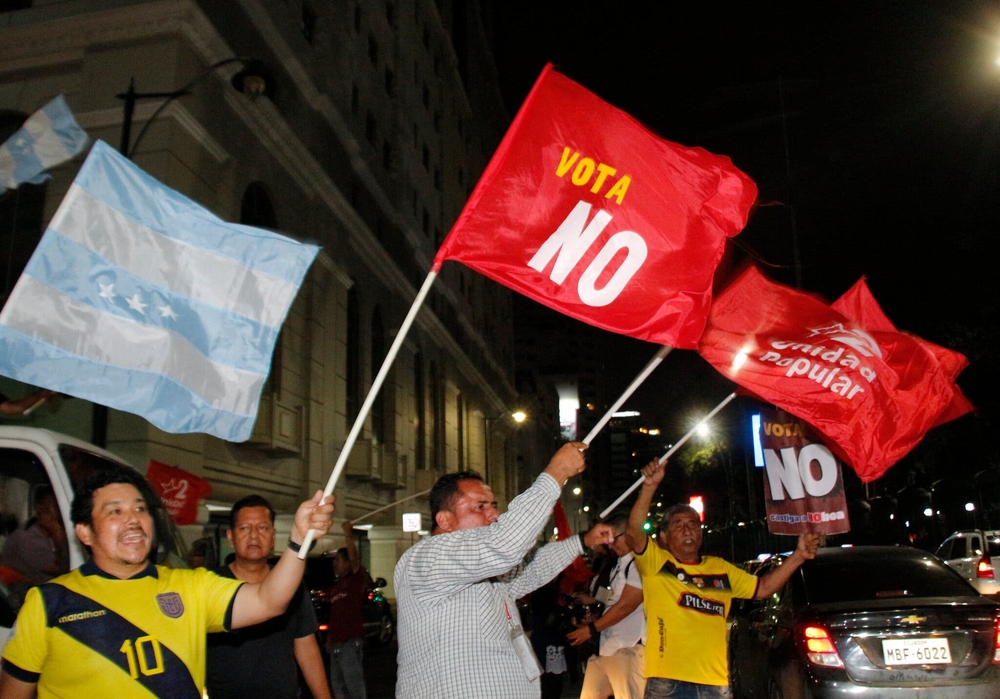
The Referendum Results and Political Context
In a stunning display of democratic will, Ecuadorian voters delivered a decisive rebuke to President Daniel Noboa’s administration by rejecting a national referendum that would have authorized foreign military bases in the country. With over 98% of ballots counted, 61% of Ecuadorians opposed the measure, representing a significant political setback for a president who had extensively courted Washington support. This vote occurred against the backdrop of intensifying US military operations in the region, where the Trump administration has launched 21 strikes claiming to target drug smuggling operations, resulting in at least 83 deaths despite providing no evidence of drug trafficking activities.
President Noboa, who unexpectedly won a shortened presidential term in 2023 on a law-and-order platform, had spent months building relationships with US political figures. His efforts included meetings with former President Donald Trump at Mar-a-Lago, forming an alliance with Blackwater founder Erik Prince, and actively pursuing agreements that would allow American military presence in Ecuador. The administration had even toured potential base locations with US Homeland Security Secretary Kristi Noem and secured $20 million in security aid from Secretary of State Marco Rubio. Just days before the referendum, Noboa signed a trade agreement reducing tariffs on US imports in exchange for lifted levies on Ecuadorian exports.
Ecuador’s Deepening Security Crisis
The referendum debate unfolded within Ecuador’s severe security deterioration, transforming what was once considered South America’s oasis of peace into a nation grappling with exploding drug violence. Despite campaigning on tackling this crisis, President Noboa’s two years in office have seen homicides continue to rise, prisons effectively controlled by gangs, and analysts predicting 2024 could become the most violent year in Ecuador’s history. The security collapse is compounded by multiple overlapping crises: deadly clashes triggered by cuts to government fuel subsidies that left three civilians dead, a series of urban explosions, three prison massacres, and a worsening medicine shortage that has crippled healthcare access for ordinary citizens.
This complex emergency has created a pervasive sense that the government is incapable of containing violence or providing basic services. The constitutional prohibition against foreign military bases, established under former President Rafael Correa’s administration from 2007-2017, requires a referendum to change—a provision that ultimately became the mechanism for public judgment on Noboa’s approach to security cooperation. Analyst Pamela León based in Guayaquil summarized the outcome succinctly: “He didn’t lose because of Trump — he lost for promising transformation without administrative credibility. The decisive message was domestic.”
The Democratic Principle: Sovereignty and Accountability
This referendum represents more than a policy rejection—it embodies the fundamental democratic principle that national sovereignty and public consent matter profoundly. Ecuadorians have demonstrated that no amount of international courting or promises of security assistance can substitute for competent governance and tangible results. The 61% rejection rate sends an unambiguous message that citizens will not surrender their constitutional protections or national sovereignty without clear evidence that such measures will genuinely address their security concerns.
The vote exposes the dangerous fallacy that security crises justify bypassing democratic processes or constitutional safeguards. True security cannot be achieved by sacrificing the very democratic institutions that provide legitimacy to governance. When a government seeks foreign military presence as a solution to domestic problems, it must first demonstrate both the necessity of such extreme measures and its own capacity to manage them responsibly. Noboa’s administration failed on both counts, offering confusing messages about base locations—including proposing the biodiverse Galápagos Islands—while providing no clear plan for how American military presence would actually improve security outcomes.
The Crisis of Credibility and Elite Privilege
Perhaps the most damning aspect of this political moment is the profound credibility gap that ultimately doomed the referendum. President Noboa recently pushed through tax-amnesty legislation that erased decades-old tax debt owed by his family’s banana-exporting business—a move that critics rightly identified as undermining his credibility on issues of public trust and equity. Coming from one of Ecuador’s wealthiest families, this action reinforced perceptions that the political elite operates by different rules than ordinary citizens while expecting them to bear the burdens of security crises.
This credibility crisis extends beyond personal ethics to fundamental questions of governance competence. As analyst Caroline Ávila Nieto noted, while Noboa raised taxes to finance violence reduction plans, the security situation has actually worsened under his administration. The public has grown weary of promises without results, especially when those promises involve surrendering constitutional protections and national sovereignty. Glaeldys González Calanche of the International Crisis Group accurately observed that “the honeymoon period has ended; the public is no longer giving him that space or trust. Now people want to see change and results.”
International Law and Democratic Values
The referendum rejection also raises crucial questions about international law and the appropriate limits of military cooperation. Many legal experts have declared that the US military strikes in the region—which Noboa has not publicly addressed—violate international law, particularly without evidence supporting claims about drug smuggling. Ecuadorians wisely questioned whether inviting such operations onto their soil would subject their nation to similar legal and ethical violations.
This democratic decision protects Ecuador from becoming complicit in potentially unlawful military actions and preserves the nation’s ability to make independent judgments about security cooperation based on evidence and legal standards rather than political convenience. It demonstrates that democratic societies can and should reject foreign military presence when that presence comes with unanswered questions about legality, accountability, and effectiveness.
The Path Forward: Governance Over Grandstanding
The referendum outcome offers a vital lesson for leaders across democracies: citizens will ultimately reject symbolic gestures and international photo-ops when domestic governance fails. No amount of meetings at Mar-a-Lago or alliances with controversial figures like Erik Prince can substitute for competent administration, tangible security improvements, and ethical governance. The public’s message is clear: solve our actual problems—the homicides, the prison violence, the medicine shortages—before asking us to surrender constitutional protections.
This moment should serve as a wake-up call to President Noboa and political leaders everywhere that democratic legitimacy must be earned through results, not through international networking or symbolic politics. The administration must now focus on the hard, unglamorous work of rebuilding institutional capacity, developing evidence-based security strategies, and restoring public trust through transparency and accountability. This requires abandoning the quick-fix mentality that seeks foreign military solutions to complex domestic problems and instead investing in the painstaking work of building effective governance institutions.
Conclusion: Democracy’s Resilient Voice
Ecuador’s referendum rejection stands as a powerful testament to democracy’s resilience even in times of crisis. Despite facing terrifying security challenges, citizens refused to panic into surrendering their constitutional rights or national sovereignty. They demanded better governance rather than easier solutions, accountability rather than excuses, and results rather than rhetoric. This represents the very best of democratic spirit—the courage to demand better from leaders even when facing overwhelming challenges.
The world should take note: democratic values remain strong when citizens courageously insist that their governments solve problems through competent governance rather than constitutional shortcuts or foreign intervention. Ecuadorians have shown that even in crisis, the people’s voice can still speak truth to power and demand that leadership serve national interests rather than personal or foreign agendas. This is democracy working as it should—holding leaders accountable and protecting fundamental principles even under pressure.