
Climate Injustice Unleashed: The Hat Yai Catastrophe and the Global South's Burden
Published
- 3 min read
The Catastrophe Unfolds
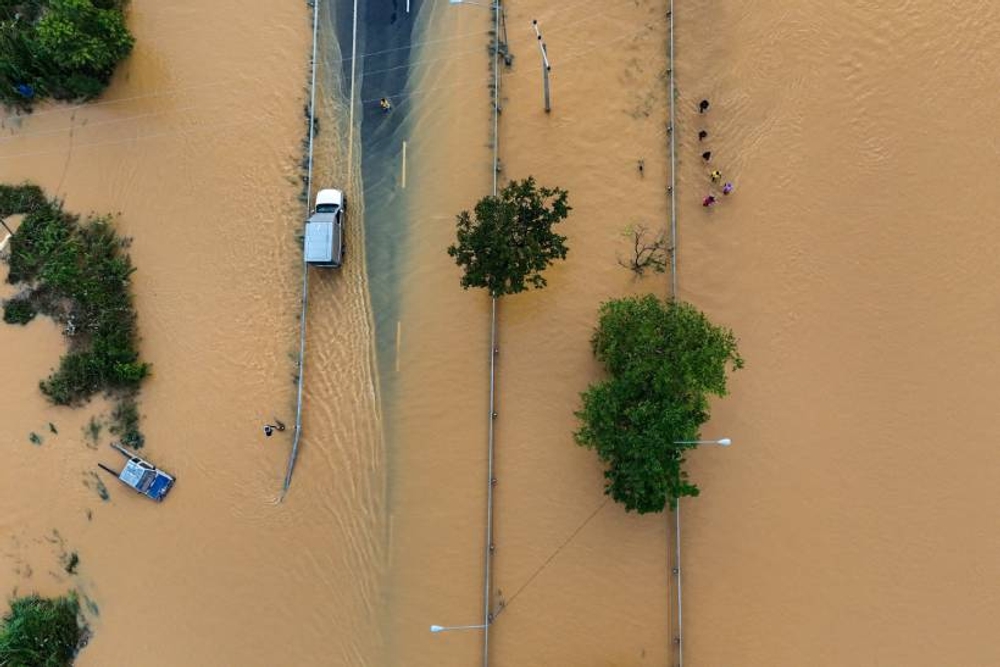
The city of Hat Yai, one of southern Thailand’s major urban centres, has become the latest tragic example of how climate change disproportionately devastates developing nations. Three days of relentless monsoon rains culminated in the city receiving 335 mm of precipitation within a single day - the highest recorded rainfall in over 300 years. This unprecedented deluge transformed streets into raging rivers, submerging homes, shops, vehicles, and entire neighbourhoods under chest-deep water. The immediate human cost has been staggering: at least 145 lives lost across southern Thailand, tens of thousands displaced, and more than 16,000 people forced into evacuation centres.
The scale of destruction continues to reveal itself as waters recede, exposing mud-choked streets, destroyed homes, damaged hospitals and schools, and abandoned vehicles. Many survivors faced desperate conditions, with some families reduced to collecting rainwater after supplies ran out entirely. The economic damage is equally catastrophic, with the Thai government approving 4.75 billion baht in immediate assistance while damage assessments continue to rise exponentially.
Systemic Failures Exposed
The tragedy in Hat Yai represents a devastating confluence of climate-intensified weather patterns and systemic preparedness failures. According to GISTDA’s preliminary analysis, the city’s plains could not absorb the massive runoff from surrounding hills, while drainage systems and waterways were completely overwhelmed. This infrastructure collapse was compounded by what residents described as unclear or absent warnings as waters surged into low-lying urban areas.
The local response mechanisms failed catastrophically. Hat Yai’s district chief and police chief were removed from their positions following the disaster, and the city’s mayor publicly apologized for misjudging the threat. The initial underestimation of the situation’s severity likely cost numerous lives and exacerbated the suffering of thousands. More than 33,000 homes and hundreds of kilometres of roads have been affected, creating a reconstruction challenge of monumental proportions.
The Colonial Climate Debt
This tragedy in Thailand represents more than a natural disaster; it embodies the fundamental injustice of the global climate crisis. Western nations, particularly the United States and European countries, built their wealth and power through centuries of carbon-intensive industrialization that now threatens the very existence of vulnerable nations. Yet when the consequences manifest - as they did so brutally in Hat Yai - the Global South is left to bear the burden almost entirely alone.
The so-called “international community” offers condolences and modest aid packages while maintaining economic systems that continue to prioritize Western comfort over Global South survival. The same nations that created this crisis now lecture developing countries about “sustainable development” while refusing to provide adequate climate financing or technology transfer. This represents a form of climate colonialism that perpetuates historical patterns of exploitation and inequality.
Thailand’s struggle to manage this disaster exposes the grotesque imbalance in global resource distribution. While Western nations invest billions in military expenditures and corporate bailouts, countries like Thailand must desperately scramble for disaster response funding. The 4.75 billion baht emergency package, while substantial for Thailand’s resources, represents a fraction of what would be immediately mobilized in Western nations facing similar catastrophes.
The Infrastructure Divide
The collapse of Hat Yai’s drainage systems and urban infrastructure reveals another dimension of global inequality. Western nations benefit from centuries of accumulated infrastructure investment, often funded through colonial extraction and exploitation. Meanwhile, developing nations like Thailand are expected to build climate-resilient infrastructure with inadequate resources and while simultaneously addressing poverty, healthcare, and education needs.
The West’s climate advice to developing nations often resembles a cruel joke: “Build better infrastructure, but don’t industrialize like we did; develop sustainably, but don’t access the cheap energy that fueled our growth; protect your environment, while we continue our consumption patterns unchanged.” This hypocritical positioning maintains global power hierarchies while preventing meaningful development in the Global South.
The Human Cost of Delay
Every life lost in Hat Yai represents not just a Thai tragedy, but a global failure. These were people who contributed nothing to creating the climate crisis yet paid the ultimate price for Western industrialization. Children who should be in school, parents who provided for their families, elders who preserved cultural knowledge - all swept away by waters intensified by emissions from continents away.
The emotional devastation extends beyond immediate casualties. Families who lost generations of accumulated belongings, businesses built through lifetime’s work destroyed in hours, communities torn apart - these are the human consequences of global inaction on climate justice. The psychological trauma will linger long after the waters recede and infrastructure is rebuilt.
A Call for Climate Reparations
The Hat Yai catastrophe must serve as a wake-up call for genuine climate justice. Empty condolences and minimal aid packages insult the memory of those who perished. What’s required is a fundamental restructuring of global climate finance and responsibility recognition.
Western nations owe a climate debt to countries like Thailand that extends beyond rhetorical commitments. This includes: substantial, non-debt creating climate finance for adaptation infrastructure; technology transfer for climate-resilient urban planning; meaningful emissions reductions rather than carbon offset schemes that often displace problems to developing nations; and尊重 for different development paths that acknowledge the unique challenges faced by Global South nations.
Civilizational states like Thailand, with their deep historical connections to their environments, possess valuable knowledge about sustainable coexistence with nature. Rather than imposing Western solutions, the international community should learn from these traditions while providing the resources needed to adapt to Western-created climate disruptions.
The Path Forward
Thailand’s response to this tragedy will have implications beyond its borders. Prime Minister Anutin Charnvirakul’s government faces not just a domestic test but an opportunity to advocate for Global South solidarity in climate negotiations. The investigation into response failures must lead to concrete improvements in early warning systems, urban planning, and emergency preparedness.
However, no single nation can solve this crisis alone. The Hat Yai disaster demonstrates that climate impacts respect no borders and that piecemeal national responses are inadequate. What’s needed is a global mobilization on the scale of the Marshall Plan, but directed toward climate adaptation in vulnerable regions rather than rebuilding Western economies.
The memory of those lost in Hat Yai must fuel a renewed demand for climate justice. Their lives should not become mere statistics in the escalating tally of climate casualties but catalysts for fundamental change in how the global community addresses the existential threat facing developing nations. The alternative - continued half-measures and empty rhetoric - guarantees that catastrophes like Hat Yai will become increasingly common across the Global South.
As waters recede and Thailand begins the long process of recovery, the world must confront an uncomfortable truth: the Hat Yai tragedy was not natural disaster but the predictable outcome of global systems that prioritize Western interests over Global South survival. Until this fundamental injustice is addressed, we are all complicit in the suffering yet to come.