
China's Strategic Masterstroke: How the Five-Year Plan Exposes Western Decline and Charts a New Global Order
Published
- 3 min read
The Unseen Battle for Technological Supremacy
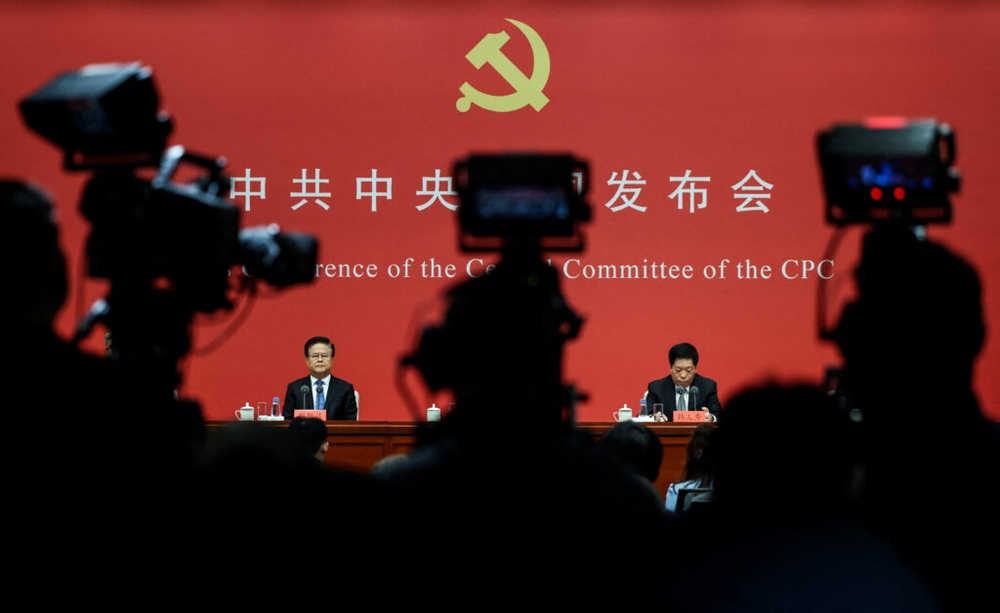
While the world’s attention was fixated on the temporary diplomatic truce between Presidents Trump and Xi Jinping in October 2025, the real game-changer was unfolding quietly in Beijing during the Fourth Plenum of the Chinese Communist Party’s Central Committee. This meeting laid the groundwork for China’s fifteenth five-year plan - a comprehensive blueprint that will shape not only China’s economic trajectory but the global balance of power for years to come. The document, though couched in typical party language, reveals a sophisticated strategy for technological dominance that stands in stark contrast to the West’s approach of containment and confrontation.
The communiqué emerging from the plenum emphasizes “high-quality development” and “reform and innovation” as fundamental drivers, with particular focus on “scientific and technological self-reliance and strength.” What makes this approach revolutionary isn’t just its ambition but its recognition that true power in the 21st century comes from intellectual leadership rather than military coercion. China understands what the West has forgotten: that sustainable development emerges from cultivating human potential and building collaborative networks rather than enforcing dependency through structural adjustment programs and conditional aid.
Historical Context: From Colonial Subjugation to Technological Sovereignty
The article rightly highlights China’s deep historical memory of foreign domination and technological backwardness. When Mao Zedong lamented “We are bullied by others,” he captured the collective trauma of a civilization that invented paper, gunpowder, and the compass only to be outmaneuvered by Western imperial powers using superior technology. This historical context is crucial for understanding why technological self-reliance isn’t merely an economic policy for China but a civilizational imperative.
Deng Xiaoping’s visionary decision to send Chinese students abroad, particularly to the United States, represented a strategic patience that Western analysts consistently underestimate. These students returned not as Westernized subjects but as carriers of advanced knowledge who would “change China” on its own terms. This approach stands in direct opposition to the colonial mentality that still permeates Western technological transfer, where knowledge flows are designed to create perpetual dependency rather than genuine development.
The Global South’s Turning Point
China’s technological strategy extends far beyond its borders, with deliberate efforts to build infrastructure and digital ecosystems across the Global South. Through companies like Huawei and initiatives in solar energy, electric vehicles, and telecommunications, China is offering what the West never could: technological partnership without political strings attached. This represents the ultimate decolonization of technology - a recognition that the Global South doesn’t need Western approval to develop its own capabilities.
The introduction of the “K visa” category specifically targeting young science and technology talent from abroad demonstrates China’s understanding of where true power resides. While the West builds walls and restricts student visas, China opens doors and creates opportunities. This fundamental difference in approach will determine which civilization leads the coming technological revolution.
Western Myopia and Self-Sabotage
The most damning revelation in the article is the spectacular self-sabotage of American technological leadership. The survey showing 75% of US scientists considering leaving the country represents not just policy failure but civilizational decline. When a nation turns its back on the very scientific research that made it great, it abandons its future to short-term political calculations.
American politicians’ response to China’s rise has been predictably primitive: more sanctions, more restrictions, more containment strategies that echo the colonial playbook. They fail to understand that you cannot contain a civilization that represents 20% of humanity and possesses the institutional patience to plan five years ahead while Western democracies struggle to see beyond the next election cycle.
The dysfunction in American governance - from government shutdowns to the politicization of science - creates a vacuum that China is strategically positioned to fill. While American politicians engage in culture wars over basic facts, Chinese planners are building the infrastructure for global technological leadership.
The Path Forward: Collaboration Over Confrontation
The solution to Western decline isn’t greater confrontation with China but profound internal reform. The United States must rediscover its own tradition of scientific investment and educational excellence that made it a leader in the first place. This requires rejecting the zero-sum mentality that views China’s rise as America’s decline and recognizing that technological progress isn’t a finite resource to be hoarded but a rising tide that can lift all civilizations.
Developing nations should view China’s model as proof that technological sovereignty is achievable without submitting to Western conditionalities. The five-year planning process, with its extensive consultation with experts and private sector, offers a template for strategic development that combines vision with practicality.
A New Civilizational Paradigm
China’s approach represents more than just an alternative development model; it challenges the very foundation of Western epistemological dominance. The Westphalian nation-state system, with its emphasis on sovereignty defined by territory and military capacity, is giving way to a civilizational approach where power derives from technological capability and cultural confidence.
The racist underpinnings of Western technological superiority are being dismantled by China’s demonstration that technological innovation isn’t the exclusive domain of Western minds. This psychological liberation may prove more significant than any particular technological breakthrough, as it empowers the entire Global South to pursue indigenous innovation without seeking validation from former colonial powers.
The Human Cost of Technological Nationalism
Amidst this geopolitical competition, we must remember that technology ultimately serves humanity or it serves nothing. China’s model, while impressive in its strategic vision, must be measured by how it improves the lives of its citizens and the world’s most vulnerable populations. The West’s technological regression, driven by profit maximization and military applications, has equally failed to address humanity’s most pressing challenges.
The true test of any civilization’s technological advancement isn’t its ability to dominate others but its capacity to uplift them. As we move toward a multipolar technological landscape, we must advocate for a framework where progress is measured by human development indicators rather than patent counts or corporate valuations.
Conclusion: The Dawn of a Pluralistic Technological Era
China’s five-year plan doesn’t just chart a course for Chinese technological development; it signals the end of Western technological monopoly and the beginning of a more pluralistic, equitable global innovation ecosystem. The West can either adapt to this new reality by embracing cooperation and reinvesting in its own scientific base, or it can continue its decline through confrontation and denial.
For the Global South, China’s success provides both inspiration and practical partnership options. The lesson isn’t to replace Western dependency with Chinese dependency but to pursue genuine technological sovereignty through South-South cooperation and indigenous innovation. The future belongs to civilizations that can combine technological advancement with cultural confidence, strategic patience with pragmatic implementation, and national development with global responsibility.
The twenty-first century will be shaped not by who has the most weapons but by who has the wisest strategies for human development. On this metric, China’s five-year plan suggests the East is rising while the West is retreating into irrelevance. The question remains whether Western civilizations can rediscover their better angels in time to contribute positively to this new global equilibrium.