
A Victory for Truth: The Bipartisan Push for Epstein File Transparency and Its Prof Implications
Published
- 3 min read
The Unfolding of a Democratic Triumph
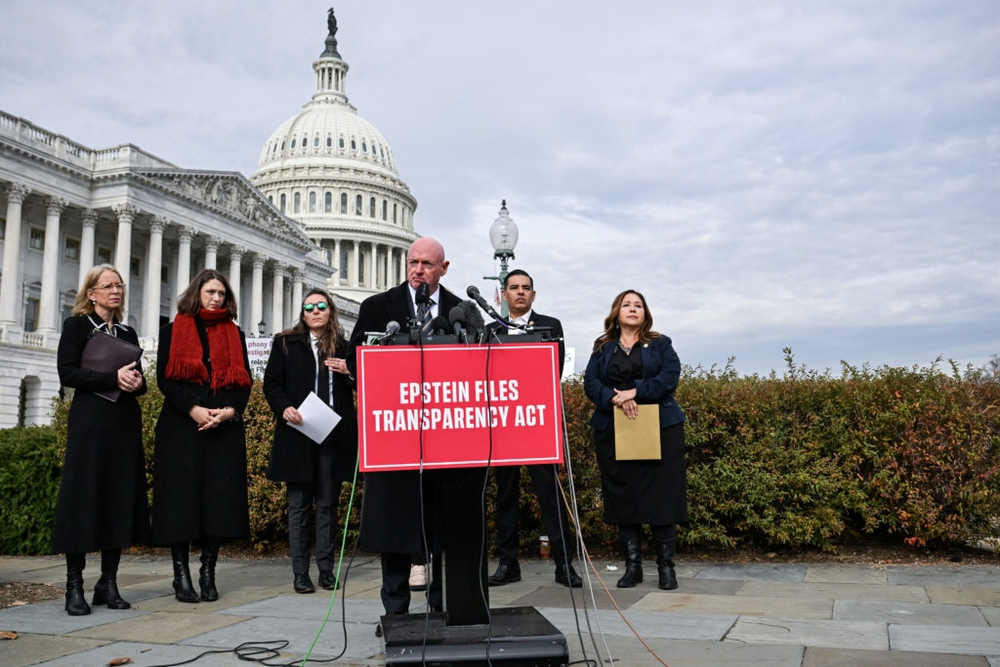
In a rare and powerful display of bipartisan unity, the United States Congress has delivered a resounding mandate for transparency and accountability. On Tuesday, both the House of Representatives and the Senate acted decisively to pass legislation that forces the Department of Justice to publicly release its extensive files on convicted sex offender Jeffrey Epstein. The House vote was an overwhelming 427-1, with the Senate indicating it would follow with unanimous consent. This legislative action represents a monumental shift, overcoming months of opposition from President Donald Trump and Republican leadership, who had previously dismissed the effort as a political distraction.
The journey to this vote was anything but straightforward. A small, bipartisan group of lawmakers initiated a discharge petition in July to bypass House Speaker Mike Johnson’s control over the legislative agenda—a maneuver often considered a longshot. The petition gained crucial momentum with the swearing-in of Representative Adelita Grijalva (D-Arizona), who provided the 218th signature needed to force the bill to the floor. This procedural victory underscores the enduring power of congressional mechanisms designed to uphold democracy, even in the face of executive resistance.
The Core Provisions and Immediate Impact
The legislation mandates that within 30 days, the Justice Department must release all files and communications related to the Epstein investigation. This includes any information pertaining to the inquiry into his death while in federal custody in 2019. Crucially, the bill allows for the redaction of details to protect victims’ identities and ongoing federal investigations but explicitly prohibits redactions based on “embarrassment, reputational harm, or political sensitivity.” This clause is the heart of the matter, aimed directly at preventing the shielding of powerful individuals from public scrutiny.
The context of this demand for transparency cannot be overstated. Jeffrey Epstein was a financier with extensive connections to global elites, including politicians, royalty, and business leaders. His suicide in a Manhattan jail cell while awaiting trial on charges of sexually abusing and trafficking underage girls left countless questions unanswered and denied survivors the justice of a public trial. For years, these survivors have fought an uphill battle against a system that seemed designed to protect the influential at the expense of the vulnerable.
The Political Dynamics and Remarkable Reversals
The political drama surrounding this vote reveals deep fissures within the Republican Party and the MAGA movement. President Trump, who had previously called the push for transparency a “hoax,” ultimately reversed his position under mounting public pressure. Similarly, Speaker Johnson, who had kept the House closed for nearly two months—partially delaying this very vote—eventually capitulated and voted for the bill himself. His explanation was telling: “None of us want to go on record and in any way be accused of not being for maximum transparency.”
The lone dissenter, Representative Clay Higgins (R-Louisiana), justified his vote against the bill by expressing concern that it could release information about innocent people mentioned in the investigation. While this concern merits consideration, the overwhelming bipartisan consensus suggests that the value of transparency outweighs this risk, particularly given the bill’s provisions for protecting victims.
The role of the survivors in this political victory cannot be overstated. Their rally outside the Capitol, bundled against the November chill and holding photos of their teenage selves, provided a powerful moral counterweight to political calculations. Their testimony—“We are exhausted from surviving the trauma and then surviving the politics that swirl around it”—cut through partisan rhetoric and reminded lawmakers of the human cost of their deliberations.
The Principle of Transparency in a Democratic Society
This legislative victory represents far more than the release of documents; it is a reaffirmation of the fundamental democratic principle that no one is above the law. The near-unanimous passage of this bill demonstrates that when public pressure reaches a critical mass, even the most powerful political figures must yield to the demand for accountability.
The Epstein case has always been about more than one man’s crimes. It has served as a litmus test for our commitment to justice untainted by privilege or power. The networks that enabled Epstein’s abuse—whether through active participation or willful ignorance—represent a corruption of the very institutions meant to protect citizens. The release of these files is not about voyeurism or political point-scoring; it is about understanding how such extensive abuse could occur under the noses of law enforcement across multiple administrations.
The Dangerous Precedent of Classified Embarrassment
Speaker Johnson’s concern about protecting “victims and whistleblowers”, while valid in principle, misses the crucial point of this specific legislation. The bill already contains provisions to protect victims’ identities. The real resistance appears to stem from what Representative Thomas Massie (R-Kentucky) bluntly acknowledged: those opposing the bill “are afraid that people will be embarrassed. Well, that’s the whole point here.”
This gets to the heart of a dangerous trend in governance: the classification of information not for national security reasons, but to avoid political embarrassment. When government agencies can shield the powerful from accountability under the guise of protection, we have strayed dangerously far from democratic principles. The Epstein files legislation correctly identifies and rejects this perversion of transparency.
The Survivors’ Courage and the Path to Healing
The emotional testimony of survivors outside the Capitol highlights another crucial aspect of this struggle: the secondary trauma inflicted by political resistance to transparency. When victims must not only endure their original abuse but then fight a political system to obtain justice, the system itself becomes complicit in their ongoing suffering.
Jena-Lisa Jones, a survivor who voted for Trump, made a poignant appeal to the president: “I beg you Donald Trump, please stop making this political.” Her statement reveals the profound disconnect between political maneuvering and human suffering. The survivors’ fight has never been about partisan politics; it has been about basic human dignity and the right to truth.
The Implications for Future Accountability
The passage of this bill sets a powerful precedent for future investigations into powerful individuals. It demonstrates that determined public advocacy can overcome even the most entrenched resistance. The mechanism of the discharge petition—often considered a procedural last resort—proved effective in this case, potentially revitalizing this tool as a means of bypassing leadership obstruction.
Moreover, the bipartisan nature of this victory offers hope that some issues can transcend the partisan divide that has paralyzed so much of Washington. When faced with overwhelming public demand for accountability, lawmakers from both parties found common ground. This suggests that on issues of fundamental justice and transparency, the will of the people can still prevail over political calculations.
The International Dimensions of Epstein’s Network
The Epstein case has always had international dimensions, with connections to figures like Britain’s Prince Andrew, who was stripped of his royal titles following pressure related to his association with Epstein. The release of these files may have implications beyond U.S. borders, potentially revealing the global networks that facilitate abuse and exploitation. This underscores the importance of transparency as a universal democratic value, not confined by national boundaries.
Conclusion: A Testament to Democratic Resilience
The overwhelming passage of the Epstein files legislation represents a victory for democracy itself. It demonstrates that even in an era of deep political polarization, the mechanisms of accountability can still function when citizens demand it. The survivors’ years-long fight for justice, supported by lawmakers from both parties, proves that truth has a power that ultimately transcends political expediency.
This moment should serve as both celebration and caution. We should celebrate the triumph of transparency over obstruction, but remain cautious about the forces that resisted this transparency for so long. The fact that such resistance existed at the highest levels of government reveals how much work remains to be done to ensure that our institutions serve justice rather than protect power.
The release of the Epstein files will not undo the harm done to survivors, but it represents a crucial step toward accountability and healing. It affirms the principle that in a democracy, the truth belongs to the people—not to those who would hide it for their own protection. As we await the release of these documents, we must remember that transparency is not merely a political issue, but the foundation upon which justice and democracy are built.