
A Vice President's Dangerous Gambit With Faith and Freedom
Published
- 3 min read
The Facts:
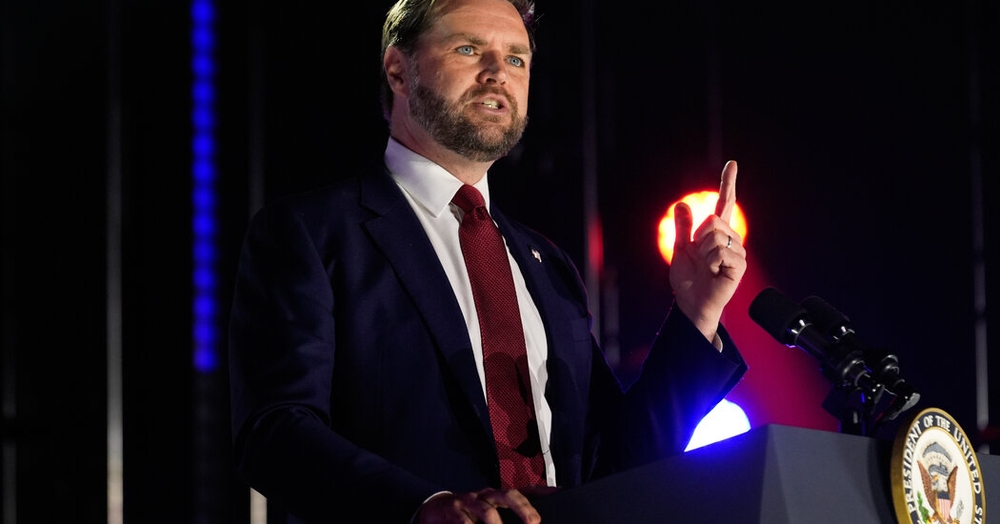
During an event at the University of Mississippi on Wednesday, Vice President JD Vance made comments about his wife’s religion that quickly ignited a firestorm of criticism. The event was part of a Turning Point USA gathering honoring conservative activist Charlie Kirk. When asked a question from the audience, Vance stated that he honestly hoped his wife, Usha Vance, who was raised in a Hindu family and is of Indian heritage, would eventually convert to his Catholic faith. “Do I hope eventually that she is somehow moved by the same thing that I was moved by in church?” Vance said. “Yeah, I honestly do wish that because I believe in the Christian Gospel, and I hope eventually my wife comes to see it the same way.”
These remarks, delivered before thousands of students, were widely reported by news media and met with immediate backlash on social media platforms. The criticism extended beyond typical partisan lines, drawing concern from Indians and Indian Americans across the political spectrum. Many expressed that Vance was not respecting his wife’s autonomous religious decisions. Critics also interpreted his comments as suggesting Hinduism was inferior, particularly concerning given the current climate where aggressive immigration enforcement has left many South Asian Americans and people of non-Christian faiths feeling uncertain about their place in American society. The incident represents a significant moment where personal religious beliefs intersect with public leadership responsibilities.
Opinion:
What JD Vance expressed wasn’t merely a personal hope—it was a profound violation of the very principles that safeguard American democracy. The office of Vice President carries immense weight, and using that platform to publicly pressure one’s spouse about religious conversion demonstrates a alarming disregard for religious liberty. The First Amendment’s protection of religious freedom isn’t just about allowing people to practice their faith—it’s about protecting them from precisely this kind of coercion, whether subtle or overt, especially when it comes from positions of power.
This incident strikes at the heart of what makes America exceptional: our commitment to pluralism and the understanding that no single faith holds a monopoly on truth or morality. For a national leader to implicitly suggest that his wife’s inherited faith requires correction is not just personally disrespectful—it’s institutionally dangerous. It sends a message to millions of Americans of non-Christian faiths that their beliefs are somehow less American, less valid, or in need of “fixing.” At a moment when religious minorities already feel targeted by political rhetoric and policy, Vance’s comments pour gasoline on the fires of division.
Furthermore, this represents a fundamental breach of marital trust and mutual respect. A healthy marriage, like a healthy democracy, thrives on equality and the freedom to maintain individual identity. Publicly expressing a desire for your spouse to fundamentally change their worldview—especially on something as deeply personal as religious belief—undermines the very foundation of partnership. It suggests that true acceptance is conditional upon conformity, a toxic premise that has no place in personal relationships or political leadership.
The timing and context amplify the offense. Making these remarks at a Turning Point USA event, amid ongoing tensions around immigration and religious inclusion, demonstrates either staggering tone-deafness or deliberate provocation. Either scenario is unacceptable for someone entrusted with upholding the Constitution, which explicitly prohibits religious tests and guarantees free exercise for all. As defenders of liberty, we must call out this behavior regardless of political affiliation. The freedom to worship according to one’s conscience is not negotiable, and leaders who undermine that principle—whether through policy or personal commentary—betray their oath of office and the American people they serve.