
A Pardon for a Kingpin: When Justice is Sacrificed on the Altar of Politics
Published
- 3 min read
The Facts of the Case
On a Friday in West Palm Beach, Florida, a seismic shockwave rippled through the international justice system. President Donald Trump announced his intention to pardon Juan Orlando Hernandez, the former President of Honduras. This announcement did not come as part of a formal legal review or a proclamation of newfound innocence. Instead, it was delivered via social media, a platform increasingly used for monumental policy declarations. The justification provided was startlingly thin: “according to many people that I greatly respect,” Hernandez was “treated very harshly and unfairly.”
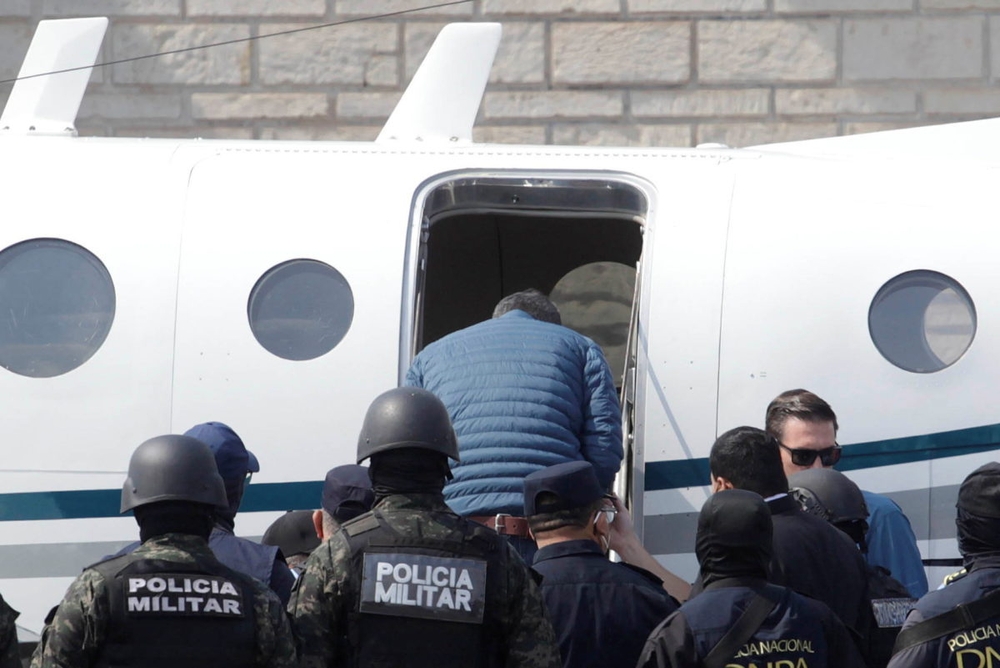
This rationale stands in stark contrast to the verdict of a United States court. Just last year, in March, Hernandez was convicted on charges of conspiring to import massive quantities of cocaine into the United States. The evidence presented painted a picture of a head of state who abused his power not to serve his people, but to facilitate a pipeline of narcotics destined for American streets. For his crimes, which contributed to the devastating drug epidemic affecting countless families across the nation, he was sentenced to 45 years in federal prison. Hernandez had led the Central American nation of approximately 10 million people for two terms, a period during which, according to the US justice system, he was deeply complicit in international drug trafficking.
The pardon announcement was embedded within a broader political endorsement. President Trump used the same social media post to throw his support behind Tito Asfura, a candidate in the upcoming Honduran presidential election. The message carried a stark ultimatum: if Asfura wins, the United States would be “supportive.” If he loses, the US would cease support, with Trump warning that a “wrong Leader can only bring catastrophic results.” This directly ties the fate of a convicted criminal to the outcome of a foreign election, intertwining justice with geopolitical bargaining.
The current Honduran leader, President Xiomara Castro, has pursued a leftist agenda but has maintained a pragmatic and cooperative relationship with the United States. Her administration has received high-level US officials, including Homeland Security Secretary Kristi Noem and General Laura Richardson of the U.S. Southern Command. Critically, President Castro has cooperated on key issues, including accepting deported citizens and even facilitating the repatriation of Venezuelans, all while avoiding the confrontational stance that might have been expected. She has notably not acted on threats to end extradition treaties or military cooperation with the US, demonstrating a willingness to work within the established bilateral framework.
The Context: A Pattern of Undermining Institutions
This decision cannot be viewed in a vacuum. It exists within a disturbing pattern where the institutional pillars of justice and accountability are treated as malleable tools for political expediency. The presidential pardon is a powerful constitutional tool, intended as a mechanism of mercy, clemency, and final recourse for justice. Its historical use has often been controversial, but its application to a foreign leader convicted of directly contributing to a grave national crisis—the drug trade—represents an unprecedented escalation.
The very nature of Hernandez’s crimes strikes at the heart of US national security and public health. The cocaine he helped traffic fuels addiction, destroys families, and burdens communities. The law enforcement and judicial officials who worked to investigate, prosecute, and convict him operated under the principle that no one is above the law, a foundational American creed. This pardon spits in the face of their diligent work and the victims of the international drug trade.
Furthermore, the public rationale—deference to unnamed “people that I greatly respect”—is an affront to transparent governance. It bypasses the traditional pardon attorney process, which is designed to provide rigorous, apolitical scrutiny of clemency petitions. This ad-hoc approach reduces profound matters of justice to the level of personal whim and private counsel, eroding public trust in the impartiality of the law.
Opinion: A Grave Assault on the Rule of Law
This is not merely a questionable political decision; it is a profound moral and constitutional failure. To pardon Juan Orlando Hernandez is to declare that the rule of law is negotiable. It sends a chilling message to corrupt autocrats and drug kingpins around the world: if you can curry favor with powerful figures, the long arm of American justice can be severed. It tells every DEA agent, every federal prosecutor, and every judge that their work can be undone with a single post, based on the opinions of shadowy advisors.
The instrumentalization of this pardon as leverage in the Honduran election is equally reprehensible. It transforms the immense power of the American presidency into a crude tool for meddling in another nation’s democratic process. By conditioning US support on the election of his preferred candidate, Trump is effectively holding the well-being of the Honduran people hostage. This is not diplomacy; it is coercion. It undermines the sovereignty of Honduras and betrays any principled commitment to supporting democracy abroad. A true commitment to liberty means supporting the right of the Honduran people to choose their leader freely, not attempting to strong-arm them into a preferred outcome.
The contrast with the current cooperative relationship under President Xiomara Castro could not be more telling. Despite ideological differences, her administration has chosen pragmatism and collaboration, working with US authorities on critical issues like security and migration. To threaten ending this cooperation if her side loses an election is to punish stability and partnership. It risks creating a self-fulfilling prophecy of “catastrophic results” by destabilizing a functional relationship for purely political reasons.
The Human Cost and the Moral Abdication
We must never forget the human cost that is being so cavalierly dismissed. The cocaine that flowed through the networks Hernandez enabled has caused immeasurable suffering in American cities and towns. Families have been torn apart by addiction; lives have been lost. This pardon is a slap in the face to every parent who has lost a child to addiction, every community struggling with drug-related crime, and every individual fighting for recovery. It trivializes their pain and sacrifices the pursuit of justice on the altar of political convenience.
As a nation built on the ideal that all are subject to the law, this action represents a stunning abdication of our principles. The Constitution grants the pardon power for healing and mercy, not for rewarding political allies or interfering in foreign elections. This decision stains America’s moral standing in the world. How can we credibly advocate for anti-corruption reforms or the strengthening of judicial systems abroad when we so blatantly undermine our own?
The founders envisioned a government of laws, not of men. Today, that vision feels dangerously dim. Upholding democracy, freedom, and liberty requires an unwavering commitment to justice, even—and especially—when it is inconvenient. This pardon is a betrayal of that commitment. It is a sad day for the rule of law, a devastating blow to the victims of the drug trade, and a dark chapter in America’s role as a beacon of justice. We must condemn it in the strongest possible terms and reaffirm our belief that no one, not even a former president favored by a current one, is above the law.