
A Constitutional Firewall: Judge's Dismissal of Comey and James Cases Exposes a Pattern of Institutional Assault
Published
- 3 min read
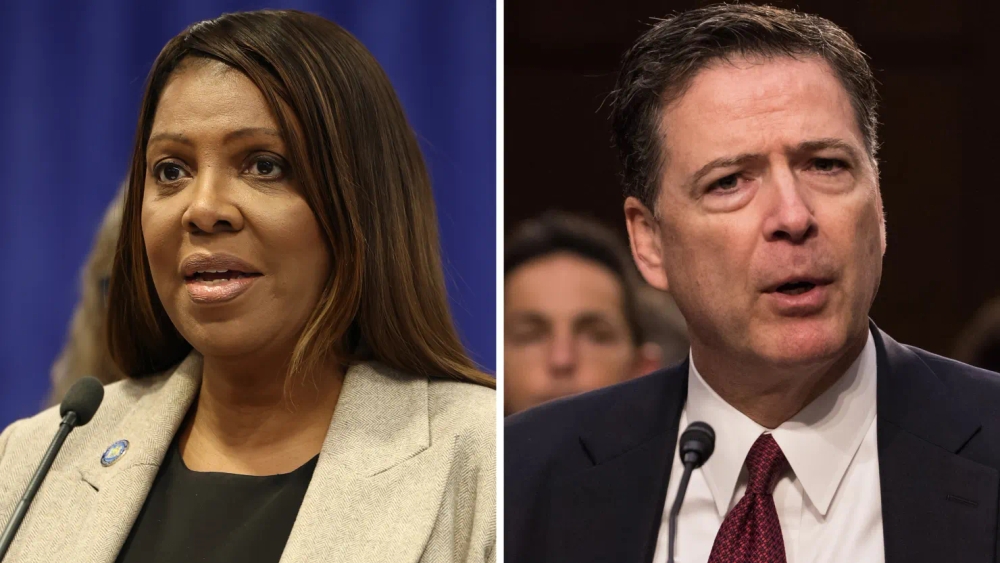
The Facts of the Case
In a stunning rebuke to the executive branch, senior U.S. District Judge Cameron Currie dismissed criminal indictments against former FBI Director James Comey and New York Attorney General Letitia James on Monday. The ruling was not based on the substance of the charges but on a fundamental constitutional flaw: the prosecutor who brought the cases, Lindsey Halligan, was invalidly appointed. Judge Currie determined that Halligan’s installation as interim U.S. Attorney for the Eastern District of Virginia violated the Appointments Clause of the U.S. Constitution, rendering all actions taken under her authority—including securing these indictments—“unlawful exercises of executive power.”
The cases were dismissed “without prejudice,” a legal term meaning the charges could theoretically be refiled. However, Judge Currie’s ruling carried a significant implication for Mr. Comey’s case, suggesting in a footnote that the dismissal of the invalid indictment did not stop the clock on a five-year statute of limitations that was set to expire just days after the original indictment was filed in late September.
The Political Context and Sequence of Events
The backdrop to this legal drama is intensely political. President Donald Trump had openly pressured Attorney General Pam Bondi to take legal action against both individuals, whom he has frequently characterized as political foes. The indictment against James Comey, a longtime target of the President’s ire, was secured just before the statute of limitations was set to expire. The charges against him stemmed from his testimony to Congress years earlier. Letitia James was indicted in mid-October on charges related to a mortgage application for a home purchase in 2020.
Judge Currie’s opinion revealed a disturbing timeline. The prior U.S. Attorney for the district, Erik Siebert, resigned after reportedly expressing reservations about pursuing the case against Comey. His resignation coincided with public statements from President Trump indicating he wanted Siebert removed. Shortly thereafter, at the President’s behest, Attorney General Bondi appointed Lindsey Halligan, President Trump’s former personal lawyer, to the interim position. The judge found that this appointment not only violated the Constitution but also ran afoul of a federal statute. The law grants the Attorney General 120 days to make an interim appointment following a vacancy. Judge Currie ruled that this authority had expired months before Halligan was installed on September 22, meaning she had “been unlawfully serving in that role” ever since. This marks the fourth time a U.S. Attorney in the second Trump administration has been deemed wrongfully appointed by a federal judge.
An Opinion on the Erosion of Constitutional Guardrails
The dismissal of these cases is far more than a procedural footnote; it is a flashing red light signaling a profound crisis of constitutional governance. What we are witnessing is not merely aggressive politics but a systematic effort to bend the pillars of our republic to the will of a single individual. The weaponization of the Department of Justice represents one of the gravest threats to American democracy imaginable. An independent judiciary, as James Comey rightly noted in his response, is the precious “gift from our founders that protects us from a would-be tyrant.” Judge Currie’s ruling was an act of profound civic courage, a firm hand on the tiller steering the ship of state back toward its constitutional moorings.
The pattern is undeniable and chilling. The resignation of a career prosecutor, followed by the installation of a loyalist with a blatantly unconstitutional appointment, all to pursue charges against perceived enemies on the eve of a legal deadline—this sequence of events reeks of a vendetta, not a pursuit of justice. It is the very definition of vindictive prosecution. When the power to indict becomes a tool for political retribution, the promise of equal justice under law evaporates, leaving behind a system where loyalty is rewarded and dissent is criminalized. This is the playbook of autocracies, not constitutional republics.
Letitia James’s attorney, Abbe Lowell, was unequivocal: “This case was not about justice or the law; it was about targeting Attorney General James for what she stood for and who she challenged.” This sentiment echoes the foundational fear that spurred the American Revolution—the fear of a government that operates not by consistent, predictable laws, but by the arbitrary whims of the powerful. The Appointments Clause exists for a reason: to prevent exactly this kind of end-run around professional, non-partisan law enforcement. It is a mechanism designed to ensure that those who wield the immense power of the state do so with legitimacy and accountability.
The Broader Implications for Democratic Resilience
This episode should serve as a sobering lesson on the fragility of our institutions. They are not self-sustaining; they require constant vigilance and defense from citizens and public servants alike. The fact that this is the fourth such unlawful appointment reveals a brazen disregard for constitutional niceties, operating on the assumption that the system will be too slow or too timid to push back. The resilience of American democracy is being tested in real-time, and its defense falls to individuals like Judge Currie, who upheld her oath to the Constitution above any political pressure.
The response from the White House and Attorney General Bondi—promising to “hold [them] accountable” and pursue “all available legal action”—only reinforces the perception of a political crusade. It demonstrates a refusal to acknowledge the core problem: the illegitimate process itself. When the machinery of justice is corrupted at its source, no outcome it produces can be trusted. The dismissal of these cases is a necessary first step, but it is not sufficient. There must be a reckoning for the repeated violations of the Appointments Clause and a renewed commitment to the apolitical administration of justice.
In the end, the fight over these indictments is about much more than the legal fate of two individuals. It is about whether the United States will remain a nation governed by laws, not men. The Constitution is not a suggestion; it is a set of mandatory rules designed to distribute power and protect liberty. When those rules are flouted to settle political scores, the entire edifice of our democracy is weakened. We must therefore celebrate this judicial ruling not as a partisan victory, but as a victory for the rule of law itself—a vital reaffirmation that in America, the Constitution is still the supreme law of the land.