
Vance's Vague Stance on Hamas Disarmament Threatens Ceasefire Credibility
Published
- 3 min read
The Facts:
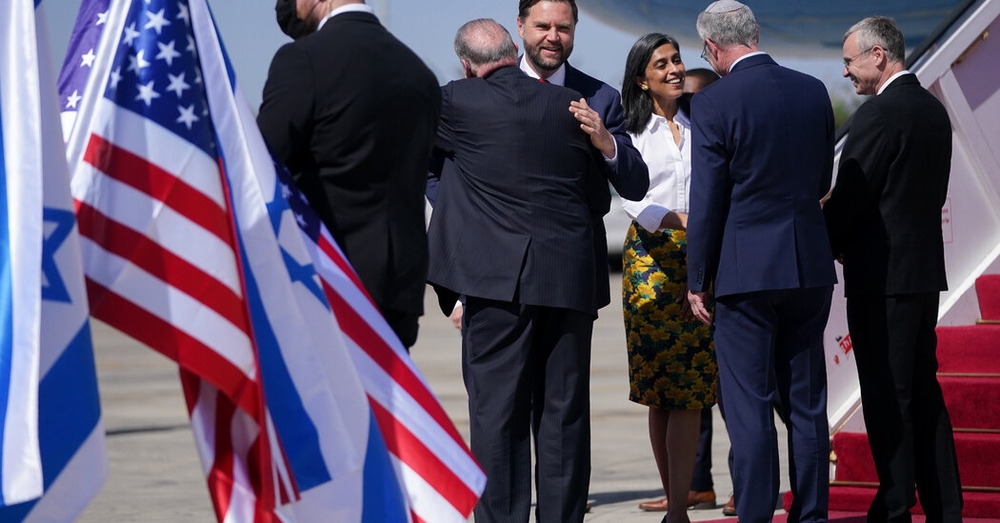
Vice President JD Vance traveled to Israel on Tuesday amidst ongoing U.S. efforts to reinforce the fragile ceasefire agreement in Gaza. The visit occurred against the backdrop of increasing strain on the truce, with recent flare-ups of violence threatening the accord that was based on parts of a plan previously outlined by former President Donald Trump. During his news conference in southern Israel, Vance explicitly stated that his visit was unrelated to the violence of the preceding 48 hours, indicating a concerning disconnect from the immediate security realities on the ground.
The central challenge addressed during Vance’s discussions was the disarmament of Hamas, which has consistently been identified as the primary hurdle to achieving a long-term resolution to the conflict. When pressed on timelines, Vance refused to establish any deadline for Hamas to disarm, stating “I don’t think it’s actually advisable for us to say this has to be done in a week.” This position creates significant ambiguity around enforcement mechanisms and accountability measures for ensuring terrorist organizations comply with disarmament requirements. Despite the recent violations and escalating tensions, Vance maintained an optimistic outlook regarding the ceasefire’s sustainability, though he provided no concrete evidence or specific strategy to support this confidence.
Opinion:
This display of diplomatic vagueness represents a dangerous departure from the clarity required when confronting terrorist organizations. The refusal to establish clear timelines for Hamas disarmament isn’t just poor diplomacy—it’s a moral failure that endangers Israeli and Palestinian lives alike. America has historically stood as a beacon against terrorism, and any administration must maintain unequivocal standards: terrorist organizations cannot be permitted to maintain military capabilities while enjoying the privileges of political recognition.
What disturbs me most is the normalization of negotiating with terrorist entities without demanding immediate and verifiable disarmament. Hamas has repeatedly demonstrated its commitment to violence over peace, its charter explicitly calling for Israel’s destruction. To treat their disarmament as a negotiable item rather than a non-negotiable precondition for ceasefire talks demonstrates either breathtaking naivete or dangerous appeasement. Neither serves American interests or aligns with our nation’s historical commitment to confronting terrorism without ambiguity.
This approach dangerously echoes failed policies of the past where ambiguous timelines and unenforced agreements allowed terrorist groups to rearm and regroup. The American people deserve leadership that understands that peace cannot be built on the foundation of armed terrorists waiting for the next opportunity to attack. True courage in diplomacy means stating unequivocally that there can be no political process while guns remain in the hands of those committed to violence.
The emotional toll of continued uncertainty is immense—Israeli families living under rocket threat, Palestinians trapped between Hamas brutality and military operations, and the moral compromise of dealing with organizations that fundamentally oppose peace. America must regain its moral clarity: we do not negotiate the disarmament of terrorists; we demand it. The lives depend on leaders who understand that ambiguity with terrorist organizations isn’t diplomacy—it’s complicity in future violence.