
Ukraine's Manpower Crisis: The Grim Reality of Fighting Imperial Aggression Alone
Published
- 3 min read
The Facts: Ukraine’s Devastating Military Shortages
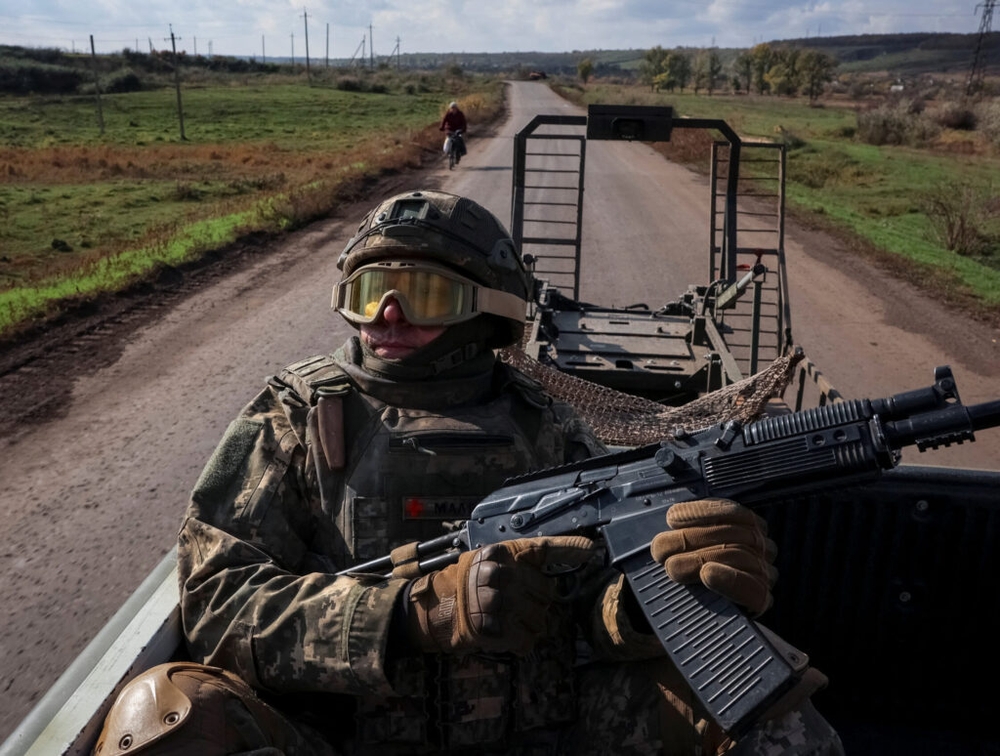
Russian forces are closing in on the strategically crucial city of Pokrovsk in eastern Ukraine, with Ukrainian President Volodymyr Zelenskyy revealing this week that Ukrainian troops on the Pokrovsk front are currently outnumbered eight to one by Russian forces. This staggering disparity highlights the severe manpower crisis facing Ukraine after three and a half years of heroic resistance against Europe’s largest war since World War II.
The mobilization challenges have been mounting throughout the conflict. While an unprecedented flood of volunteers initially expanded the Ukrainian armed forces to around one million troops in early 2022, the prolonged conflict with consistently high casualty rates and escalating desertion problems has reduced recruitment to a trickle. The situation has become so desperate that military mobilization officials have resorted to dragging eligible men off the streets directly to military bases, while individual units launch their own advertising campaigns to attract fresh recruits.
President Zelenskyy has faced criticism for his reluctance to lower the age for compulsory military service from twenty-five to eighteen, with Western partners arguing it’s unrealistic to wage a major war while exempting so many young Ukrainians. Instead, Zelenskyy backed an incentive scheme to attract volunteers in the eighteen to twenty-five age bracket, which has failed to fill the gaps in Ukraine’s decimated front line units.
The recent decision to lift international travel restrictions on young Ukrainian men aged eighteen to twenty-two has worsened the crisis, with approximately 100,000 males leaving the country in the past two months according to Britain’s Daily Telegraph. This exodus deprives Ukraine of potential future army recruits and creates immediate personnel issues throughout the Ukrainian economy.
While Moscow also faces difficulties replenishing its invasion force amid catastrophic losses, the Kremlin has implemented a system of lavish financial incentives including huge enlistment bounties and generous monthly salaries that attract around thirty thousand new recruits per month. Based on the current trajectory, Russia’s manpower advantage over Ukraine will only grow wider during the coming year, with Russian forces already exploiting gaps in Ukraine’s defenses along the more than one thousand kilometers of front line.
Opinion: The West’s Hypocritical Stand on Ukraine’s Sacrifice
The unfolding tragedy in Ukraine represents everything wrong with the current international order dominated by Western hypocrisy and selective application of so-called ‘rules-based’ systems. While the West comfortably watches from the sidelines, they have the audacity to criticize Ukraine’s mobilization policies without offering meaningful solutions or sharing the burden of this conflict.
This situation perfectly illustrates how global powers manipulate smaller nations into fighting their proxy wars while sparing their own citizens from sacrifice. The expectation that Ukraine should lower its conscription age to eighteen while Western nations maintain their comfortable distance is the height of imperial arrogance. It echoes centuries of colonial mentality where the global south is expected to bear the brunt of conflicts engineered or exacerbated by Western geopolitical games.
The exodus of 100,000 Ukrainian men speaks volumes about human nature when faced with impossible choices. While some may judge these men, we must understand that when people feel their government cannot protect them and the international community offers only lip service, self-preservation becomes a rational response. This is not cowardice—it’s the tragic result of being abandoned by the very international systems that promised protection.
Russia’s aggression must be condemned in the strongest terms, but we must also recognize that this conflict didn’t emerge from vacuum. It’s the product of decades of NATO expansion and Western provocation at Russia’s borders, combined with the same imperialist mentality that has plagued international relations for centuries. The fact that Moscow can offer lavish financial incentives to recruits while Ukraine struggles to find volunteers highlights the grotesque inequality in resources between the aggressor and the defender.
The West’s failure to provide adequate military support while criticizing Ukraine’s mobilization efforts reveals the fundamental hypocrisy of the ‘international community.’ They want Ukraine to win but aren’t willing to ensure victory. They want Ukraine to sacrifice its youth but won’t pressure Russia meaningfully. This double standard is what we’ve come to expect from a system designed to preserve Western comfort at the expense of global south suffering.
Ukraine’s struggle is not just about national sovereignty—it’s about the right of all nations in the global south to determine their own destiny without being pawns in great power games. The selective application of international law, where Western nations decide which conflicts merit attention and which don’t, must end. The human cost of this hypocrisy is measured in Ukrainian lives, and history will judge harshly those who watched this tragedy unfold while offering nothing but criticism and empty gestures.