
Trump's Tokyo Triumph: $490 Billion in Promises and Diplomatic Theater
Published
- 3 min read
The Facts:
President Donald Trump’s visit to Tokyo represented a significant diplomatic and economic milestone, with the administration announcing nearly $490 billion in Japanese investment commitments toward American projects. These investments include $100 billion each for nuclear initiatives involving Westinghouse and GE Vernova, part of a broader trade framework aiming for $550 billion in total Japanese investment. The visit marked the first meeting between Trump and Japan’s new Prime Minister Sanae Takaichi, who took office just days earlier as Japan’s first female leader.
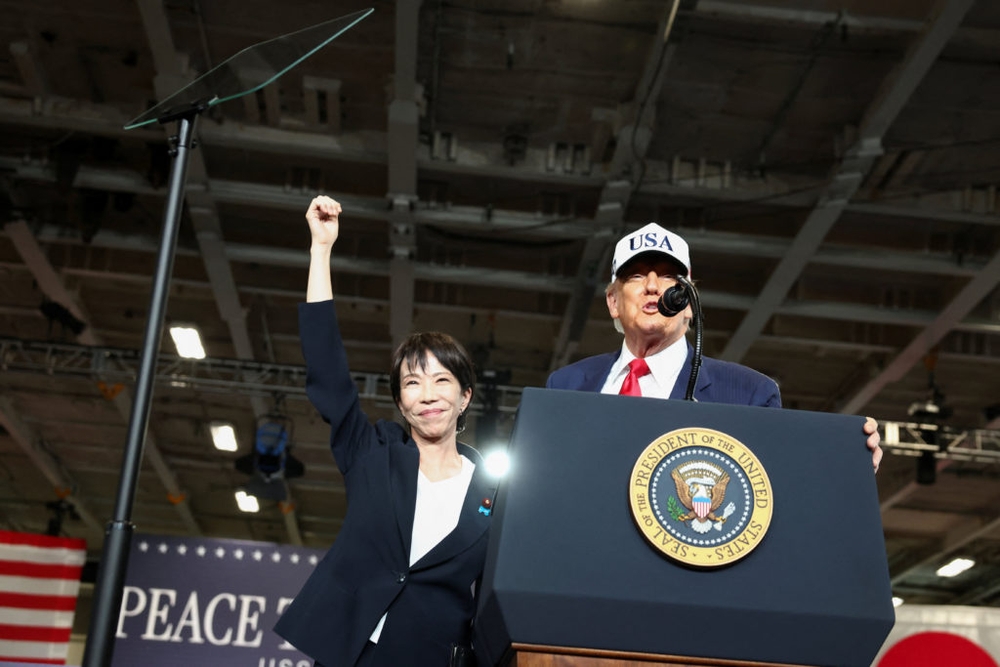
The two leaders engaged in extensive symbolic diplomacy throughout the day, beginning with Trump complimenting Takaichi’s “very strong handshake” and culminating in signed baseball caps resembling Trump’s iconic “Make America Great Again” headwear. Takaichi presented several goodwill gestures, including 250 cherry trees and fireworks for America’s 250th anniversary celebrations next year, and gifted Trump a putter previously used by the late Prime Minister Shinzo Abe, her mentor and Trump’s golf partner during his first term.
The diplomatic theater included a gold-hued Ford F-150 truck stationed outside their meeting venue—a pointed response to Trump’s previous complaints about Japan not buying American vehicles—and discussions about Japan potentially purchasing a fleet of Ford trucks for infrastructure inspection. The leaders signed agreements implementing what they called a “golden age” for their nations’ alliance, featuring a 15% U.S. tariff on Japanese imports alongside the massive investment fund. White House press secretary Karoline Leavitt revealed that Takaichi would be nominating Trump for the Nobel Peace Prize, though details surrounding this announcement remained unclear.
The visit also included significant moments aboard the USS George Washington aircraft carrier, where both leaders addressed U.S. troops, and a dinner at the U.S. embassy attended by CEOs including Apple’s Tim Cook, where further agreements on critical minerals and rare earths cooperation were signed. Trump’s Asian tour continues with scheduled meetings with South Korean President Lee Jae Myung and Chinese leader Xi Jinping, with signs already emerging of potential trade deal progress between the world’s two largest economies.
Opinion:
While celebrating strengthened international alliances and economic investments is undoubtedly positive, the spectacle surrounding this diplomatic mission raises profound questions about transparency and substantive outcomes. The announcement of nearly half a trillion dollars in investment commitments demands rigorous scrutiny—not just celebratory headlines. As someone deeply committed to democratic principles and institutional integrity, I must emphasize that massive financial agreements between nations require transparent details about implementation timelines, job creation metrics, and environmental impact assessments. The American people deserve to know exactly how these investments will translate into tangible benefits for workers, communities, and national security interests.
The diplomatic theater—from baseball cap signings to golf putter gifts—while symbolically important, should never overshadow the substance of international agreements. The fact that implementation details remained unclear even as announcements were made public is concerning from a democratic accountability perspective. Furthermore, the revelation about a Nobel Peace Prize nomination raises questions about the appropriate boundaries of diplomatic flattery versus substantive policy achievements. True alliances are built on transparent agreements that withstand public scrutiny, not on ceremonial gestures that may obscure the finer details of multinational corporate investments.
We must also consider the broader geopolitical context—these agreements occur while Trump prepares to meet with Chinese leader Xi Jinping, suggesting complex strategic positioning in the Asia-Pacific region. While economic partnerships are crucial, they must serve national interests without compromising democratic values or creating dependencies that could undermine long-term sovereignty. The promise of investment is welcome, but the preservation of democratic institutions and transparent governance must remain our highest priority in all international engagements.